
Review · OSLO TOURS
Unknown war. Oslo and Norway during 1940-45
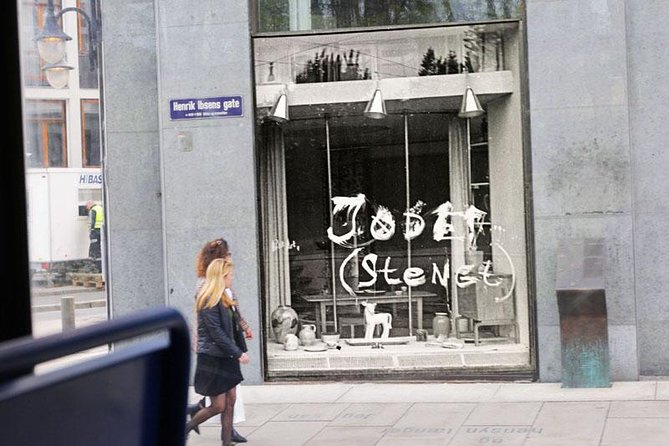
Oslo looks different after a WWII photo walk. This private, English-language tour links 1940 to 1945 occupation history to the exact places you see today, using period photos to make the past feel real and local. I love how guide Rami builds stories from what people experienced day to day, not just big battles. I also love the private, customizable pacing, so you can move slower for photos, or speed up if you have tight plans.
The main thing to consider is that you’ll be mostly outdoors, and the experience runs only in good weather. Some stops involve optional admission tickets, so check what’s included in your timing, especially if you want every interior.
In This Review
- Key highlights to look forward to
- Where the story starts: Karl Johan-monumentet to a city in 1940-45
- The Royal Palace stop: politics you can point to
- Karl Johans Gate: the long street where occupation becomes visible
- Parliament and public pressure at the Norwegian Parliament
- Stortorvet Kebab in the market square: where life kept moving
- University of Oslo, Faculty of Law: education and the occupied mind
- Nationaltheatret and the Gunnar Sønsteby monument: culture, bravery, and memory
- Akershus Castle and Fortress: ending at the right place for the next chapter
- Price and value: $307.50 per group up to five
- Scheduling: Mon to Thu hours and why timing matters
- What to expect from the tour style: neutral facts, real images
- Practical tips for a comfortable WWII walking tour
- Should you book this Oslo WWII photo walk?
- FAQ
- How long is the Oslo WWII photo tour?
- What is the price?
- Is this tour private?
- What language is the tour offered in?
- Do I need separate tickets for the stops?
- Where does the tour start and end?
Key highlights to look forward to
- Karl Johans Gate, Stortinget, and other landmarks tied to occupation-era life, not vague WWII trivia
- Rami’s period photographs, shown from the same spots you stand in now
- Private group format for up to five, with room to customize what you care about
- A “see and understand” route across the historical center, built for a 2.5-hour window
- End at Akershus Fortress, a natural setup for the Resistance Museum area
Where the story starts: Karl Johan-monumentet to a city in 1940-45
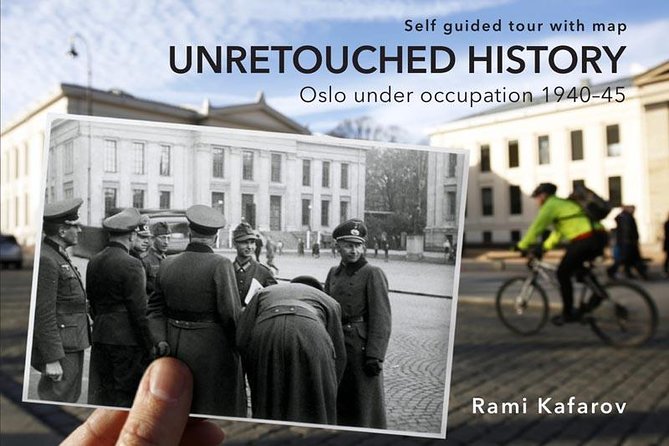
This tour starts where many first-time visitors begin, at the Karl Johan monument in the Sentrum area. The difference here is that you are not just getting your bearings. You are getting context. Within minutes, you start seeing how Oslo’s center became a stage for occupation power, public pressure, and resistance.
That early clarity matters. If you arrive in Oslo and only do standard sights, WWII can feel like a separate topic. On this walk, the history sticks because it is attached to the buildings and streets you pass anyway. You get a framework for what you are seeing later, especially around political and cultural landmarks.
Also, because the group is small and private, you can ask questions without worrying about holding up strangers. That sounds minor, but on a history walk, it changes everything.
A few more Oslo days worth weighing up
- Oslo: Oslo Fjord Sightseeing Cruise by Sailing Ship
★ 4.5 · 5,790 reviews - Oslo: Scenic Fjord Cruise with Audio Guide Commentary
★ 4.5 · 5,375 reviews - Oslo Nature Walks: Island Hopping Tour
★ 4.8 · 2,713 reviews
The Royal Palace stop: politics you can point to
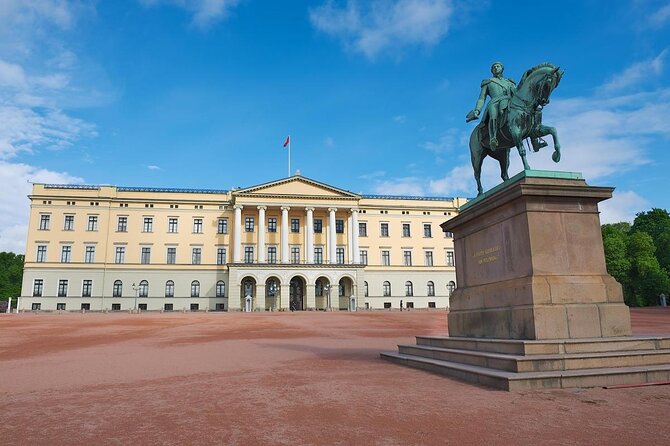
The Royal Palace is the kind of place you recognize instantly, even if you know nothing about Norwegian royal history. Standing there with the occupation story in mind shifts the focus. You start thinking about authority, control, and what it meant when the public face of the state was under strain.
In a 10-minute stop, you will not tour every interior. Instead, you get the kind of orientation that makes later reading and museum visits click. The practical benefit is simple: you leave knowing which parts of Oslo’s power structure to pay attention to.
If you plan to do other palace-related attractions separately, this stop helps you connect dots. It also sets the tone for the rest of the walk, which keeps returning to how civilian life was affected by the occupation.
Karl Johans Gate: the long street where occupation becomes visible
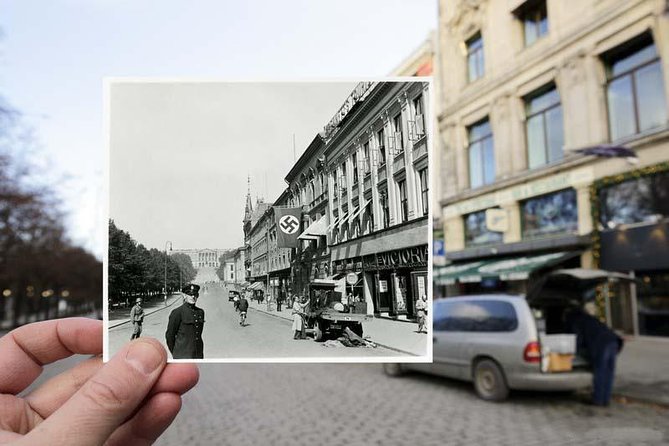
Karl Johans Gate is Oslo’s main spine through the center, and it is exactly the kind of location where history can either feel abstract or feel grounded. Here, it feels grounded. You spend time picking up multiple WWII-related stories linked to locations along the route.
This stop is more about patterns than one single event. You begin to see how public spaces became places where control and message-sending happened, and where everyday people navigated fear, uncertainty, and surveillance.
What I like about this part is that it does not ask you to memorize dates. It helps you notice what changes when power changes. Street-level history works best this way: small details, repeated themes, and a guide who can point to what you are actually looking at.
Parliament and public pressure at the Norwegian Parliament
At the Norwegian Parliament (Stortinget), the tour turns from general occupation context into civic stakes. This is where the story becomes political in a very real way. Even in a short walk stop, you get the sense that institutions are not just buildings. They are roles people depend on, and in wartime those roles can be disrupted overnight.
This is also where period photos start to matter most. When you look at a recognizable government building and then see older images of the same spot, it stops being a distant story. You can visualize how Oslo’s center looked in the occupation years.
If you are the type who likes history that explains how decisions affect people, this is one of the high-value stops on the route.
Same corner of the country, a completely different day out:
- Oslo: 24 or 48-Hour Hop-On Hop-Off Sightseeing Bus GrayLine
★ 4.0 · 2,088 reviews - Oslo: 100% Electric Oslofjord Sightseeing Cruise
★ 4.4 · 2,041 reviews - Oslo: Fjord Evening Cruise with Shrimp Buffet
★ 4.5 · 1,956 reviews - Oslo: Guided Sightseeing Fjord Cruise on Premium Silent Boat
★ 4.7 · 1,826 reviews
Stortorvet Kebab in the market square: where life kept moving
One of the smartest choices on this itinerary is placing a stop at Stortorvet Kebab in the market square area. It is free time, and it gives you a breather in the middle of the walk.
Why it works: market squares are where wartime pressure shows up in small ways. Even if you never eat there, the stop reminds you that the city’s story is not only told by monuments. It is also told by daily routines, commuting habits, and how food and services kept running under impossible conditions.
If you want a tiny reset before you hit Akershus Fortress, this is your moment. It also makes the tour easier on legs and attention span, which matters because you are doing multiple landmark stops back-to-back.
University of Oslo, Faculty of Law: education and the occupied mind
Next comes the University area, with a focus near the University of Oslo Faculty of Law. This is a quieter shift from government to education and professional life.
In occupation periods, universities and legal training carry extra meaning. People still need rules, still need interpretation, and still need ways to function. That tension shows up in how the guide frames the story while you stand near the university square.
This stop also tends to reward curious travelers. If you like understanding how different sectors of society responded, you will likely enjoy the way the tour connects occupation impact to future paths, not just immediate survival.
Also, since this is a short stop with free time, it is a good chance to ask Rami a specific question about how Norwegians handled day-to-day uncertainty, or how the resistance fit into normal life.
Nationaltheatret and the Gunnar Sønsteby monument: culture, bravery, and memory
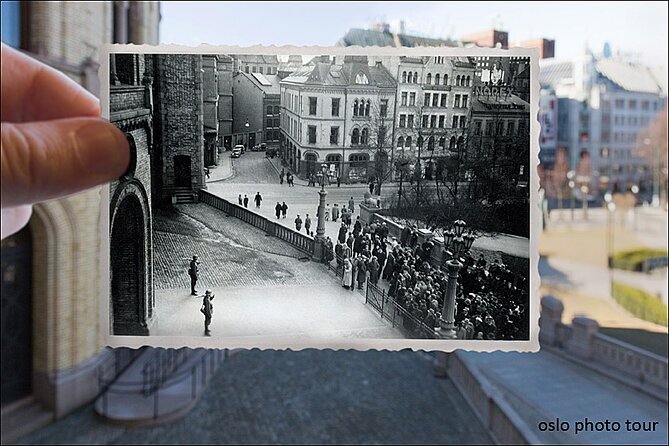
At Nationaltheatret, you get a cultural anchor. The theater area is a reminder that occupation years were not only about paperwork and fear. They were also about what people protected, what they performed, and what they remembered.
You also see the Gunnar Sønsteby monument as part of this area. That matters because it connects the walk’s wider occupation themes to a specific form of courage tied to Norway’s resistance story.
This is a powerful segment when you enjoy biographical history, even if you are not a WWII superfan. It helps you feel the difference between a general occupation narrative and a personal, human one.
Akershus Castle and Fortress: ending at the right place for the next chapter
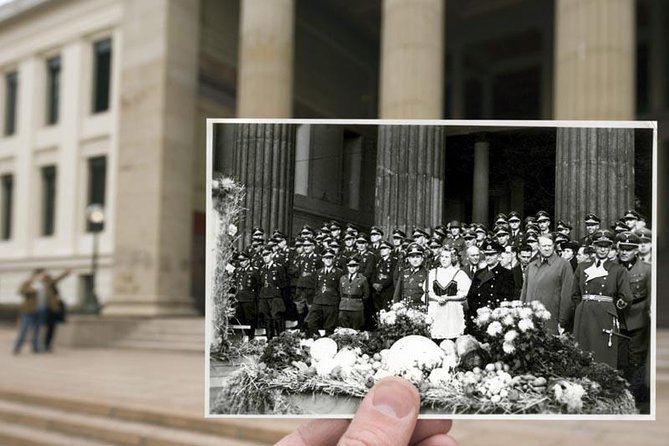
The tour ends at Akershus Fortress, near the Norway’s Resistance Museum area. This is a smart final move because it gives you a natural transition. You finish the walking context, then you are standing right where you can continue with deeper museum details.
Akershus is a location that already feels historical. With the tour’s framing, it feels even more meaningful. You understand how Oslo’s center and the fortress area connect to the occupation timeline and the resistance movement’s presence in people’s lives.
Practical note: this is a short stop by design. If you want to linger, plan extra time for the museum nearby. The tour gives you the why and the how to notice what you see next.
Price and value: $307.50 per group up to five
At $307.50 per group (up to five), this is priced like a private history walk, not a mass-market sightseeing tour. The value comes from a few things you can actually feel during the experience.
First, you get a tight route through central Oslo in about 2 hours and 30 minutes, which is a good use of time if you want depth without losing a full day. Second, the private format means Rami can slow down for your questions, revisit an area you are curious about, or adjust the order based on what you care about most.
For families or small groups, the per-person cost often drops compared with booking multiple separate tickets for individual guides. And because the tour uses period photos tied to the exact spots, it is not just commentary. It is visual guidance that turns the walk into a learning tool.
If you are traveling solo, you might compare this with joining a larger group tour. But if you want your pace and your interests centered, the private approach is the point of paying this price.
Scheduling: Mon to Thu hours and why timing matters
The experience is offered during a defined window, with Monday to Thursday hours from 9:00 AM to 4:00 PM. That is useful if you are planning around other Oslo stops like museums, harbor visits, or evening dining.
It also helps to know confirmation comes within 48 hours of booking, subject to availability. If your schedule is fixed, booking earlier is smart. The average booking window is about 77 days in advance, which tells you this is a popular option for history travelers.
Finally, since good weather is required, you should plan a little flexibility in your itinerary. If the forecast looks rough, give yourself backup time the same week.
What to expect from the tour style: neutral facts, real images
A big reason people rate this so highly is that the guidance stays fact-based and balanced. You get occupation history with nuance, including how different segments of society navigated the period and how the Norwegian resistance fits into the wider WWII story.
The other standout feature is the photo approach. Rami uses a private collection of WWII photos that correspond to where you are standing. That can be a game-changer if you struggle to picture the past. Instead of asking your brain to guess what buildings looked like 70-plus years ago, you get an on-the-spot visual match.
It also makes the walk easier to remember later. You can look at a street or building today and recall the corresponding image from the occupation years.
Practical tips for a comfortable WWII walking tour
You will walk between central landmarks, so wear shoes you trust. Oslo weather can turn quickly, even if the forecast is decent, so I recommend bringing an umbrella just in case. One rainy day can be survivable, but a flooded or windy day is the difference between a fun tour and a miserable one.
Other practical points:
- Bring a light layer you can remove on warmer days.
- Have your questions ready, especially if you care about the resistance story or daily civilian life.
- Expect that some stops may require optional admission tickets, so build a little buffer if you want to go inside or add time.
If you already watched a WWII film or documentary about Norway, you might find the tour gets you oriented faster. Even without that, the guide’s structure helps you build understanding quickly.
Should you book this Oslo WWII photo walk?
Book it if:
- You want WWII history tied to places you can actually see in Oslo’s city center.
- You like guided explanations that explain how daily life changed under occupation.
- You prefer a private tour that adapts to your interests, with photo support that makes details stick.
Skip it or consider alternatives if:
- You cannot do much walking, since the route is a landmark-to-landmark city walk.
- You only want museum-style history with long indoor stops. This tour is focused on the city and short, high-impact landmark viewing.
- Weather is a serious constraint for your trip dates, because good conditions are required.
Bottom line: if your ideal Oslo day mixes strong orientation with human-scale WWII context, this is a very solid choice.
FAQ
How long is the Oslo WWII photo tour?
It lasts about 2 hours 30 minutes.
What is the price?
The price is $307.50 per group, up to 5 people.
Is this tour private?
Yes, it is a private tour/activity. Only your group participates.
What language is the tour offered in?
The tour is offered in English.
Do I need separate tickets for the stops?
Admission tickets are not included for some stops (like the Royal Palace, Norwegian Parliament, Nationaltheatret, and Akershus Castle and Fortress). Other stops are free time (Stortorvet Kebab and the University of Oslo, Faculty of Law area).
Where does the tour start and end?
It starts at Karl Johan-monumentet in Sentrum and ends at Akershus Fortress, near Norway’s Resistance Museum.
Recently added around Oslo
- 4 hours Best View of the Oslofjord Winter Edition★ 4.0 · 15 reviews
- Oslo Winter Highlights Bike Tour★ 5.0 · 36 reviews
- Winter Forest Walk and Campfire by Torchlight in Oslo★ 4.5 · 20 reviews
- Viking Planet Oslo Combination Ticket (Museum +VR Game)★ 4.0 · 13 reviews
- The Ultimate Norwegian Skiing Experience★ 5.0 · 16 reviews
- The Viking Planet Museum – Mini Group (4 adults)★ 4.0 · 16 reviews
- The Ultimate Study of the Human Form at Vigeland’s Sculpture Park with a Local★ 4.0 · 14 reviews
- The Scenic Roadtrip, Oslo to Bergen via Flam & the Fjords★ 5.0 · 25 reviews
Oslo Tours, compared.
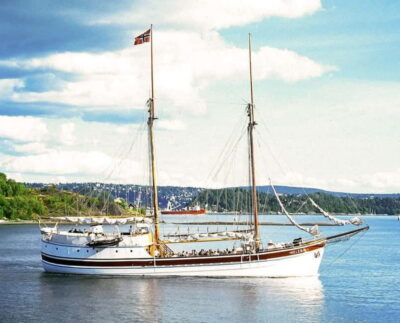
Oslo Fjord Sightseeing Cruise by Sailing Ship
Read our review →
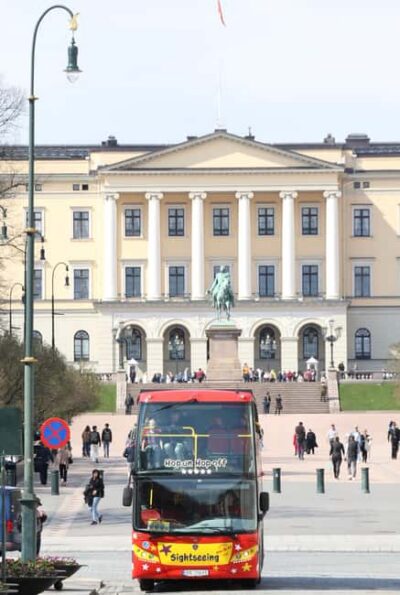
24 or 48-Hour Hop-On Hop-Off Sightseeing Bus GrayLine
Read our review →


Guided Sightseeing Fjord Cruise on Premium Silent Boat
Read our review →
Browse the lists this tour appears in