
Review · HISTORICAL TOURS
History and Secrets of Oslo Tour
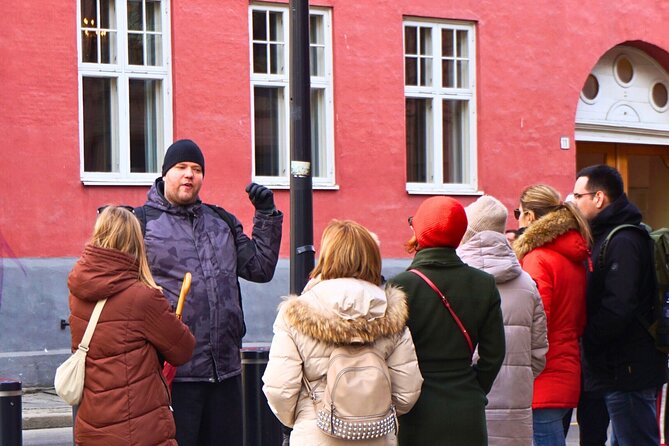
Oslo clicks into focus fast on this 3-hour walk. You get story-first sights, moving from royal legends to modern icons with lots of useful local context. I especially like how many stops are free to enter, so your time goes to seeing and learning, not ticket lines. One watch-out: it is a walking tour with shorter stops, so if you want long museum time or lots of sit-down stops, you will need extra time on your own.
What makes it work is the flow. You start at the Royal Palace and end at Oslo Central Station by the tiger statue, with a small group cap of 10 and a mobile ticket for easy check-in. Guides such as Martin, Monika, Radu, Anders, and Magnus are known for lively storytelling and practical tips that help you plan the rest of your day.
In This Review
- Key Highlights Worth Getting Excited About
- Oslo in 3 Hours: Royal Stories, Nobel Clues, and Fjord Views
- Meet at the Royal Palace, Finish by the Tiger at Central Station
- From 1300 Years of Royal Family Threads to Nobel Dynamite
- Nobel Peace Center at Aker Brygge: Peace Prize History in a Former Station
- Oslo City Hall: The Nobel Ceremony Setting and the Meaning in the Art
- Palace Boulevard to Parliament: How Oslo’s Center Works
- Christian IV’s Square and the 1624 Fire That Rebuilt Oslo
- Medieval Fortress Grounds Over the Harbor: Defense Stories and a Bell Moment
- Bankplassen and the Bank of Norway: Trade and Innovation Made Physical
- Deichman Bjorvika: The World-Class Library Break You Actually Want
- Oslo Opera House Pier and the Munch Museum View Across the Water
- Oslo Central Station Finish: Your Orientation Payoff
- Who This Walking Tour Suits Best
- Should You Book This Oslo Walk?
- FAQ
- How long is the Oslo History and Secrets tour?
- Is the tour in English?
- Where does the tour start and end?
- Do I need cash or physical tickets?
- What is the maximum group size?
- Are admissions included or free at the stops?
- Is the tour suitable for someone with moderate physical fitness?
- Is the tour near public transportation?
- Can I bring a service animal?
- What is the cancellation policy?
Key Highlights Worth Getting Excited About
- Nobel Peace Center storytelling: Peace prize history linked to the people behind it, set in a former railway station on the fjord.
- Oslo City Hall from the outside in: Murals and sculpture symbolism tied to the annual Nobel ceremony.
- A straight shot to Oslo’s power sites: Palace boulevard to Parliament, so you get the city’s political layout quickly.
- Christian IV’s Oslo reset: How the 1624 fire and Christiania naming shaped the modern city plan.
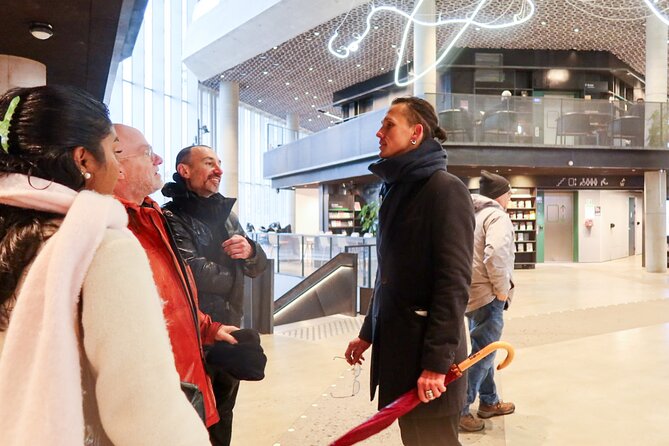
- Deichman Bjorvika stop: A design-led library break with light-filled calm, right where today’s Oslo shows itself.
- Opera House pier views: A photo-worthy pause that frames the Opera House and the Munch Museum across the water.
Oslo in 3 Hours: Royal Stories, Nobel Clues, and Fjord Views
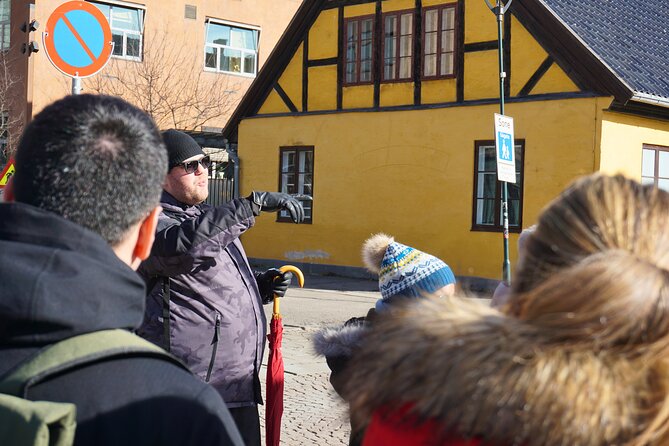
This is the kind of tour that helps you understand Oslo without turning it into a checklist. In just a few hours, you connect the dots between monarchy, Nobel history, democracy, and modern culture. The pace is friendly but not slow, so it is ideal for your first day when you want orientation fast.
The best part is that the guide does not just point. You get meaning. A stop at Nobel Peace Center is not only about the building, it is also about why Oslo became the place for global peace stories. A walk past City Hall is not only architecture, it is the symbolism behind art and ceremony.
It also feels efficient. Many stops are quick exterior looks, but the tour still gives you enough time to step in, read a bit, and take photos. It is a smart format for visitors who want value and clarity.
More Historical Tours in Oslo
- Oslo: Historic Myths & Legends Evening Walking Tour
★ 4.8 · 408 reviews - Oslo: Small Group History, Art & Secrets Tour
★ 4.6 · 127 reviews - Oslo City Walks – Historic River Walk
★ 5.0 · 31 reviews
Meet at the Royal Palace, Finish by the Tiger at Central Station
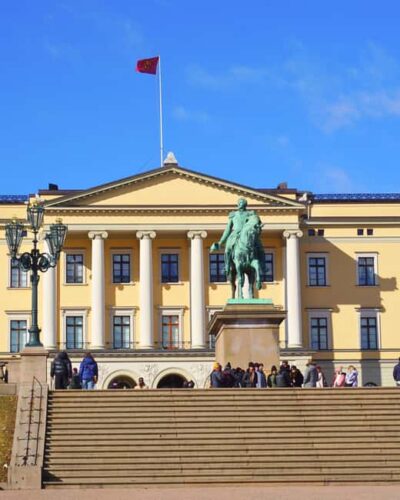
You start at Slottsplassen 1, right at the Royal Palace. That location matters because it places you at the top of Oslo’s classic “big-city axis,” where you can see how power, culture, and transit line up. You then walk steadily toward the center.
You finish at Jernbanetorget 1, Oslo Central Station, by the tiger in front of the station. That ending is practical. You are back at the main rail hub, so after the tour you can easily hop on transit, head to a museum, or grab food nearby without burning time.
The tour runs about 3 hours, it is in English, and it keeps groups small, with a maximum of 10. Mobile ticketing is used, which helps if you prefer minimal paperwork while traveling.
From 1300 Years of Royal Family Threads to Nobel Dynamite
The tour opens by looking at royal history across roughly 1300 years. It sets a tone that feels very Scandinavian: less grandstanding, more context. Then the route connects that broad history to the Nobel family thread and the dynamite story tied to Alfred Nobel’s legacy.
Why I like this start: it gives you a frame before you hit the big landmarks. When you later see the Nobel Peace Center, you already understand the “why Oslo” angle instead of feeling like you are reading a random fact sheet.
It also helps solo travelers. Many people join this type of short walk to learn faster and feel more confident navigating on their own right after. A good guide can make the group feel easy, and the guide styles on this route are often described as funny, warm, and inclusive.
Nobel Peace Center at Aker Brygge: Peace Prize History in a Former Station
Nobel Peace Center is one of Oslo’s most important cultural stops, and it sits in a former West Railway Station by the fjord at Aker Brygge. That building choice is not a detail. It reinforces the theme of movement and the world, since rail history and international exchange feel built into the setting.
Inside, you explore exhibitions and short films about the Nobel Peace Prize and its laureates. Each year the center hosts the official exhibition for the current Nobel Peace Prize winner. You also get the Nobel family and dynamite connection to understand how industrial invention became a global peace legacy.
Practical note: admission here is listed as free for this tour. That makes it a strong value stop. Even if you only have a limited amount of energy for reading, the layout and film style make it easier to take in meaning quickly.
Same corner of the country, a completely different day out:
- Oslo: Oslo Fjord Sightseeing Cruise by Sailing Ship
★ 4.5 · 5,790 reviews - Oslo: Scenic Fjord Cruise with Audio Guide Commentary
★ 4.5 · 5,375 reviews - Oslo Nature Walks: Island Hopping Tour
★ 4.8 · 2,713 reviews - Oslo: 24 or 48-Hour Hop-On Hop-Off Sightseeing Bus GrayLine
★ 4.0 · 2,088 reviews
Oslo City Hall: The Nobel Ceremony Setting and the Meaning in the Art
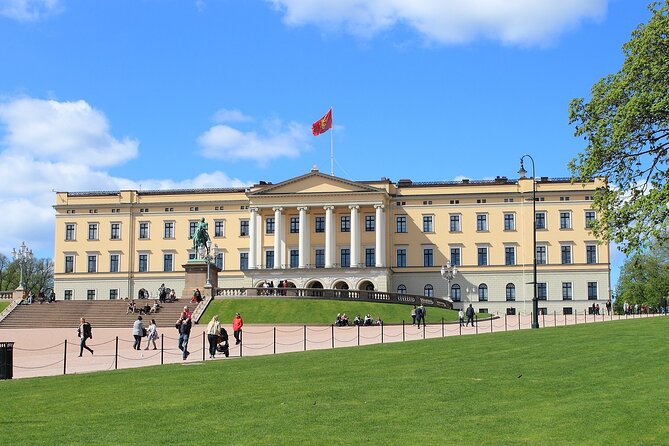
Next, you reach Oslo City Hall, where the Nobel Peace Prize ceremony is held each year. The outside of the building is impressive, but what really adds value is how the guide explains the murals and sculptures. These are not just decoration. They tell stories from Norway’s history and help you connect national identity to international events.
This is a good stop for anyone who enjoys symbolism. If you like architecture, you will also appreciate the way the building reads from different angles as you walk around it. And since the tour keeps the pace balanced, you get enough time to look closely without feeling rushed.
Another value point: admission is listed as free for the tour, so you are not paying extra for what becomes a key “Nobel Oslo” moment.
Palace Boulevard to Parliament: How Oslo’s Center Works
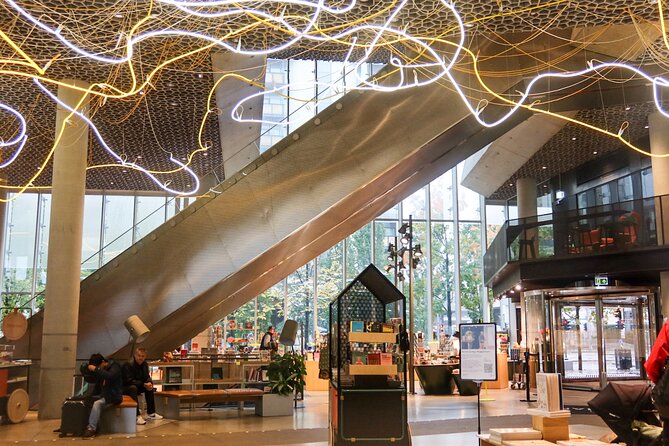
After City Hall, you stroll along Oslo’s main boulevard that links the Palace with the Central Station. This is a smart stretch because it is where you get a fast sense of the city’s shape. You also see street life and cultural landmarks that you might otherwise miss if you only hopped between museums.
The tour then stops near Parliament. Here, the focus is how Norway’s democracy developed over the centuries. This is where Oslo stops being only pretty buildings and becomes an idea you can picture. You learn that political identity did not appear overnight, and the city’s physical center reflects that long development.
This section is also useful for logistics. Once you understand the boulevard and where Parliament sits in relation to the Palace and the station, you can plan the rest of your day with much less guesswork.
Christian IV’s Square and the 1624 Fire That Rebuilt Oslo
A highlight for architecture and urban planning lovers is Christian IV’s Glove area, a historic square tied to King Christian IV. This stop is built around the idea that cities can be remade by a single catastrophe and then redesigned with ambition.
Christian IV rebuilt Oslo after the devastating fire in 1624. His vision also shaped the name Christiania, which helps explain why Oslo’s identity has older layers than you might expect.
Why this stop matters: it gives you the “city reset” story. Instead of thinking Oslo is only modern design and fjord views, you see the deep planning that created the city you walk today. Even if you are not a history buff, this is an easy story to follow.
Admission is listed as free, so you get the context without extra cost.
Medieval Fortress Grounds Over the Harbor: Defense Stories and a Bell Moment
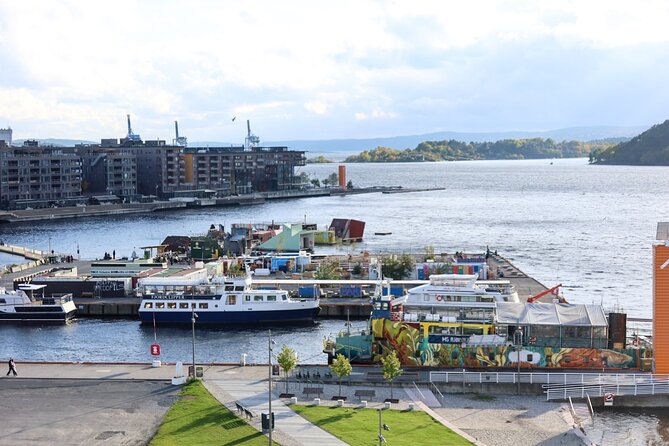
From there, you visit the grounds of a medieval fortress overlooking the harbor. The tour frames this as more than scenery. It is about defense, how Oslo protected itself, and how that past still shows up in the way you perceive the waterfront today.
Harbor viewpoints are where Oslo can feel both old and new at once. You get the sense of strategic thinking, ships, and trade routes that made the city valuable far beyond its borders.
And there is a small, memorable moment that can happen at the harbor viewpoint, a bell moment that many people remember because it is part of the experience rather than just a photo stop. Even if you focus on the story, you end up with something playful to hold onto.
Bankplassen and the Bank of Norway: Trade and Innovation Made Physical
At Bankplassen, you head to the Bank of Norway and hear how trade, banking, and innovation shaped Oslo’s growth into a modern capital. This is a less obvious topic than royal history or Nobel ceremonies, but that is exactly why it works.
The guide connects economic development to what you see around you. You start noticing how power is expressed in institutions, not only in palaces. It is also a helpful topic if you are wondering why Oslo became a global city with modern infrastructure while still protecting a strong sense of national identity.
Time is kept reasonable, so you get the core ideas without turning the walk into a lecture. Admission is listed as free for this tour, so again, you get value while keeping momentum.
Deichman Bjorvika: The World-Class Library Break You Actually Want
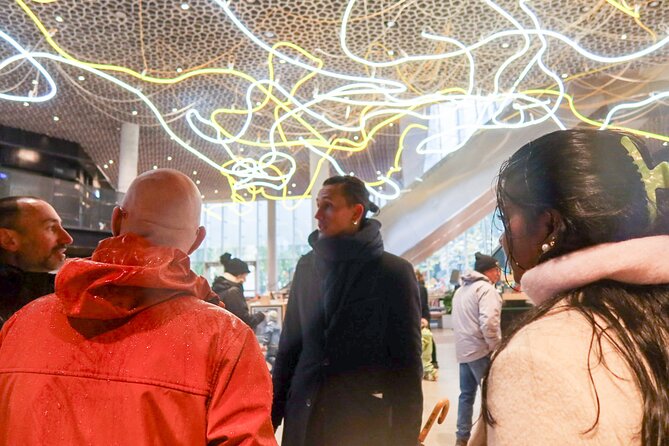
One of the most pleasant stops is Deichman Bjorvika, a library named as the most beautiful library in the world. The best part is what you can feel when you step inside: light, openness, and a calm atmosphere that fits Norwegian design.
This is not a long sit-down break, but it gives your brain a reset. After walking through ceremonial and historic sites, the library stop shifts you into modern Oslo in a way that feels quiet and human.
If you care about design, you will likely enjoy noticing how the architecture supports reading and focus. If you just want a breather, this still delivers. Admission is listed as free, so it is a low-cost, high-comfort pause.
Oslo Opera House Pier and the Munch Museum View Across the Water
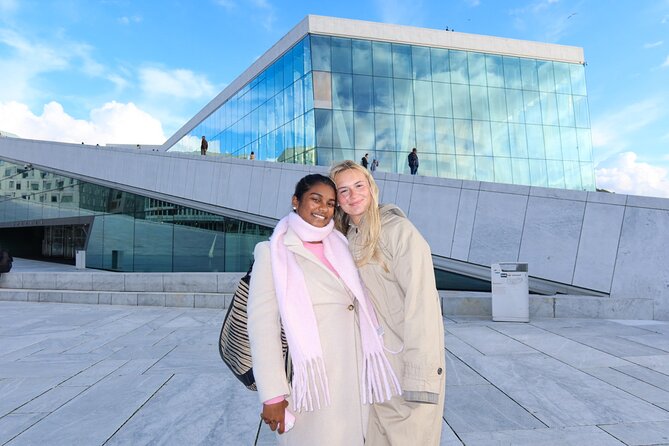
The tour then reaches the Oslo Opera House area, where you get a short break by the pier. The views are the point: the Opera House and the Munch Museum across the water create that modern skyline feeling that makes Oslo look like a European city with a future.
This stop also helps you frame the waterfront. Even if you plan to visit the Opera House or museum later, you start understanding how the buildings relate to the fjord and why the area has become such a signature “Oslo moment.”
Admission is listed as free for this tour, and the time here is short enough that you do not lose your sense of the day’s structure.
Oslo Central Station Finish: Your Orientation Payoff
Finally, you end at Oslo Central Station in the middle of everything. Ending here is smart because it is where you naturally want to be if you are continuing to another area or getting back to your hotel.
You leave with a clearer mental map. You also know which parts of Oslo are tied to international history (Nobel), national ceremony (City Hall), politics (Parliament), and modern culture (library and Opera House). That makes your self-guided exploration after the walk easier.
And if you are the type who likes photos, guides on this route often help at viewpoints so the group actually gets usable pictures, not just everyone awkwardly holding their phone in the wind.
Who This Walking Tour Suits Best
This is a great fit if you:
- Are visiting Oslo for the first time and want a quick orientation that still teaches you something.
- Prefer stories over facts-on-facts, and you like humor mixed into history.
- Want a small group experience, with a maximum of 10 people.
- Plan to keep exploring after, since the tour ends at the city’s main rail hub.
It is less ideal if you want a long museum day. Several stops are designed for quick context and exterior views, with only limited time at each point.
Physical comfort matters too. The tour notes a moderate physical fitness level, which makes sense for 3 hours of walking around central Oslo. You will be fine if you can handle uneven pavement and cool, windy outdoor weather.
Should You Book This Oslo Walk?
I think you should book it if your goal is a clear, story-led overview that helps you navigate Oslo quickly. The combo of Nobel Peace Center, City Hall, Parliament area, Christian IV’s rebuilding story, Deichman Bjorvika, and the Opera House view gives you a well-rounded “why Oslo is Oslo” picture in one afternoon.
Skip it only if you already plan to focus deeply on indoor museums for the day. In that case, you might want a tour that spends more time inside fewer places. But for a first-timer day, or for travelers who want to feel confident after just a few hours, this route is a strong choice.
FAQ
How long is the Oslo History and Secrets tour?
The tour lasts about 3 hours.
Is the tour in English?
Yes, the tour is offered in English.
Where does the tour start and end?
It starts at the Royal Palace, Slottsplassen 1, Oslo, Norway, and ends at Oslo Central Station, Jernbanetorget 1, Oslo, Norway. The finish point is by the tiger in front of the train station.
Do I need cash or physical tickets?
You use a mobile ticket for this experience.
What is the maximum group size?
The tour has a maximum of 10 travelers.
Are admissions included or free at the stops?
The itinerary indicates admission tickets are free for the stops listed in the tour.
Is the tour suitable for someone with moderate physical fitness?
Yes, the tour notes that travelers should have a moderate physical fitness level.
Is the tour near public transportation?
Yes, it is near public transportation.
Can I bring a service animal?
Yes, service animals are allowed.
What is the cancellation policy?
You can cancel for a full refund if you do it up to 24 hours in advance. If you cancel within 24 hours of the start time, the amount paid is not refunded.
Recently added around Oslo
- 4 hours Best View of the Oslofjord Winter Edition★ 4.0 · 15 reviews
- Oslo Winter Highlights Bike Tour★ 5.0 · 36 reviews
- Winter Forest Walk and Campfire by Torchlight in Oslo★ 4.5 · 20 reviews
- Viking Planet Oslo Combination Ticket (Museum +VR Game)★ 4.0 · 13 reviews
- Unknown war. Oslo and Norway during 1940-45★ 5.0 · 74 reviews
- The Ultimate Norwegian Skiing Experience★ 5.0 · 16 reviews
- The Viking Planet Museum – Mini Group (4 adults)★ 4.0 · 16 reviews
- The Ultimate Study of the Human Form at Vigeland’s Sculpture Park with a Local★ 4.0 · 14 reviews
Historical Tours, compared.

Reindeer Camp and Sami Cultural Tour with Lunch
Read our review →
Sámi Reindeer Sledding and Sami Cultural Tour
Read our review →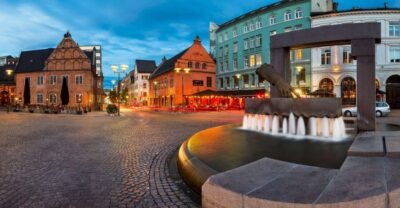



Browse the lists this tour appears in