

Review · WALKING TOURS
Oslo: City Center Walking Tour
Oslo changes fast when you walk it. This small-group city walk strings together the biggest sights, with guides like Nicola and Jessie who keep the stories clear and the pace relaxed. I especially like how the route links modern Oslo to the old power centers, from the Opera House to Akershus Fortress. The one drawback to plan for is simple, cold weather and rain, because you are outside for nearly the whole time.
You meet at the Tiger statue in front of Oslo Central Train Station, and you should be ready to start on time, rain or snow. The tour runs about 90 minutes in real life, even though the booking window can show a slightly longer total, so wear good shoes and keep your phone charged for photos.
In This Review
- Key Highlights You Should Know Before You Go
- Why This Walking Tour Feels Like the Best First-Day Option in Oslo
- Meeting at the Tiger Statue, and How to Get Started Smoothly
- Oslo Opera House: Modern Architecture You Actually Understand While Walking
- Oslo Børs and Christiania Torv: Finance and Power Stories in Plain Sight
- Akershus Fortress: The Medieval Wall That Still Touches Modern Oslo
- Aker Brygge and the Nobel Peace Center: Turning an Award Into a Place
- Oslo City Hall, National Theatre, and the Royal Palace: Reading Façades Like Clues
- University Aula, Karl Johans gate, and the Storting: How Oslo Channels Movement Into Meaning
- Price and Value: Is $22 Worth It for About 90 Minutes?
- Pacing, Timing, and What to Bring for a Comfortable Walk
- Who This Tour Fits Best, and Who Might Prefer Something Else
- Should You Book This Oslo City Center Walking Tour?
- FAQ
- Where do I meet the guide?
- How long is the tour?
- Is the tour in English?
- What is the price?
- Is the tour wheelchair accessible?
- Is it possible to cancel for a refund?
Key Highlights You Should Know Before You Go
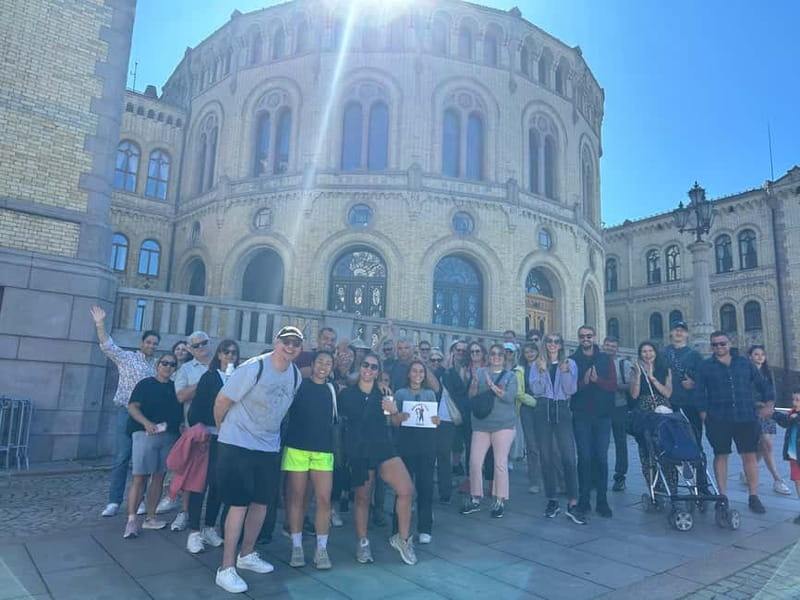
- Start at the Tiger outside Oslo Central Train Station, easy to find and good for a first-day arrival
- Opera House views on a guided walk, modern architecture with national arts context
- Akershus Fortress, from medieval defense to today, plus real current use (prime minister temporary office)
- Nobel Peace Center stop at Aker Brygge, where the Nobel Prize is turned into a place you can walk through
- Karl Johans gate to the Storting, the city’s main street to Norway’s Parliament building
- Small group pacing, helped by guides who answer questions and keep things comfortable
Why This Walking Tour Feels Like the Best First-Day Option in Oslo

If you arrive in Oslo and want to understand the city without bouncing around by taxi, this is a smart format. You get a tight loop through landmarks that define Oslo’s self-image, arts and culture first, then defense and government, then the major ceremonial streets.
I like that the tour does not treat these places like checkboxes. The guide ties each stop to a bigger idea, like how Oslo plans for public life, how Norway presents its institutions, and how the city uses space along the water. Guides such as Nicola and Jessie come through with an energetic style that makes the walk feel friendly, not like a lecture. One guide also gets praised for keeping a good pace, which matters when you are mixing sightseeing with walking time.
One thing to consider before you book is how you feel about walking in winter light and weather. The route is doable, but it is not a sit-down tour, so dress for the outdoors and bring a layer you will not regret.
More City Tours in Oslo
- Oslo: City Sightseeing Hop-On Hop-Off Bus Tour
★ 3.6 · 724 reviews - Oslo: Grand City Sightseeing Tour by Bus with Fjord Cruise
★ 4.6 · 647 reviews - Oslo Combo Tour: Grand City Tour and Oslo Fjord Cruise
★ 4.5 · 555 reviews
Meeting at the Tiger Statue, and How to Get Started Smoothly
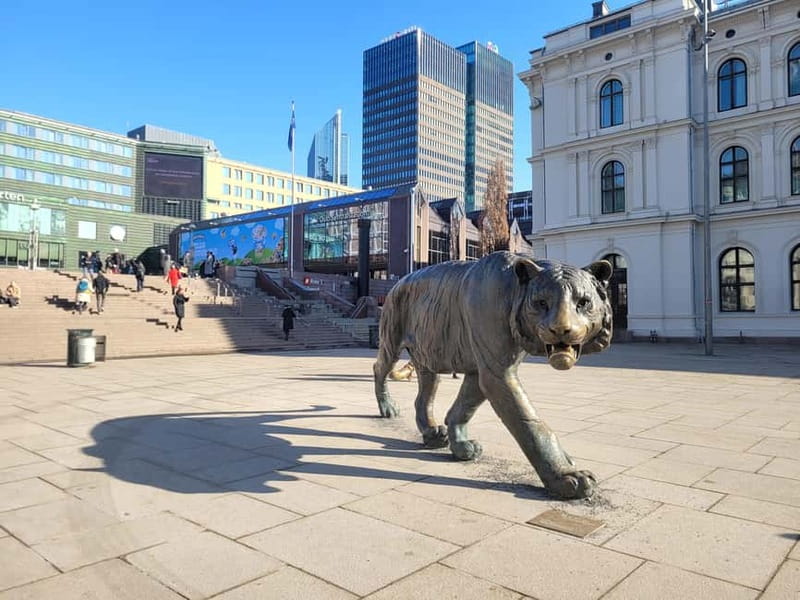
The meeting point is simple: stand by the Tiger statue in front of Oslo Central Train Station and look for the guide holding a CITY WALKING TOUR OSLO sign. This is a practical setup. If you are arriving by train, you are basically already there. If you are coming from a hotel, Oslo Central is one of the easiest landmarks to use as your navigational anchor.
Once the group is together, the tour starts right on time, rain or snow, and you will begin with a walk toward the Opera House. That early start direction is helpful, because you ease into the city center without backtracking.
A good trick for any city walking tour is to pick a meeting time you can honor calmly. If you show up stressed, the first few minutes can feel rushed. Here, you want to settle into the rhythm early, because the guide’s job is to make connections between places while your feet are still fresh.
Oslo Opera House: Modern Architecture You Actually Understand While Walking
The first big wow stop is the Norwegian National Opera and Ballet building, the Oslo Opera House. It is modern, and it is designed to be seen from more than one angle as you move around it. The tour gives you a guided look, not just a photo stop, which is the difference between seeing a building and getting why people talk about it.
What I like is that the tour frames the Opera House as a cultural hub, not only a landmark. You connect the look of the building to what it represents in Norwegian life: major performances and national-level arts.
If you are a photography person, plan your camera settings for winter or overcast skies. The bright exterior can still produce crisp shots, but the light may be gray, so having your phone ready and steady helps.
The only drawback here is also a common one in Oslo sightseeing. The Opera House area can be popular, so if you want wide, uncluttered views, keep your expectations realistic and let the guide control the timing a bit.
Oslo Børs and Christiania Torv: Finance and Power Stories in Plain Sight
After the Opera House, the walk heads toward Oslo Børs, the stock exchange in the Nordic area. The tour highlights that Oslo Børs offers Norway’s only regulated markets for securities trading. That detail matters because it helps you see why this part of the city has a particular kind of importance. You are not just passing buildings, you are moving through the geography of decision-making.
Next comes Christiania Square, where you will see the Christian IV glove monument. The tour keeps the meaning as a day-of surprise, which is honestly a good approach. Instead of forcing a pre-read from your phone, you get the explanation on the spot when the monument is right there, in context.
I like this pairing, Oslo Børs and Christiania Torv, because it shows Oslo’s mix of practical power and symbolic power. Finance and monarchy do not feel like separate worlds when you connect them by geography and timing on one walk.
Possible consideration: if you want every detail spelled out in advance, you might feel impatient when the guide says there is a surprise coming. But if you enjoy learning in sequence, it makes the walk more satisfying.
More Walking Tours in Oslo
- Oslo: Guided Walking Tour of Central Oslo with Local Guide
★ 4.7 · 936 reviews - Oslo: Best of Oslo Walking Tour
★ 4.5 · 458 reviews - Oslo: Historic Myths & Legends Evening Walking Tour
★ 4.8 · 408 reviews - Taste of Oslo Walking Tour
★ 4.5 · 282 reviews
Akershus Fortress: The Medieval Wall That Still Touches Modern Oslo
Akershus Fortress is the anchor stop for the day, and it is a fantastic contrast to the modern Opera House. The fortress dates to the 13th century and was built for defense and as a royal residence. Over time, the site served as a military base and even as a prison.
What makes this stop feel current is the way the tour connects the past to now. The fortress today includes the prime minister temporary office. That detail turns a stone-and-history setting into a living part of government life, even if access and security mean you experience it from outside viewpoints.
When I think about why fortress stops are worth your time on a walking tour, it is because you get scale. You notice walls, angles, and strategic placement in a way that is hard to grasp from a single viewpoint photo. Here, you get that by walking from one segment of the center to another, so your eyes keep adjusting and learning.
The only real caution is weather footing. Fortress areas can have uneven surfaces or slick patches in snow or rain. Wear shoes with good grip and take your time on steps and corners.
Aker Brygge and the Nobel Peace Center: Turning an Award Into a Place
From Akershus Fortress, the route continues toward Aker Brygge, where the Nobel Peace Center is located. The tour gives you a guided pass near the center and explains what it represents: a showcase for the Nobel Peace Prize and the ideals behind it.
Even if you already know the Nobel Peace Prize, a place like this changes the way you think about it. You stop treating the prize as a headline and start seeing it as a physical space dedicated to peace as a concept, not only as an outcome.
This segment is also a nice pace adjustment. After the fortress, you shift to a more open, waterfront-feeling area. That helps you reset your legs, and it breaks the day into two emotional themes: security and governance, then global ideals and public attention.
Practical tip: if you want photos, this is a good time to check the sky and angles. Water-adjacent areas can reflect light, and gray days can still give you clean shots if you aim slightly away from the brightest patches.
Oslo City Hall, National Theatre, and the Royal Palace: Reading Façades Like Clues
As the walk continues, you pass iconic buildings including Oslo City Hall, the National Theatre, and the Royal Palace. The tour approach here is simple and effective: you are encouraged to look at the façades, then learn the backstory behind what you are seeing.
This is where the guide style matters. The best guides do not just name buildings. They point out elements you would miss if you were sightseeing on your own. That is how you start noticing details like style shifts, design choices, and how different institutions present themselves to the public.
I like this part of the tour because it teaches your eyes. After a couple of stops, you start looking at symmetry, entrances, and how ornament communicates status. Even if you are not an architecture expert, you get the basics quickly.
One consideration: if you are expecting long interior visits at every stop, you might be a little disappointed. This walk is designed for outside viewing and short, guided context. Still, for most first-time visitors, it is a great return on time.
University Aula, Karl Johans gate, and the Storting: How Oslo Channels Movement Into Meaning
The tour’s next segment takes you toward University Aula, located on the old campus. Even without going deep into academic details, it is a solid sight because it adds a different kind of authority to the walk. You have already covered monarchy and politics and finance. University space adds education and public thought into the mix.
Then you end up on Karl Johans gate, the city’s main street. The walking flow here is useful. Main streets are where you can feel the city’s daily rhythm without having to interpret it from a map.
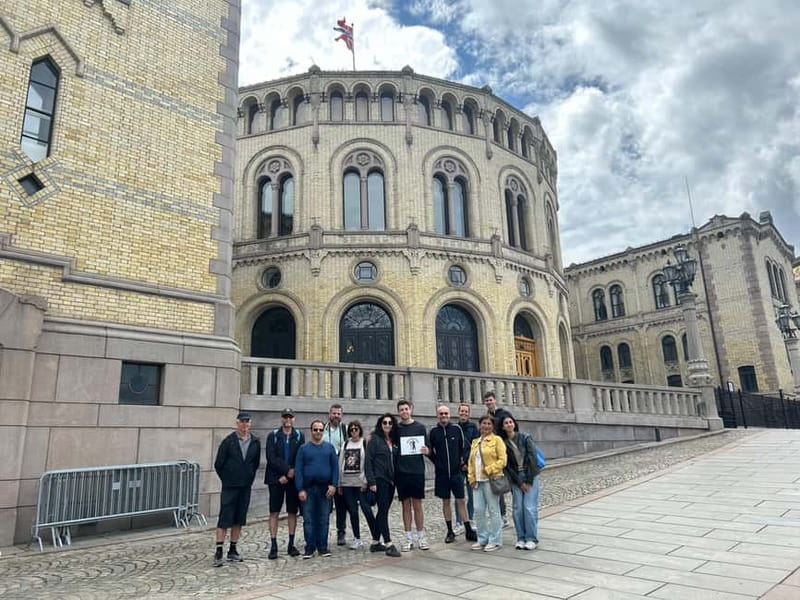
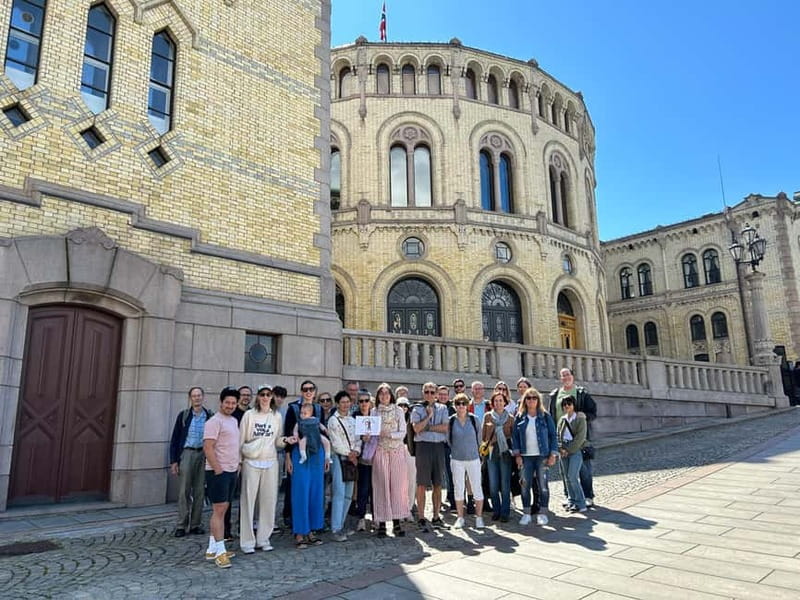
Along Karl Johans gate you see the Storting building, the Norwegian Parliament. The guide wraps up the walking tour after admiring the Parliament architecture. For me, this ending is satisfying because it brings the whole loop together: from medieval defense to modern leadership, and finally to national law.
If you have limited time in Oslo, ending with the Parliament area is also helpful for practical navigation. It places you near major city center connections, so you can keep going afterward with less guesswork.
Price and Value: Is $22 Worth It for About 90 Minutes?
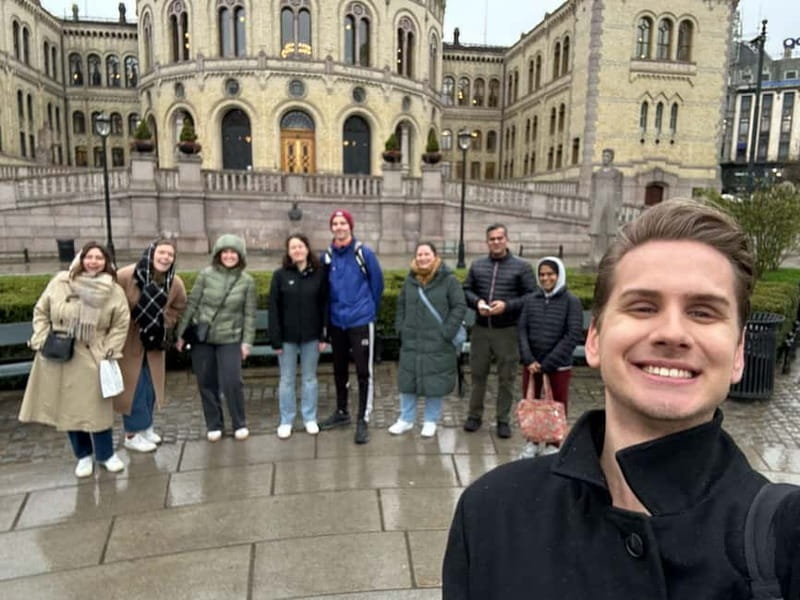
At about $22 per person, this walk lands in the reasonable category for a guided, high-impact city loop. You are paying for local context plus a route that hits several of Oslo’s top landmarks without you needing to plan a multi-stop itinerary yourself.
The value is strongest if you match the tour purpose to your needs. If you want a first day orientation and you like learning while you walk, $22 can be a bargain compared to spending time and money trying to figure out what to see and why. Guides praised for enthusiasm and engagement are exactly the ingredient that turns a short walk into something you actually remember.
One thing to watch is the pricing vs similar walking options you might see in Oslo. A comment from a past booking suggests the walking route may overlap with a free walking tour format. If that matters to you, decide what you value more: paying for a set spot here or choosing a free option and tipping in person. Either can make sense, depending on how you like to travel.
Pacing, Timing, and What to Bring for a Comfortable Walk
The tour starts on time, rain or snow, and lasts about 90 minutes, with booking details showing a slightly longer window. That means you should plan your day as if it is closer to a solid hour and a half outside.
Small groups help here. They mean the guide can answer questions without slowing down for too long, and they mean you are not stuck behind a huge line at every street corner. Reviews also highlight guides keeping a good pace and making people feel welcome and relaxed, which is a big deal when you are walking in winter.
Bring the basics:
- Comfortable shoes with grip
- A warm layer, plus rain protection if the forecast looks uncertain
- A charged phone for photos and quick translation needs
- Curiosity. The best moments happen when you ask what something means in Norwegian culture
If you are sensitive to cold, you might want to avoid planning this as your only outdoor activity. Use it as your orientation walk, then schedule indoor time nearby for breaks.
Who This Tour Fits Best, and Who Might Prefer Something Else
This tour is a great fit if:
- You want an easy way to see major Oslo center highlights in one go
- You like guided storytelling and a calm pace
- You are traveling solo or with friends and you want structure without rigidity
It is also ideal for a first day, because it gives you a mental map of how Oslo is put together, from royal and political spaces to cultural landmarks.
You might choose a different style of tour if:
- You need lots of indoor museum time during your trip
- You dislike cold weather walks, even for about 90 minutes
- You prefer self-guided control, with no group pace
Should You Book This Oslo City Center Walking Tour?
If your goal is to get oriented fast and see Oslo’s key symbols in a single loop, I think you should book it. The price feels fair for what you get, especially with guides like Nicola and Jessie earning praise for clear information and an easygoing pace. You also end in a strong location near the Parliament area, which makes it easier to keep exploring afterward.
I would book it confidently if you enjoy walking and you want context, not just photos. If you want nonstop indoor stops or you strongly dislike weather-driven outdoor time, then look at a different format. But for most visitors, this is one of the most practical ways to understand what Oslo values, and where you should spend the rest of your day.
FAQ
Where do I meet the guide?
Meet in front of Oslo Central Train Station by the Tiger statue. Look for the guide standing next to the statue holding the sign CITY WALKING TOUR OSLO.
How long is the tour?
The tour is listed for 105 minutes, and the actual walking time is about 90 minutes.
Is the tour in English?
Yes, the live tour guide is English.
What is the price?
The price is $22 per person.
Is the tour wheelchair accessible?
Yes, the tour is wheelchair accessible.
Is it possible to cancel for a refund?
Yes. Free cancellation is available up to 24 hours in advance for a full refund.
Recently added around Oslo
- 4 hours Best View of the Oslofjord Winter Edition★ 4.0 · 15 reviews
- Oslo Winter Highlights Bike Tour★ 5.0 · 36 reviews
- Winter Forest Walk and Campfire by Torchlight in Oslo★ 4.5 · 20 reviews
- Viking Planet Oslo Combination Ticket (Museum +VR Game)★ 4.0 · 13 reviews
- Unknown war. Oslo and Norway during 1940-45★ 5.0 · 74 reviews
- The Ultimate Norwegian Skiing Experience★ 5.0 · 16 reviews
- The Viking Planet Museum – Mini Group (4 adults)★ 4.0 · 16 reviews
- The Ultimate Study of the Human Form at Vigeland’s Sculpture Park with a Local★ 4.0 · 14 reviews
Walking Tours, compared.
Past & Present Small Group Guided Walking Tour
Read our review →
Walking Tour in Bergen of the Past and Present
Read our review →
Guided Walking Tour of Central Oslo with Local Guide
Read our review →

Browse the lists this tour appears in