

Review · WALKING TOURS
Central Oslo Guided Walking Tour with Local Guide
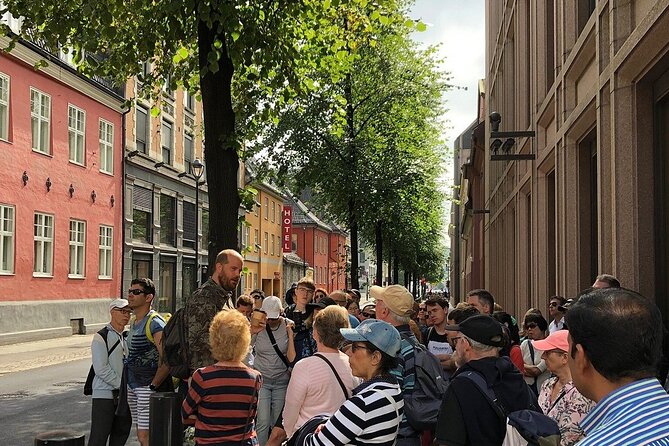
Oslo feels different on foot. In just about 2 hours, this central guided walk strings together the city’s biggest landmarks, with a local guide sharing stories that make the places click, starting at the Tigeren statue at Jernbanetorget. You get to place Oslo on the map, fast, without spending your whole day hopping between sites.
Two things I really like: first, you see the full range of Oslo, from modern architecture at the Opera House to medieval defense at Akershus Fortress. Second, the route includes the political and ceremonial heart of Norway, with stops tied to how the country presents itself, like the Nobel Peace Prize connection at Oslo City Hall. One thing to keep in mind: this tour is outdoors and viewpoints only, so you should not expect to tour inside museums or public buildings.
In This Review
- Key highlights that make this walk worth it
- Why a 2-hour central Oslo walk is a smart first move
- Tigeren pa Jernbanetorget: the Tiger City welcome
- Oslo Opera House waterfront stop: modern architecture you can actually read
- Rådhusgata to City Hall: the street that leads to power
- Akershus Fortress: from medieval defense to a historical site
- Oslo Cathedral and Karl Johans gate: the classic Oslo rhythm
- Aker Brygge and the Storting: waterfront reinvention meets democracy
- Ending at the Royal Palace: finish with a landmark, not a dead end
- Price, group size, and what you truly get for $16.94
- Practical tips so you enjoy every stop
- Should you book this Central Oslo guided walking tour?
- FAQ
- What is the duration of the Central Oslo Guided Walking Tour?
- How much does the tour cost?
- Where does the tour start and end?
- Is the tour in English?
- Are you visiting inside any buildings?
- What is included in the tour?
- What size groups should I expect?
- What should I know about weather?
- Is there free cancellation?
Key highlights that make this walk worth it
- Tigeren pa Jernbanetorget: the Tiger City symbol from Oslo’s millennium year, right in the action
- Oslo Opera House exterior views: contemporary waterfront architecture that you can read from the street
- Akershus Fortress complex: protection in the late 1200s, now a major historical site
- Oslo City Hall focus: a building built in the mid 20th century, tied to the Nobel Peace Prize ceremony
- Karl Johans gate and the cathedral: the classic central street plus Baroque religious architecture
- Aker Brygge and Storting area: shipyard past turned into a prime waterfront district, then Parliament next
Why a 2-hour central Oslo walk is a smart first move
If you only have a short window in Oslo, this kind of guided loop is exactly what you want. The route is built for orientation, meaning you’ll learn how the city parts connect: the transit hub area, the ceremonial core, and the waterfront all in one go.
At about 2 hours, the pacing tends to stay comfortable. It is long enough to feel like you got something real, but short enough that you can still spend the rest of your trip choosing what you want to return to on your own. Reviews highlight that guides keep things conversational, not lecture-y, and they make time for questions. Names that came up in feedback include Suzanne and Alexia, plus others like Marta, Kamil, Daniel, and Camille, and the common thread is humor mixed with clear context.
The group size is capped at 27, and many departures feel on the larger side. That matters if you are picky about hearing every detail, since street noise can be a factor. Still, the overall feedback is that guides manage the group well and keep everyone together.
More Walking Tours in Oslo
- Oslo: Guided Walking Tour of Central Oslo with Local Guide
★ 4.7 · 936 reviews - Oslo: Best of Oslo Walking Tour
★ 4.5 · 458 reviews - Oslo: Historic Myths & Legends Evening Walking Tour
★ 4.8 · 408 reviews
Tigeren pa Jernbanetorget: the Tiger City welcome
Your tour starts at TigerJernbanetorget, at the Tigeren pa Jernbanetorget sculpture. This is not a random ornament. The Tiger statue was erected in 2000 to commemorate Oslo’s millennium, and it is the visual shorthand for the city nickname “Tiger City.”
Here is what you should look for in this first moment. Pay attention to how the statue anchors the whole experience: it instantly tells you Oslo wants to brand itself, modern identity included. Your guide will connect that nickname to the city story, which is useful because Oslo can feel a little “organized” at first glance, especially if you are coming from places with less planning.
This stop is quick, around 10 minutes, and that is intentional. You start with an easy win, then you move into the heavier themes: architecture, governance, and the way Oslo has evolved from defense and commerce to a polished capital.
Oslo Opera House waterfront stop: modern architecture you can actually read
Next you head toward the Oslo Opera House. Even if you never step inside, it is one of those buildings you can study from the outside and still understand why it matters. Completed in 2008, it is the home of the Norwegian National Opera and Ballet, and its waterfront location is part of the design story.
What makes this stop useful on a walking tour is the scale and placement. From street level, you get a “street-to-water” sense of where the building sits in Oslo’s geography. Then your guide can help you connect it to the broader theme of Oslo reinventing itself, especially through architecture and public spaces.
This is also a good photo stop, because it tends to give you both the clean lines of contemporary design and the broader city mood around the harbor area. If your timing hits a busy period, just be patient, because the best angles are often near corners and edges rather than in the densest crowd spot.
Rådhusgata to City Hall: the street that leads to power
After the Opera House area, you walk into Rådhusgata. This is a historic central street built in the 1620s, and it leads toward Oslo’s City Hall. On foot, it becomes more than a street name. It becomes a line you can follow through time, from older city fabric to modern civic architecture.
Then you reach Oslo City Hall, a landmark built from 1931 to 1950. Your guide will point out why this building is more than administrative offices. It symbolizes Norwegian administrative, social, and cultural ideals, and it is renowned for hosting the Nobel Peace Prize ceremony annually.
Even without entering, you can still get value here. The outside view gives you a sense of official scale, and learning about the Nobel ceremony connection helps you understand why this place matters nationally. This is one of the stops where stories can shift your understanding from sightseeing to meaning.
Time is about 15 minutes at the City Hall stop, which is just right. Enough to notice details and hear the key connections, without dragging your momentum.
Same corner of the country, a completely different day out:
- Oslo: Oslo Fjord Sightseeing Cruise by Sailing Ship
★ 4.5 · 5,790 reviews - Oslo: Scenic Fjord Cruise with Audio Guide Commentary
★ 4.5 · 5,375 reviews - Oslo Nature Walks: Island Hopping Tour
★ 4.8 · 2,713 reviews - Oslo: 24 or 48-Hour Hop-On Hop-Off Sightseeing Bus GrayLine
★ 4.0 · 2,088 reviews
Akershus Fortress: from medieval defense to a historical site
One of the biggest “wow” stops on this walk is Akershus Fortress. The fortress is tied to Oslo’s defensive past, built in the late 13th century, around 1299. Historically, it was meant to protect Oslo from invasions. Over time it also served as a military base and a prison, and today it functions as a museum and historical site.
Because the tour is not focused on interior visits, you should think of this stop as “fortress complex and viewpoints,” not a museum deep-dive. You’ll still get the core value, which is perspective. From the outside, the fortress layout and setting help you grasp how Oslo used to protect itself, and how the city grew around those walls.
Why this stop is worth prioritizing even if you like modern places: it gives you the missing timeline. Oslo’s present tends to look sleek. Akershus reminds you it has old roots underneath, and the transition from medieval purpose to modern cultural space becomes the story your guide ties together.
Oslo Cathedral and Karl Johans gate: the classic Oslo rhythm
After the fortress and civic buildings, the route moves into the traditional center. You stop at the Oslo Cathedral, originally constructed in 1697. The cathedral is known for Baroque architecture, and it has undergone multiple renovations, including major changes in the 20th century. It remains an important cultural and religious site.
This is a great stop for architecture lovers, but also for everyone else, because it shows you how Oslo’s central identity is not just modern. Baroque design gives you a different feel than the government buildings or the waterfront modernism.
Then you walk along Karl Johans gate, Oslo’s main street. It stretches from the Royal Palace to Oslo Central Station. Established in the 19th century, it is packed with historic buildings, shopping, dining, and cultural sites. On foot, Karl Johans gate works like a spine. You feel where people gather, where the city energy moves, and how the center connects.
The tour keeps this section efficient, with a short stop around 10 minutes. So if you want to explore Karl Johans gate more, treat the walk as your starter map. You’ll know where to return later.
Aker Brygge and the Storting: waterfront reinvention meets democracy
As the walk heads back toward the harbor-side district, you reach Aker Brygge. It is now one of Oslo’s most popular shopping, dining, and entertainment areas. But the story is built on transformation: it started as a shipyard established in 1854, then it was transformed into its current form in the 1980s.
That history matters because it changes how you read the waterfront. You are not just looking at pretty buildings. You are seeing how an industrial past turned into public space. Your guide’s context helps you connect the street scene to the earlier function of the area.
After Aker Brygge, the route includes the Storting building, the seat of the Norwegian Parliament. Construction dates back to 1861 to 1866, and it is known as a prominent example of 19th-century architecture, tied to Norway’s democratic values.
This part of the tour is powerful because you go from a place shaped by commerce and shipping to a place shaped by lawmaking. Together, they show Oslo’s dual themes: how it builds systems and how it builds spaces.
Ending at the Royal Palace: finish with a landmark, not a dead end
The tour ends at the square in front of the Royal Palace, Det Kongelige Slott, at Slottsplassen 1. This finish is smart. Instead of ending in a random side street, you close at a landmark that functions like a reference point.
From here, you can decide what you want to do next. If you want more architecture photos, Karl Johans gate is nearby. If you want to keep exploring the center, you are in the right place to move in any direction without second guessing.
In other words, the ending is practical. You get a clean stop, then you take over.
Price, group size, and what you truly get for $16.94
The price is $16.94 per person, for about 2 hours with a live, local guide. That is good value if your goal is orientation and context rather than admissions.
Remember, the tour does not include visits inside buildings. So if your ideal day is museum time and guided interior access, you should use this tour as the “shape of the city” step, then plan separate time for any sites that interest you most.
As for group size, the maximum is 27 travelers, and reviews often mention the group being large but controlled. Guides like Suzanne and Daniel are specifically praised for managing big groups, keeping the pacing on track, and staying engaging. One note from feedback: on very rainy or noisy days, you might find hearing a bit harder at times, depending on where you stand and the street conditions.
Still, the overall rating is 4.7 with 94% recommended, which lines up with what this route is designed to do: hit the big central sights quickly, give you the stories behind them, and help you pick next-day priorities.
Practical tips so you enjoy every stop
A few things will make your walk smoother.
First, wear comfortable shoes. This is a walking tour through central Oslo, including multiple blocks and several areas with steps and edges. Reviews mention the walking is manageable for many people, but you should not plan on it being a stroll where you barely move.
Second, bring layers. Oslo weather can shift, and some tours are described as enjoyable even when it rains. If rain is likely, a compact rain layer beats guessing.
Third, use your time with the guide. The strongest reviews mention humor, clear explanations, and Q and A. If you care about one theme, like Norway politics, royal history, or Scandinavian rivalries, ask. A good guide can tailor your understanding without changing the fixed route.
Should you book this Central Oslo guided walking tour?
Book it if you want a fast, high-value introduction to central Oslo. This works especially well on your first day because you will come away with a mental map: transit hub landmarks, ceremonial buildings, the cathedral, the main street, the waterfront reinvention at Aker Brygge, and the Parliament area, all ending at the Royal Palace.
Skip it if your top goal is interior access to museums and buildings. Since the tour focuses on exterior viewing and walking context, you will still see the big structures, but you won’t get “inside tour” time.
If you fall in the middle, like most first-timers do, I think you will enjoy it. The route is tight, the guides have a knack for mixing humor with facts, and at this price point, it is one of the easiest ways to start understanding Oslo instead of just collecting photos.
FAQ
What is the duration of the Central Oslo Guided Walking Tour?
It runs for about 2 hours.
How much does the tour cost?
The price is $16.94 per person.
Where does the tour start and end?
It starts at TigerJernbanetorget, 0154 Oslo and ends in front of the Royal Palace (Slottsplassen 1, 0010 Oslo).
Is the tour in English?
Yes, it is offered in English.
Are you visiting inside any buildings?
No. The tour does not include visits inside buildings.
What is included in the tour?
A personalized knowledgeable guide for the group is included.
What size groups should I expect?
The tour has a maximum of 27 travelers.
What should I know about weather?
It requires good weather. If it is canceled due to poor weather, you will be offered a different date or a full refund.
Is there free cancellation?
Yes. You can cancel for a full refund up to 24 hours in advance of the experience start time.
Recently added around Oslo
- 4 hours Best View of the Oslofjord Winter Edition★ 4.0 · 15 reviews
- Oslo Winter Highlights Bike Tour★ 5.0 · 36 reviews
- Winter Forest Walk and Campfire by Torchlight in Oslo★ 4.5 · 20 reviews
- Viking Planet Oslo Combination Ticket (Museum +VR Game)★ 4.0 · 13 reviews
- Unknown war. Oslo and Norway during 1940-45★ 5.0 · 74 reviews
- The Ultimate Norwegian Skiing Experience★ 5.0 · 16 reviews
- The Viking Planet Museum – Mini Group (4 adults)★ 4.0 · 16 reviews
- The Ultimate Study of the Human Form at Vigeland’s Sculpture Park with a Local★ 4.0 · 14 reviews
Walking Tours, compared.
Past & Present Small Group Guided Walking Tour
Read our review →
Walking Tour in Bergen of the Past and Present
Read our review →
Guided Walking Tour of Central Oslo with Local Guide
Read our review →

Browse the lists this tour appears in