
Review · WALKING TOURS
Hipstoric Grünerløkka Private Walking Tour
Oslo has a second face. This private walking tour threads through local politics, working-class history, and the street-art and culture pockets that most visitors miss. You start in Youngstorget and end at Mathallen OsloVulkan, with a guide who brings the neighborhood to life along the way.
I especially like how the route balances big-city landmarks with smaller corners, like Kulturkirken Jakob and the cemetery grounds where Ibsen and Munch are resting. I also love the way the walk stays practical, mostly free stops, so your time and money go into the commentary, not ticket lines. The main drawback is the price, $237.12 per person, which can feel steep if you are traveling solo or on a tight budget.
Here is the good news. The tour is short enough to stay lively, about 3 hours, and it is built around a lot of compact, high-impact stops. And if you get a guide like Inger or Bjorn, you will likely get clear, thoughtful answers to your questions, not a script read from memory. Wear comfy shoes, because it is still a walking tour in Oslo weather.
In This Review
- Key Highlights You Will Feel in Your Feet
- Setting Off at Youngstorget, Where Politics Happens in Public
- Torggata and Kulturkirken Jakob, Two Stops That Explain Oslo’s Everyday Story
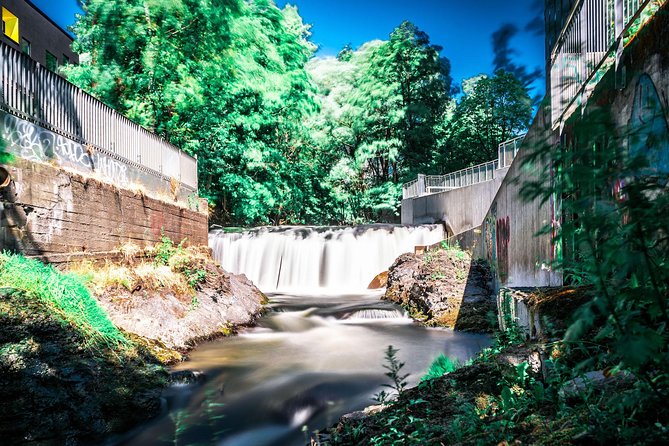
- Akerselva, Oslo’s Green Lung, and the Mood Shift Into Nature Nearby
- Grünerløkka, the Fairytale Bridge Moment, and the Working-Class to Gentrification Story
- Olaf Ryes plass and Parkteatret, Plus a Munch Connection
- Blå and Brenneriveien, Street Art That Comes from Local Hands
- Damstredet Wooden Houses, Old Streets, and Great Photo Angles
- Our Saviour’s Memorial Cemetery and Old Aker Church, Where Culture Meets Deep Time
- Telthusbakken and Mathallen OsloVulkan, Ending With Food and a Final Creative Spark
- Price and Logistics, Is It Worth $237.12 Per Person?
- Who This Private Oslo Walk Fits Best
- Should You Book the Hipstoric Grünerløkka Private Walking Tour?
- FAQ
- Where does the tour start?
- Where does the tour end?
- How do I get back after the tour?
- How long is the walking tour?
- Is this a private tour?
- What language is the tour offered in?
- Are there admission fees for the stops?
- What fitness level do I need?
- Does it operate in bad weather?
- Are service animals allowed and is cancellation free?
Key Highlights You Will Feel in Your Feet
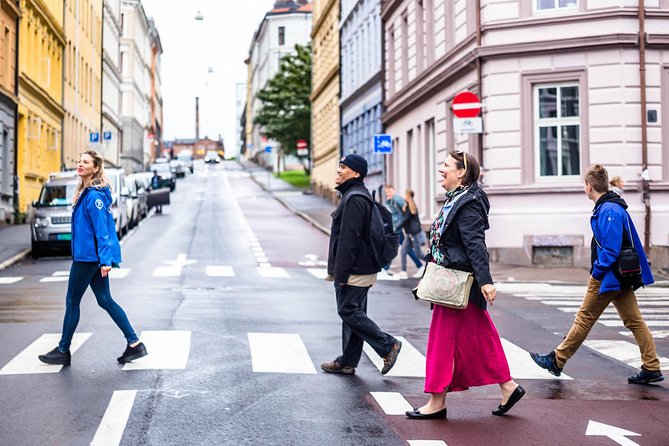
- Small-group focus with a real guide and plenty of time for questions, not a crowded cattle-queue vibe
- Grünerløkka street art route with street-level stops that make you look up and pull out your camera
- Akerselva river views plus parks and nature paths, so the walk has breaks from city grit
- Culture and creativity in unusual places, from Kulturkirken Jakob to the Parkteatret area
- Photo-friendly old wooden neighborhoods like Damstredet and Telthusbakken
Setting Off at Youngstorget, Where Politics Happens in Public
Your walk begins at Youngstorget, a square tied to Norway’s political life. It is close to the Government quarter, so you get that sense that decisions are made nearby, with rallies and speeches happening in the open air. Even if you are not there for a specific event, the square gives you the map of how Oslo thinks and organizes.
I like the way this start frames the rest of the tour. Instead of jumping straight to art and architecture, you learn how public spaces shape daily life. If your visit includes March 8 events or Pride season, this area becomes even more meaningful, because the square has hosted those kinds of marches and rallies.
More Walking Tours in Oslo
- Oslo: Guided Walking Tour of Central Oslo with Local Guide
★ 4.7 · 936 reviews - Oslo: Best of Oslo Walking Tour
★ 4.5 · 458 reviews - Oslo: Historic Myths & Legends Evening Walking Tour
★ 4.8 · 408 reviews
Torggata and Kulturkirken Jakob, Two Stops That Explain Oslo’s Everyday Story
Next is Torggata, or Square Street. It is one of those details that makes the city feel both real and playful, including the fact that it shows up in the Norwegian edition of Monopoly. That is the kind of fact you would not likely stumble on by yourself.
Then comes Kulturkirken Jakob, often described as a church of culture. It is rented long-term by Kirkelig Kulturverksted, and it functions as a venue for theatre, concerts, dancing, and other cultural expressions. The point is not just to see a building, it is to understand how Oslo repurposes spaces so culture stays close to daily life.
This section also gives you a useful rhythm: a quick landmark, a quick story, and then you keep moving. It is ideal if you want a morning or afternoon that feels busy but not exhausting.
Akerselva, Oslo’s Green Lung, and the Mood Shift Into Nature Nearby

After the city squares and venues, the walk turns toward Akerselva, the river that flows through Oslo. It is known as Oslo’s green lung, mainly because the parks and nature trails line the water. So even though you are in a city, the route feels like it breathes.
This part is especially good for anyone who wants a break from street crowds while still getting guided context. You get the practical payoff too: river-side paths tend to make walking calmer, and the photos usually look less like a postcard queue.
Grünerløkka, the Fairytale Bridge Moment, and the Working-Class to Gentrification Story
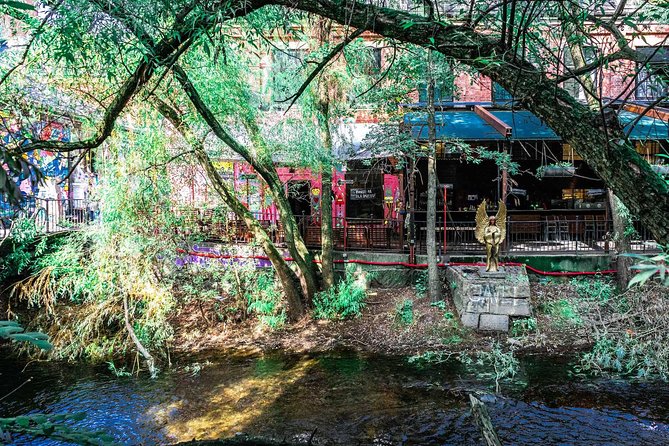
Crossing Akerselva and the Fairytale Bridge marks the shift into Grünerløkka. This district started as a traditional working-class area, then changed during the late 1900s as gentrification moved in. That single word matters, because it helps you understand why you see both older textures and newer creative energy close together.
You also get a clearer sense of how neighborhoods evolve in Oslo, not as a total wipeout, but as layered change. That is why this tour feels different from the usual sweep of only the most famous sights. You are looking at how people live, how communities shift, and how culture finds space in the middle of it.
Same corner of the country, a completely different day out:
- Oslo: Oslo Fjord Sightseeing Cruise by Sailing Ship
★ 4.5 · 5,790 reviews - Oslo: Scenic Fjord Cruise with Audio Guide Commentary
★ 4.5 · 5,375 reviews - Oslo Nature Walks: Island Hopping Tour
★ 4.8 · 2,713 reviews - Oslo: 24 or 48-Hour Hop-On Hop-Off Sightseeing Bus GrayLine
★ 4.0 · 2,088 reviews
Olaf Ryes plass and Parkteatret, Plus a Munch Connection
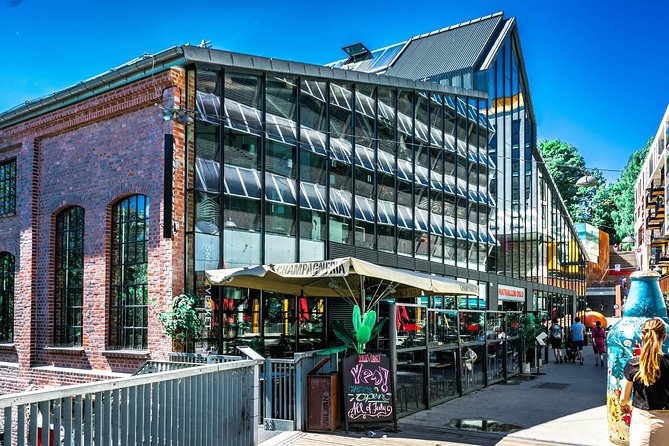
Next stop is Olaf Ryes plass, a park framed by three- and four-story buildings, many built in the late 1800s. This is one of those areas where you can feel the scale of the city turning human-sized, with a park at the center of older streets.
Two details make it stick: the area ties to a young Edvard Munch, and next to the park sits Parkteatret, one of Oslo’s well-known concert venues. The lesson here is subtle, but useful. Oslo does not treat culture as a distant attraction. It threads performance space into everyday streets.
Blå and Brenneriveien, Street Art That Comes from Local Hands
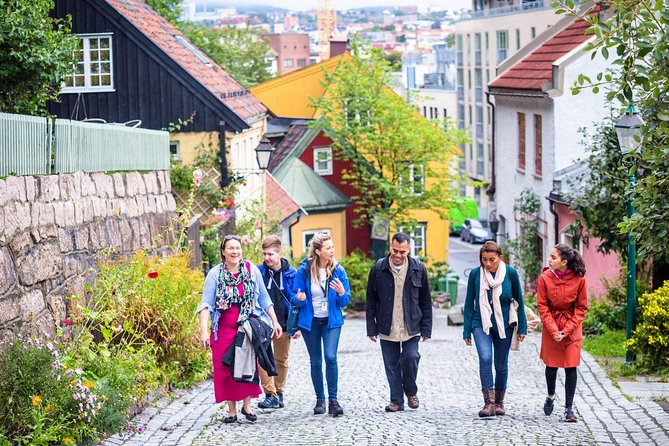
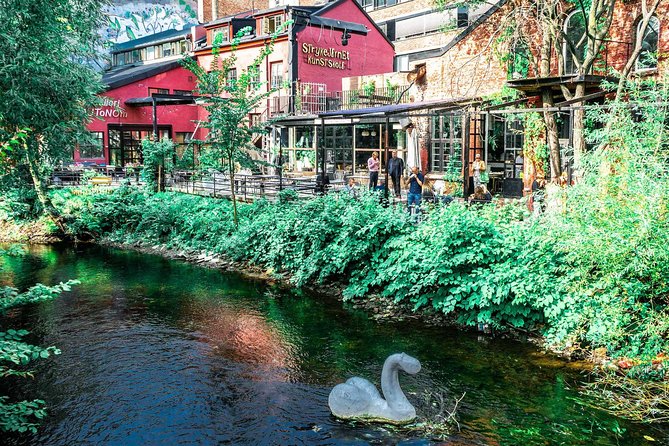
Now you start moving into the tour’s most eye-catching mode. Around the alternative music venue Blå, you will see a strong concentration of street art, and yes, your camera matters here. The best part is that it does not feel random. The guide’s commentary helps you connect art to place and to the district’s creative scene.
Then you hit Brenneriveien, an area filled with old, unused industrial buildings that local art students turned into a street art space. That transformation angle is the key takeaway. You are not just seeing art, you are seeing how people repurpose what is already there.
This is also where the private format pays off. With a regular group tour, you can feel rushed between quick photo stops. Here, you are more likely to have time to ask, pause, and actually look.
Damstredet Wooden Houses, Old Streets, and Great Photo Angles
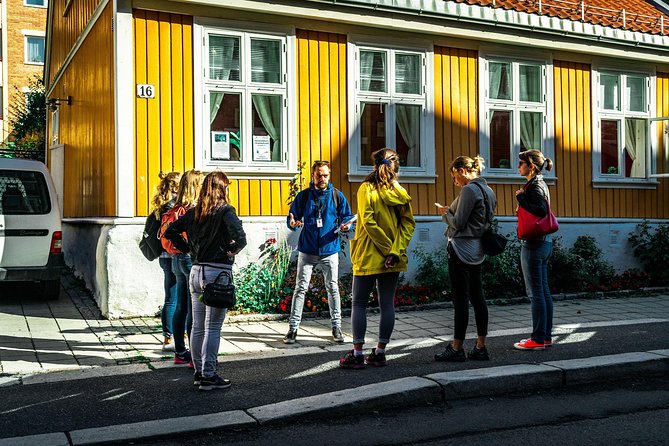
At Damstredet, the focus shifts to preserved old housing. The wooden hillside houses are well-preserved and still inhabited, which makes the street feel lived-in rather than staged. The stop is also a strong photo moment, because the slope and architecture give you angles that look good even without perfect weather.
If you care about architecture but you do not want a textbook pace, this is a great middle stop. It is short enough to stay light, but it gives you a real sense of how the neighborhood looks from street level.
Our Saviour’s Memorial Cemetery and Old Aker Church, Where Culture Meets Deep Time
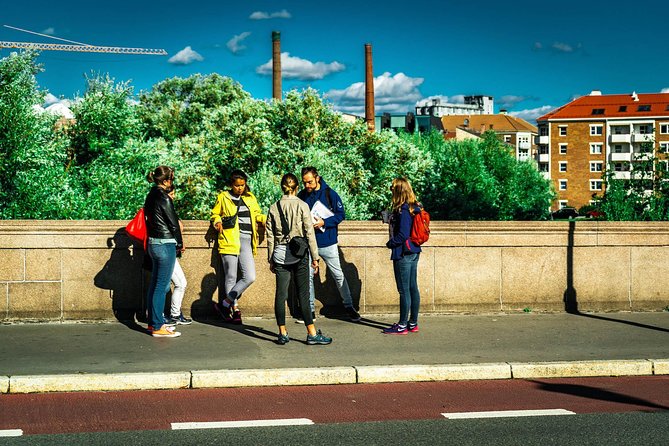
Two of the most memorable stops come next: Our Saviour’s Memorial Cemetery and Old Aker Church.
At the cemetery, you are in resting place territory for famous Norwegians, including playwright Henrik Ibsen and painter Edvard Munch. Even if you are not a huge history buff, it helps to see how the arts connect to Oslo’s geography and identity.
Then you step into Old Aker Church (Gamle Aker Kirke), Oslo’s oldest remaining building. It is also the only remaining church from the Middle Ages. That combo, old building plus still a working church story, is a powerful reset after street art and modern repurposing. It reminds you Oslo can hold centuries in the same walking day.
Telthusbakken and Mathallen OsloVulkan, Ending With Food and a Final Creative Spark
Your last neighborhood stop is Telthusbakken, with colorful wooden houses and a visual link to Edvard Munch. The street is the motif of one of his paintings, and today roughly 50 people live on one side, while the other side includes allotment gardens. That blend of daily life and art connection makes Telthusbakken feel personal.
From there, the tour ends at Mathallen OsloVulkan, part of the Vulkan development. The area connects back to the river Akerselva, where the former industrial bank is now part of this food hub. Mathallen is a food hall with options for many tastes, and it is a smart finish if you want to keep the day going without trekking across town.
One practical note that matters: Mathallen is closed on Mondays. So if your travel dates include Monday, you may want to plan lunch somewhere else after the walk.
Price and Logistics, Is It Worth $237.12 Per Person?
Let’s talk money, because $237.12 per person is not a budget grab.
You are paying for a professional guide, and you are getting a private tour where only your group participates. That usually means you are buying time plus flexibility. Instead of sticking to generic facts, you can ask questions and get answers that fit what you actually want to see, like how local politics shapes public life or why certain districts shifted over time.
You are also getting a route where the listed stops are marked as free admission. That helps. Your spending is mostly on the guide and experience, not on stacking ticket fees for every stop.
The downside is simple. If you are traveling solo, the per-person price can feel heavy. This kind of tour tends to feel best when you can share the cost among a small group, or when you really want a guided story through Grünerløkka rather than a self-guided photo walk.
Logistically, plan for about 3 hours on foot, with a moderate fitness level. The stops are short, roughly 10 to 15 minutes each, but you still cover enough ground to need comfortable shoes. The tour runs in all weather, so bring layers and dress for rain or chill.
Who This Private Oslo Walk Fits Best
This tour is a strong match if you want more than the usual top hits. I think it suits three kinds of travelers best:
- You like street-level details, like Brenneriveien’s industrial-to-art transformation and the wooden streets of Damstredet
- You care about how culture and everyday life overlap, especially around Kulturkirken Jakob and the Parkteatret area
- You prefer a guide who can answer questions with context, and you enjoy tours where the city feels explained, not just shown
If you are the type who likes to read your surroundings, this will feel rewarding. If you only want famous monuments in quick succession, you might find the pace more neighborhood-focused than landmark-heavy.
Should You Book the Hipstoric Grünerløkka Private Walking Tour?
I would book it if you want an Oslo day that feels local, artsy, and human in scale. The route connects politics, church culture, river greenery, working-class neighborhoods, and street art, so you get a broad view of how Oslo works in real life.
I would skip it if the cost is a deal-breaker for your budget, or if you need a purely sightseeing-only plan with fewer walking moments. Also, check your calendar for Mondays, because Mathallen Oslo is closed on Mondays, and that affects the ending if you were hoping to eat there.
If you do book, I’d arrive ready to ask questions. Guides like Inger and Bjorn are the kind of people who turn a simple stop into a story you remember.
FAQ
Where does the tour start?
The tour starts at Youngstorget, Oslo, Norway.
Where does the tour end?
The tour ends at Mathallen OsloVulkan 5, 0178 Oslo, Norway.
How do I get back after the tour?
The tour ends at Mathallen, and you make your own way back. It is about a 15 minute walk (1 km) to return, or you can use public transport. A ticket is not included.
How long is the walking tour?
It lasts about 3 hours.
Is this a private tour?
Yes. It is listed as a private tour or activity, meaning only your group participates.
What language is the tour offered in?
The tour is offered in English.
Are there admission fees for the stops?
The stops listed are marked as free admission (ticket free).
What fitness level do I need?
You should have moderate physical fitness for the walking.
Does it operate in bad weather?
Yes, it operates in all weather conditions, so dress comfortably and appropriately.
Are service animals allowed and is cancellation free?
Service animals are allowed. Cancellation is free if you cancel up to 24 hours in advance for a full refund.
Recently added around Oslo
- 4 hours Best View of the Oslofjord Winter Edition★ 4.0 · 15 reviews
- Oslo Winter Highlights Bike Tour★ 5.0 · 36 reviews
- Winter Forest Walk and Campfire by Torchlight in Oslo★ 4.5 · 20 reviews
- Viking Planet Oslo Combination Ticket (Museum +VR Game)★ 4.0 · 13 reviews
- Unknown war. Oslo and Norway during 1940-45★ 5.0 · 74 reviews
- The Ultimate Norwegian Skiing Experience★ 5.0 · 16 reviews
- The Viking Planet Museum – Mini Group (4 adults)★ 4.0 · 16 reviews
- The Ultimate Study of the Human Form at Vigeland’s Sculpture Park with a Local★ 4.0 · 14 reviews
Walking Tours, compared.
Past & Present Small Group Guided Walking Tour
Read our review →
Walking Tour in Bergen of the Past and Present
Read our review →
Guided Walking Tour of Central Oslo with Local Guide
Read our review →

Browse the lists this tour appears in