
Review · WALKING TOURS
Oslo: 3-hour Highlights & Vigeland Park Private Walking Tour
Oslo in three hours is surprisingly doable. I love how this tour strings together big-name sights like the Royal Palace area and Vigeland Sculpture Park, and I also love that your guide keeps answering questions as you walk. The main drawback is that you’ll cover some gravel or unpaved walkways, so plan for solid shoes.
This is a private tour built for focus, not milling around. It starts at the Nobel Peace Center, moves through central Oslo on foot, then includes a tram segment, finishing at Frognerparken so you can keep exploring afterward.
The finale is why many people book. You’ll see Gustav Vigeland’s sculptures in the world’s largest sculpture park, including the Monolith Plateau with the 36 figures and the Monolith totem carved from a single block of stone, all tied to the park’s bigger meaning.
In This Review
- Key things I’d plan around
- Starting at the Nobel Peace Center, and why that matters
- The inner-city loop: Oslo’s civic core on foot
- Oslo Opera House and the “major-sight” factor
- Practical tip for this part
- Akershus Fortress: harbour views and the old-new Oslo mix
- Royal Palace, Karl Johans gate, and the street that organizes the city
- The tram segment: why pacing matters in a 3-hour tour
- Frogner Park and Vigeland Sculpture Park: the art lesson you want
- The Monolith Plateau and the “circle of life” idea
- What to do with the hour
- Price and value for a private 3-hour highlights tour
- Who this Oslo tour fits best
- What to wear and bring so 3 hours feels easy
- Should you book this Oslo Highlights and Vigeland Park tour?
- FAQ
- How long is the Oslo highlights and Vigeland Park private walking tour?
- Where does the tour start?
- Where does the tour finish?
- Is this tour private?
- What public transportation is included?
- Is admission to Vigeland Park included?
- What languages are available for the live guide?
- What should I bring?
- Does the tour involve walking on uneven ground?
- Can I cancel for a full refund?
Key things I’d plan around
- A start at the Nobel Peace Center sets the tone with Alfred Nobel and the Nobel Peace story before you ever hit the royal and civic buildings.
- A fast, on-foot center-city route that connects Karl Johans gate, Parliament, City Hall, and the National Theatre without wasting time.
- Akershus Fortress views put Oslo’s harbour and old-city feel right into the walk.
- One tram ride, timed well so the 3 hours actually cover serious ground.
- Vigeland Park as a guided art lesson with the Monolith Plateau and Monolith as the emotional center of the visit.
- Private-group pacing means you can ask questions and adjust to what you care about most, whether that’s architecture, art, or Norwegian identity.
Starting at the Nobel Peace Center, and why that matters
Most highlight tours start with a statue or a view. This one starts at the Nobel Peace Center, which is a smart choice because it frames Oslo as more than just pretty buildings and waterfront photos. You begin with Alfred Nobel’s story and the way the Nobel Peace Center connects ideas of peace, conflict, and international attention to Norway’s modern identity.
From there, your guide helps you switch gears from global history to the very physical geography of Oslo. You’re about to walk through the spaces where Norway governs, performs, and commemorates. That context makes the next stops land harder, especially when you move from an ideas-based museum site into street-level landmarks.
Also, the tour is timed so you’re not doing the “figure out your way around” dance first. You meet outside the Nobel Peace Center entrance at Brynjulf Bulls plass 1, and the guide is on-site about 10 minutes before departure, holding a sign with the local partner’s name. It’s a small thing, but it removes friction early.
More Walking Tours in Oslo
- Oslo: Guided Walking Tour of Central Oslo with Local Guide
★ 4.7 · 936 reviews - Oslo: Best of Oslo Walking Tour
★ 4.5 · 458 reviews - Oslo: Historic Myths & Legends Evening Walking Tour
★ 4.8 · 408 reviews
The inner-city loop: Oslo’s civic core on foot
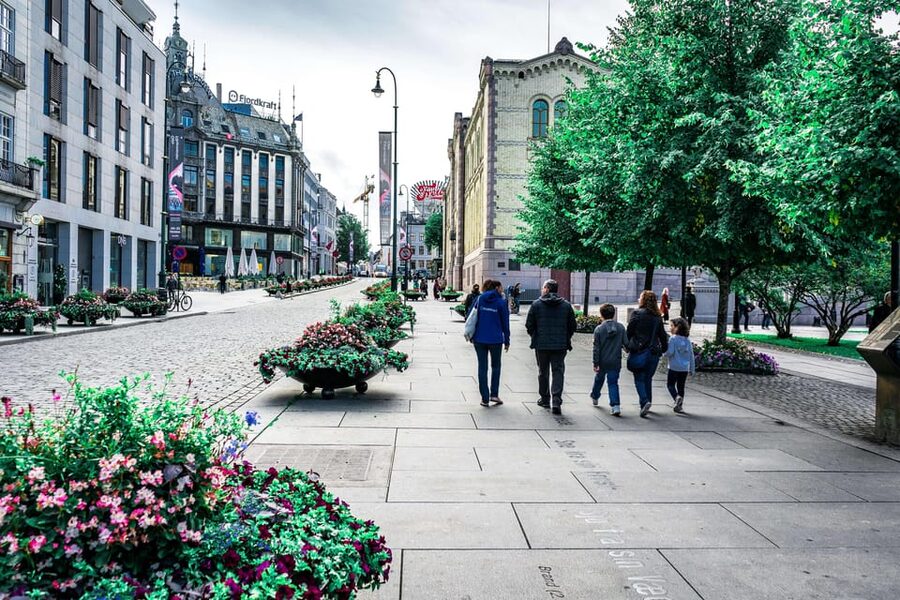
After your Nobel Peace Center start, the walk heads into Sentrum, Oslo, and this is where the tour earns its keep. The central area is packed with the kinds of structures you normally see only from the outside, or only after you’ve spent time figuring out bus routes and map zooms.
You’ll look at major public buildings and cultural icons in a tight arc. Expect stops and viewpoints that cover:
- Oslo City Hall, including the fact it was built between 1931 and 1950
- The Norwegian National Theatre, tied to prominent Norwegian playwrights
- The Royal Palace, perched on a hilltop overlooking Karl Johans gate
- The Parliament building, from where Oslo is governed
- The Bank Square and Christiania Torv as small but useful texture stops in the city center
What I like about doing these in sequence is that it turns architecture into story. City Hall and Parliament aren’t just shapes. They represent how a capital organizes itself, how it protects authority, and how it presents power in everyday life.
Oslo Opera House and the “major-sight” factor
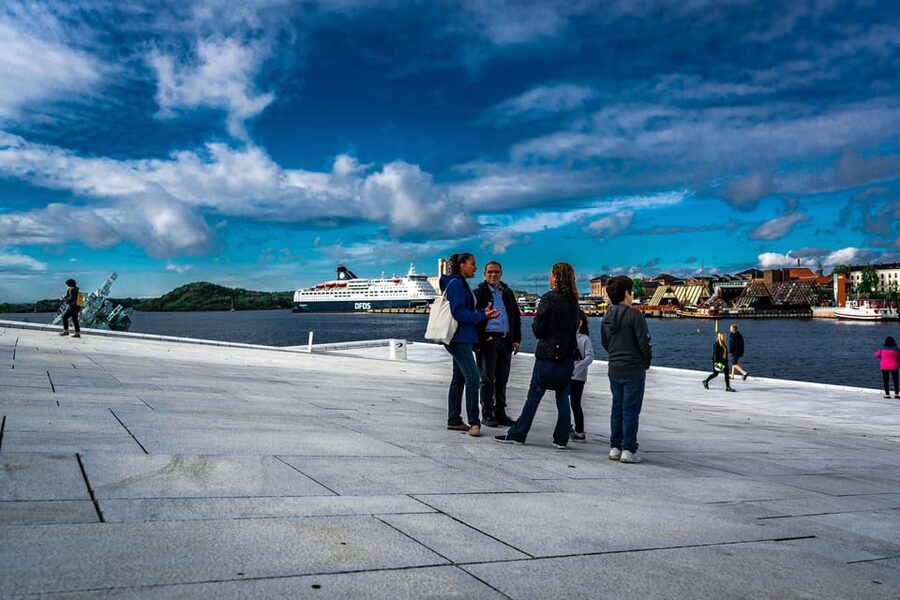
The tour also highlights the Oslo Opera House among the headline sights. Even if you don’t spend long inside any single building, the ability to connect major landmarks to what you’re seeing in the streets helps you leave with a clearer mental map of Oslo. And it matters because Oslo’s highlights aren’t all in one cluster. They’re spread across the central city, plus the waterfront and the parks.
Practical tip for this part
Keep your camera ready for the moment your guide points out where a building sits relative to the street grid. In Oslo, small changes in elevation and perspective can make a landmark look completely different from one corner to another. Walking with a guide makes those quick viewpoint shifts worth it instead of feeling random.
Same corner of the country, a completely different day out:
- Oslo: Oslo Fjord Sightseeing Cruise by Sailing Ship
★ 4.5 · 5,790 reviews - Oslo: Scenic Fjord Cruise with Audio Guide Commentary
★ 4.5 · 5,375 reviews - Oslo Nature Walks: Island Hopping Tour
★ 4.8 · 2,713 reviews - Oslo: 24 or 48-Hour Hop-On Hop-Off Sightseeing Bus GrayLine
★ 4.0 · 2,088 reviews
Akershus Fortress: harbour views and the old-new Oslo mix
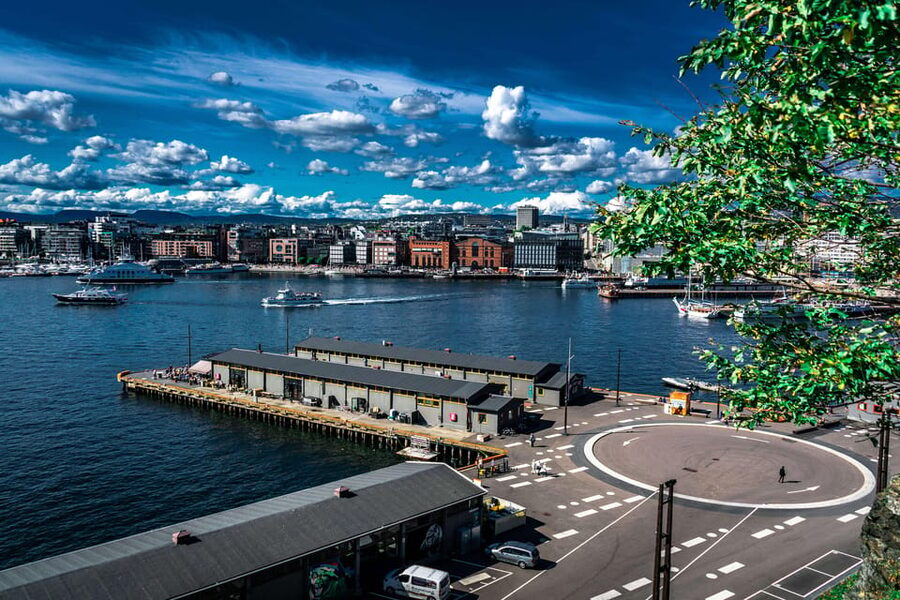
Then you hit Akershus Fortress, overlooking the Oslo harbour. This stop is one of those “it would be nice to see this someday” moments that becomes real on a guided route. Fortresses tend to be visually dramatic, but here the important part is the payoff you get from the positioning.
From the fortress area, you get an immediate sense of Oslo’s relationship with water. The harbour isn’t far away, and the fortress sits as a reminder that this city’s growth and defense were always tied to the coastline. If you care about how capitals form over time, this is a quick stop that gives you a lot of meaning for the minutes you spend there.
Also, it’s a nice break from the denser cluster of civic buildings. You’re not constantly facing the same style of frontage or façade. Instead you get sky, water, and a structure that reads as older and more protective.
Royal Palace, Karl Johans gate, and the street that organizes the city
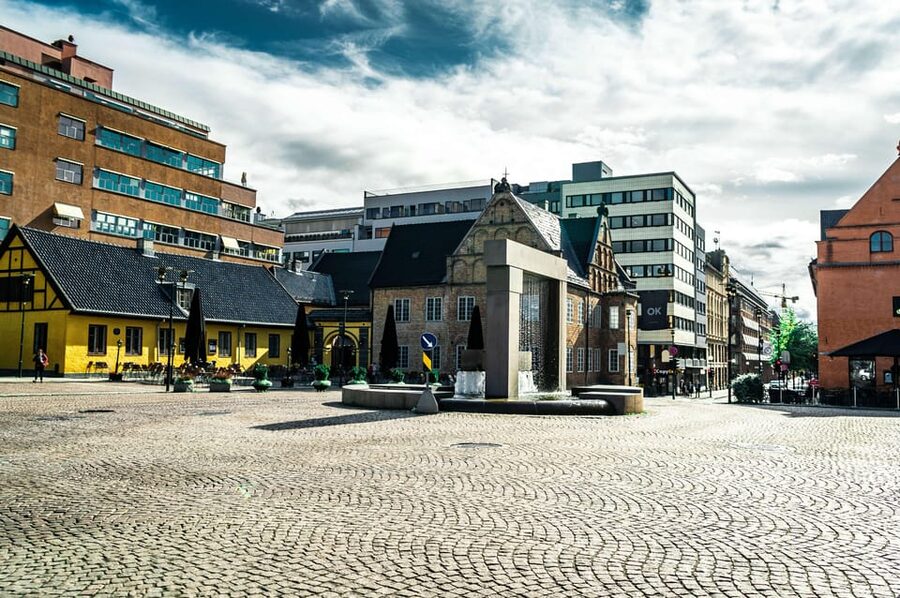
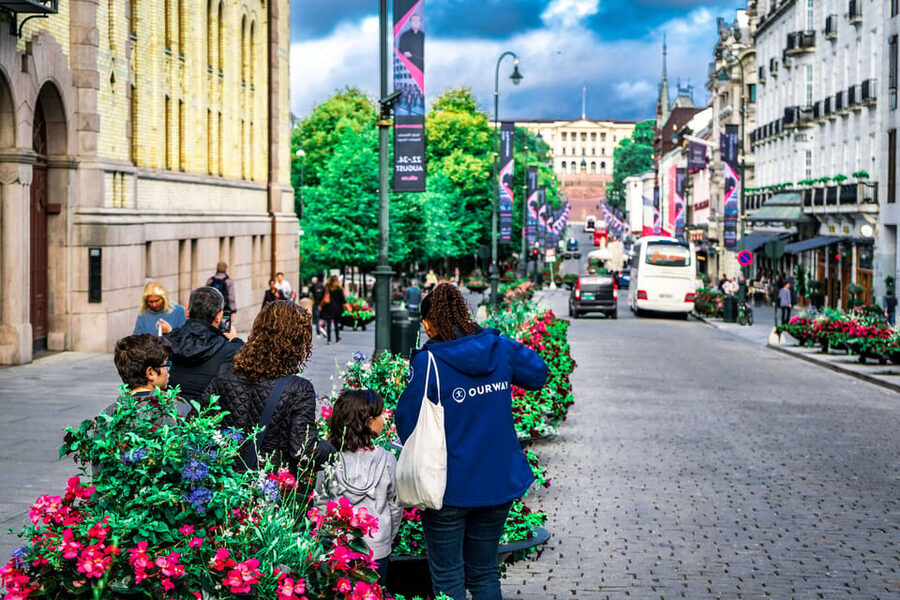
Next comes a section you’ll feel instantly. Karl Johans gate is Oslo’s main pedestrian shopping street, and you see how it functions as a spine for the city. The Royal Palace sits above it on a hilltop, which means your viewpoint can connect a royal setting to everyday street life in a single glance.
You also see the Parliament building, and your guide explains what it represents for Oslo’s governance. This is one of those places where you might otherwise pass without much thought. With a guide, it becomes easier to notice details like how the city places power where people can see it.
I like this part of the tour because you start thinking like a local for a moment. Oslo’s city center isn’t just where visitors walk. It’s where civic life happens, where cultural institutions stand nearby, and where the geography helps the capital feel coherent rather than scattered.
The tram segment: why pacing matters in a 3-hour tour

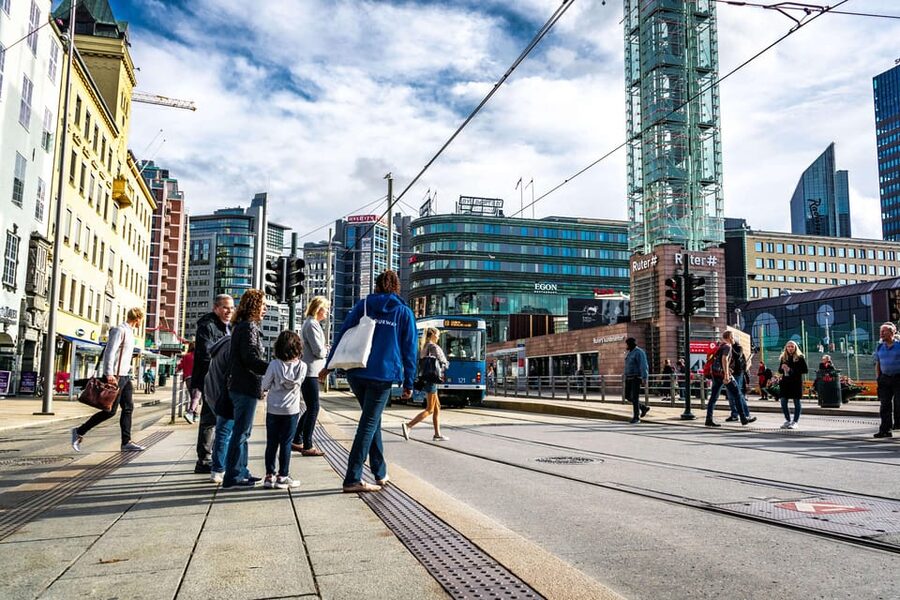
You’re not walking the entire time. There’s a public transport portion of about 30 minutes, and you’ll use a tram to reach the final area.
That pacing is actually a key reason this tour works well. If a highlights tour forces you to walk too much, you end up tired before you reach the most important stop. Here, the tram reduces that risk, letting you arrive at the sculpture park with energy for both photos and a guided explanation.
You also get a return ticket for public transportation, and tickets are included and provided by the guide. Since the tour ends at Frognerparken, this becomes practical: you can keep exploring on your own and then head back without scrambling for transit.
Frogner Park and Vigeland Sculpture Park: the art lesson you want
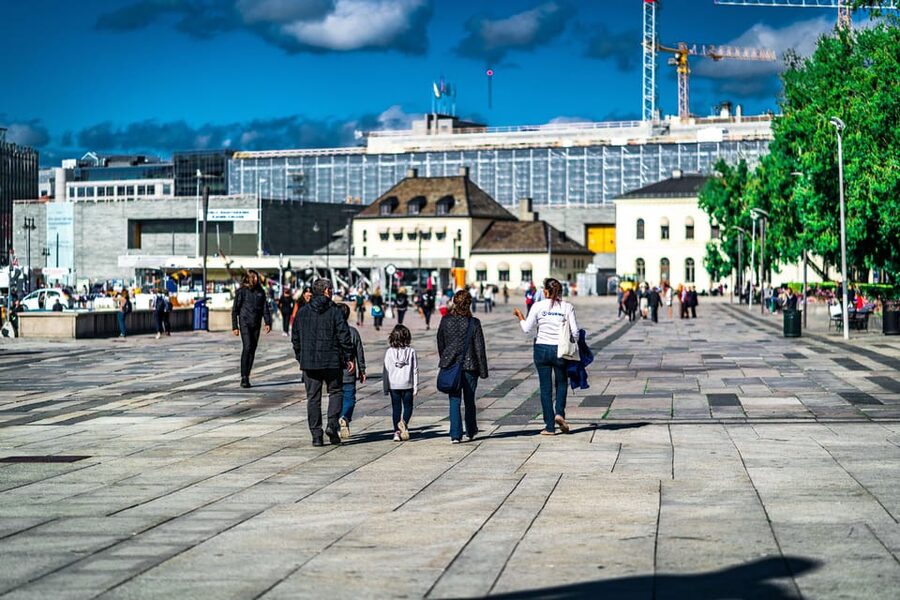
Now for the main event. You head to Vigeland Sculpture Park, visit with a guided tour of about 1 hour, and end at Frognerparken. This is billed as the world’s largest sculpture park, and the scale feels real even if you only spend an hour inside it.
Your guide shares how one man built the sculpture park, which helps you see it as a single creative vision rather than a random collection. The sculptures were mostly crafted from local Iddefjord granite, so there’s a strong sense of place in the material choice.
The Monolith Plateau and the “circle of life” idea
Two stops define the emotional tone of the park:
- Monolith Plateau, where 36 figures symbolize the circle of life
- Monolith, an impressive totem carved from a single block of stone
These are not just “big sculptures.” Your guide ties them into the themes behind Vigeland’s work, so you’re not just looking at figures standing around. You’re reading the park as a message system.
And that changes your photos too. Instead of trying to capture everything, you start capturing the meaning: groupings, repetition, and how the figures relate to each other as you move.
What to do with the hour
Here’s how I’d approach it while you have a guide. Take a minute to watch how your guide points out direction and spacing. Vigeland’s work is meant to be seen while you walk through it, not just stopped for one quick snapshot. If you keep moving at a comfortable pace, the park’s layout starts to make sense quickly.
Then, after your guided hour, you can continue on your own since the tour ends at Frognerparken. That freedom matters. Some people want a second look at the figures. Others want time to wander without instruction.
Price and value for a private 3-hour highlights tour
At $518 per group up to 1, this is not a budget tour. You’re paying for a private guide, a route that hits a lot of major sites in a short window, a tram ticket component, and admission support for Vigeland Park (entrance is free as part of what’s included).
So the real value question is this: do you want a guided interpretation of Oslo’s core landmarks, plus a guided art stop in Vigeland Park, without spending your time mapping it out?
If you’re traveling alone and want efficiency, the pricing can make sense because you’re buying certainty. If you’re two people or more, you’ll want to confirm how the per-group pricing works for your specific booking, but private tours like this typically become more reasonable when shared among more participants.
Where I think this tour justifies itself is the mix: civic buildings plus Nobel Peace context plus a strong art finish. A cheaper walking route might list landmarks, but it rarely gives you the “why this place matters” explanations that make a capital feel understandable.
Who this Oslo tour fits best
This works especially well if you want:
- A guided hit list of Oslo’s central landmarks without hunting buses or trains
- Explanations that connect buildings to meaning, from Nobel Peace to royal and civic spaces
- A serious stop at Vigeland Sculpture Park with time to understand what you’re seeing
It also fits travelers who like asking questions. One review highlighted that the guide was extremely knowledgeable on many subjects and could handle questions smoothly, with great English and a personable style. Another noted that with just two people, the guide stayed flexible and could incorporate the group’s wishes. That private format is the point, not a bonus.
If you’re the type who prefers long museum time and slow wandering, you might feel rushed. But for a compact highlights visit, the structure is strong.
What to wear and bring so 3 hours feels easy
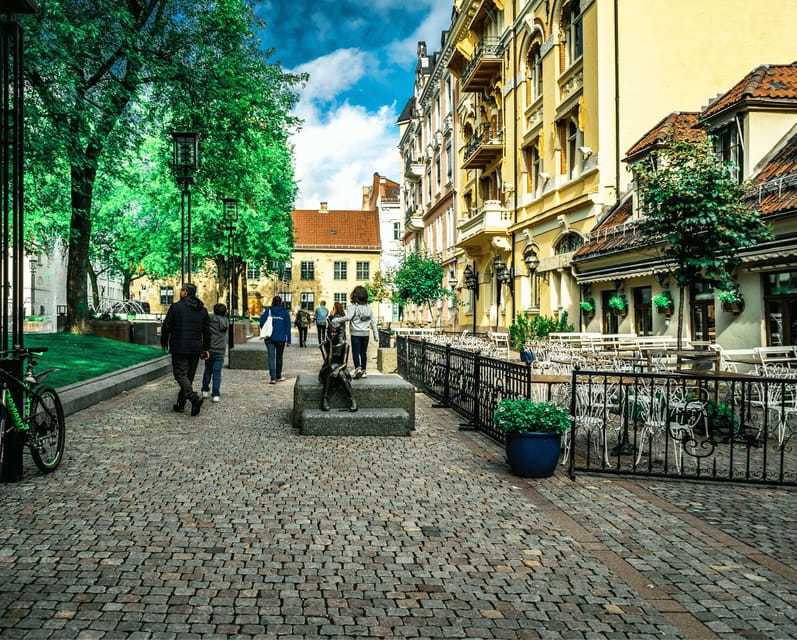
This tour includes walking on some gravel or unpaved walkways in parts of the route. That’s not a reason to skip, but it is a reason to plan.
Bring comfortable shoes you can trust on uneven surfaces, and dress for the weather. Oslo can be changeable, and you’ll be outside for the majority of the experience.
Also, expect a mix of “stand and look” moments (palace and civic viewpoints) and “move through” moments (Karl Johans gate area and inner-city streets). If you pack lightly, you’ll feel better when you step into colder wind near the harbour viewpoints.
Should you book this Oslo Highlights and Vigeland Park tour?
Book it if you want a guided route that connects Oslo’s major symbols of power and culture with a genuinely meaningful art experience at Vigeland Sculpture Park. The end-to-end plan, including the tram timing and the guided focus in the sculpture park, is the difference between seeing Oslo and understanding it.
Skip it or consider something else if you dislike guided walking, hate any chance of gravel paths, or want to spend more time inside specific buildings rather than covering the city’s key outdoor highlights.
If you’re planning a first-time Oslo visit and you want to make your time count, this is a solid choice.
FAQ
How long is the Oslo highlights and Vigeland Park private walking tour?
The tour lasts 3 hours.
Where does the tour start?
It starts at the Nobel Peace Center, outside the entrance, at Brynjulf Bulls plass 1.
Where does the tour finish?
The tour ends at Frognerparken.
Is this tour private?
Yes, it’s a private group tour.
What public transportation is included?
A return ticket for public transportation is included, and there is a public transport segment of about 30 minutes during the tour.
Is admission to Vigeland Park included?
Yes, entrance to Vigeland Park is included and is free as part of the tour.
What languages are available for the live guide?
The live tour guide is available in English, Spanish, French, Italian, Norwegian, and German.
What should I bring?
Bring comfortable shoes and weather-appropriate clothing.
Does the tour involve walking on uneven ground?
Yes, part of the tour takes place in areas where you may have to walk on gravel or unpaved walkways.
Can I cancel for a full refund?
Yes, free cancellation is available up to 24 hours in advance for a full refund.
Recently added around Oslo
- 4 hours Best View of the Oslofjord Winter Edition★ 4.0 · 15 reviews
- Oslo Winter Highlights Bike Tour★ 5.0 · 36 reviews
- Winter Forest Walk and Campfire by Torchlight in Oslo★ 4.5 · 20 reviews
- Viking Planet Oslo Combination Ticket (Museum +VR Game)★ 4.0 · 13 reviews
- Unknown war. Oslo and Norway during 1940-45★ 5.0 · 74 reviews
- The Ultimate Norwegian Skiing Experience★ 5.0 · 16 reviews
- The Viking Planet Museum – Mini Group (4 adults)★ 4.0 · 16 reviews
- The Ultimate Study of the Human Form at Vigeland’s Sculpture Park with a Local★ 4.0 · 14 reviews
Walking Tours, compared.
Past & Present Small Group Guided Walking Tour
Read our review →
Walking Tour in Bergen of the Past and Present
Read our review →
Guided Walking Tour of Central Oslo with Local Guide
Read our review →

Browse the lists this tour appears in