
Review · WALKING TOURS
Oslo: 3-hour Private Walking Tour of Bohemian Grünerløkka
Oslo can feel surprisingly hip and local, fast. This 3-hour private walk through Grünerløkka mixes street art, industrial streets, and real art-history stops without the usual sightseeing shuffle. I especially love the mix of colorful neighborhoods and the walk along the river corridor, plus the payoff at Our Saviour’s Cemetery where Edvard Munch is buried. One thing to consider: because it ends at Vulkan for lunch, you may want a plan for how you will get back after, instead of expecting to loop right back to where you started.
I also like how the route builds momentum. You start in the city center, then ease into the gritty, creative vibe of Grünerløkka, with photo moments at Telthusbakken and Blå. The cemetery and food hall make it feel balanced, not just a street-art photo walk.
If you want a classic checklist of top Oslo monuments, this tour is not that. It is more side streets, stories, and the kind of sights you only notice when someone points them out.
In This Review
- Key things I’d center in your planning
- Why Grünerløkka feels like another side of Oslo
- From Youngstorget into the city, then onward to Grünerløkka
- Damstredet and the color-your-morning part of the walk
- Blå, chandelier views, and the street art stop that feels like a scene
- Telthusbakken’s hillside charm, and why you’ll want to stop often
- Our Saviour’s Cemetery: the trio of Ibsen, Bjørnson, and Edvard Munch
- Industrial streets, Quan Thang Ancient House, and the approach to Vulkan
- Mathallen Foodhall lunch timing in Vulkan, right where you end
- Price and logistics, with a plain-value reality check
- Who should book this Grünerløkka walk
- Should you book this Oslo: Bohemian Grünerløkka Private Walking Tour?
- FAQ
- Where does the tour start and where does it end?
- How long is the walking tour?
- Is the tour private, and what languages are available?
- What are the main sights you will see during the walk?
- What should I bring for the tour?
- How do I get back after the tour ends?
Key things I’d center in your planning
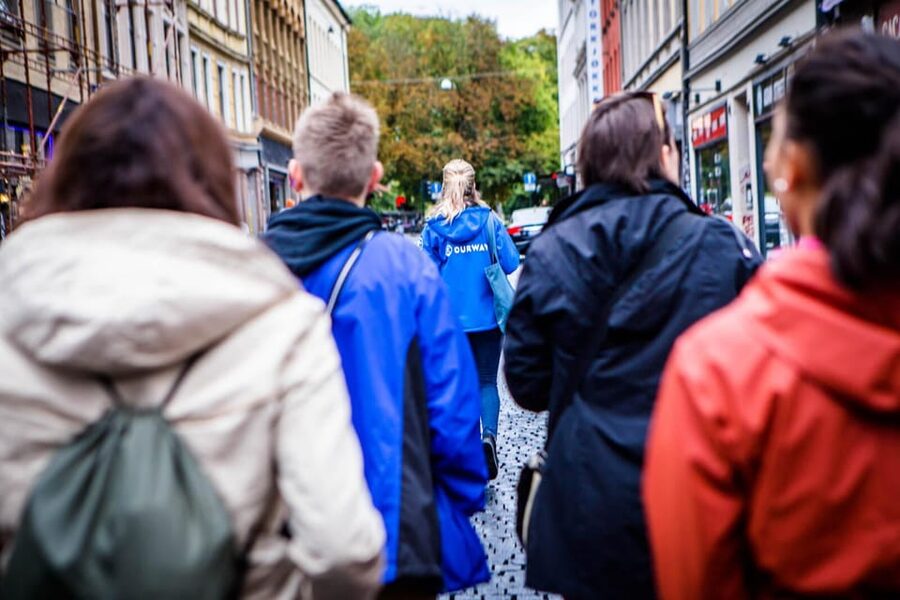
- Private, 3-hour format that keeps the day simple while still hitting big highlights
- Street art and industrial streets, including a photo stop at Blå
- Edvard Munch burial site at Our Saviour’s Cemetery, alongside Ibsen and Bjørnson
- Colorful hillside houses at Telthusbakken, best with a camera ready
- Mathallen Foodhall lunch timing right at the end, in the Vulkan food neighborhood
Why Grünerløkka feels like another side of Oslo
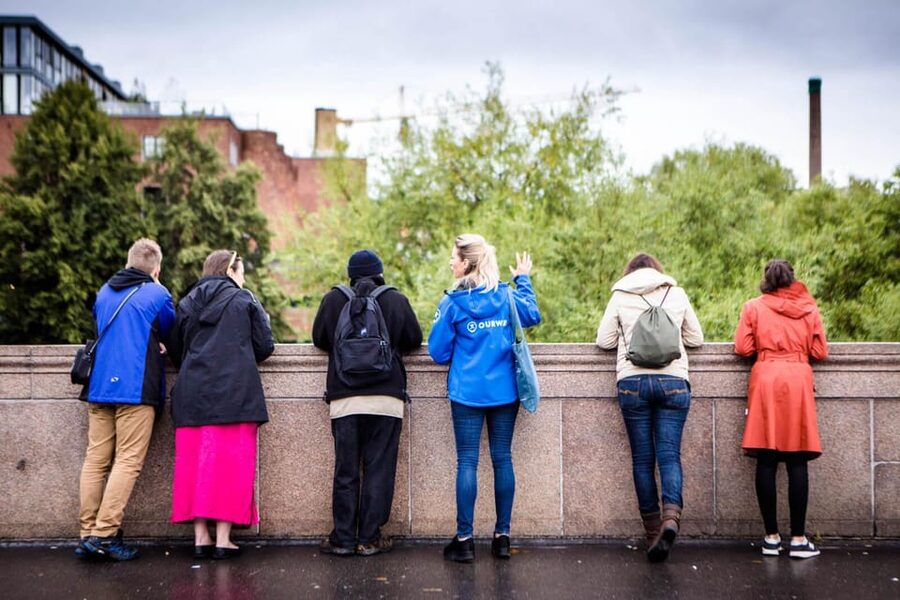
Grünerløkka has a way of making you slow down and look around. In a few hours, you get the whole mood shift: from central Oslo’s streets into an area that feels creative, working-class, and proudly arty at the same time. That balance is exactly what makes this walking tour worth your time.
I like that it is not just about pretty views. The walk mixes visual experiences, like colorful houses and street art, with meaning, like why artists and free thinkers gravitate to this kind of neighborhood. You are also not stuck in a single theme. You get industrial brick buildings, a music venue stop, a cemetery stop, and a food hall finish, all in one flow.
This is also a good choice if you feel tired of tours that mostly move you from one famous spot to another with little context. Here, the small streets matter. The setting does work for the story.
More Walking Tours in Oslo
- Oslo: Guided Walking Tour of Central Oslo with Local Guide
★ 4.7 · 936 reviews - Oslo: Best of Oslo Walking Tour
★ 4.5 · 458 reviews - Oslo: Historic Myths & Legends Evening Walking Tour
★ 4.8 · 408 reviews
From Youngstorget into the city, then onward to Grünerløkka
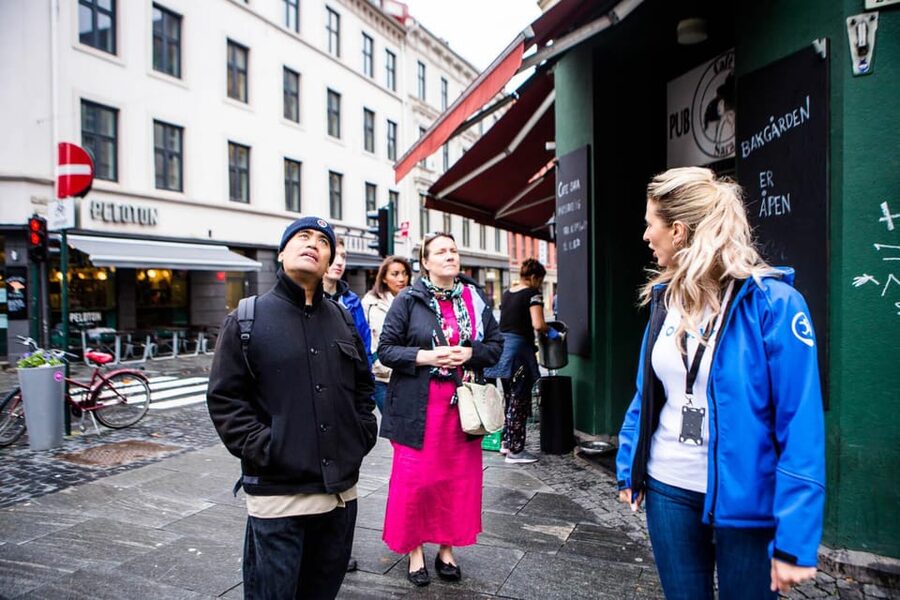
You meet at Youngstorget 2A, by the fountain in the middle of the square in the city center. It is a convenient jump-off point, and it helps you avoid the stress of trying to find your way first. The guide arrives on-site about 10 minutes before departure, holding a sign with the local partner name, so you can spot them and get going.
The tour starts with a guided orientation stretch in Sentrum. Even if you already know Oslo, this first part helps you understand the city’s layout so the later neighborhood streets make sense. After that, you move through Torggata, where the atmosphere starts shifting toward local street life.
Then you pass Kulturkirken Jakob, and cross Ankerbrua. These aren’t just waypoints. They help frame the walk so the Grünerløkka area feels like a real transition rather than a random hop across town.
One of the most enjoyable aspects of this route is how it brings you along a bubbling river corridor surrounded by colorful houses and industrial buildings. That combination is the heart of the area’s look: the neighborhood keeps its industrial edge, but it is softened by art, color, and everyday life.
Practical tip: this is a walking tour. Comfortable shoes are non-negotiable, especially if the weather turns slick or you find yourself taking extra photos.
Damstredet and the color-your-morning part of the walk
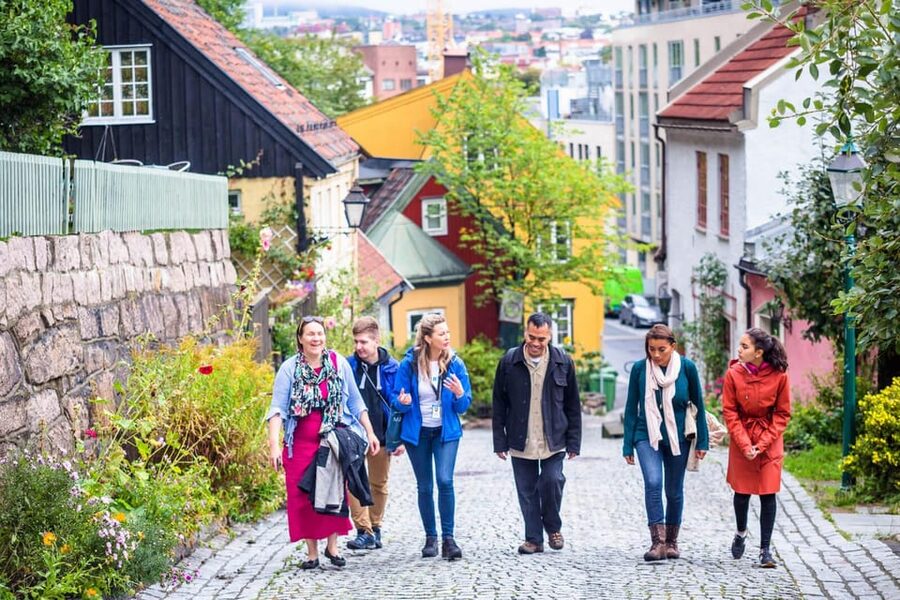
As you settle into Grünerløkka proper, the tour leans hard into the neighborhood’s signature look: brick buildings, craft details, and residential color. Damstredet is one of the standouts. It’s the kind of street where your eyes keep moving, because the buildings feel both lived-in and styled.
What makes this stop valuable is not only the photos. It is the way you connect the visuals to what the area represents. Grünerløkka has a reputation for creativity, and the streets show it. The colorful houses along the river corridor feel like a counterpoint to industrial Oslo, and your guide’s stories tie that contrast to artists, free thinkers, and neighborhood character.
You’ll also see how graffiti and street art become part of the urban fabric here, not something tacked on for show. That matters, because it changes how you look at the walls. You start noticing composition, layering, and how art sits alongside older architecture.
If you are the kind of person who likes to understand why a neighborhood looks the way it does, this portion is strong.
Blå, chandelier views, and the street art stop that feels like a scene
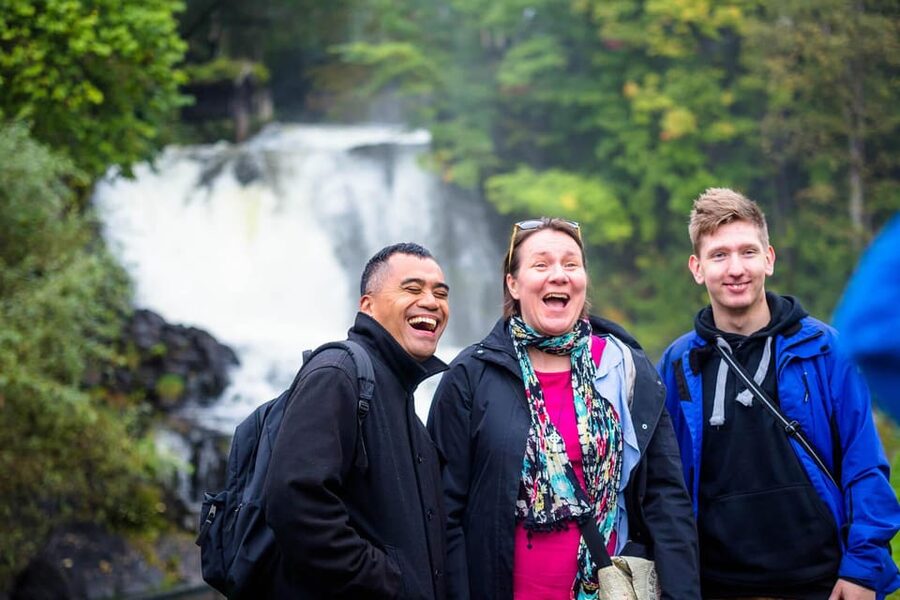
At some point in the walk, you reach BLÅ, a music venue that is surrounded by colourful street art. There’s a photo stop here, and it is one of those places where the neighborhood identity becomes obvious fast. The giant chandelier is the detail you will remember, because it turns an urban corner into a statement.
This is a smart stop in the tour plan for two reasons. First, it breaks the walk rhythm. You get a landmark you can orient to visually. Second, it shows how Oslo’s creative culture lives in real locations, not only in museums.
Nearby, you also pass streets that keep the street art and building textures going. You are moving through a neighborhood that feels like it belongs to people who work, make music, paint walls, and hang out.
Photo tip: if you want clean shots at Blå, take a minute to step slightly back from the busiest sidewalk and frame the street art with the venue in view. A quick pause usually gets you better photos with less hassle.
Same corner of the country, a completely different day out:
- Oslo: Oslo Fjord Sightseeing Cruise by Sailing Ship
★ 4.5 · 5,790 reviews - Oslo: Scenic Fjord Cruise with Audio Guide Commentary
★ 4.5 · 5,375 reviews - Oslo Nature Walks: Island Hopping Tour
★ 4.8 · 2,713 reviews - Oslo: 24 or 48-Hour Hop-On Hop-Off Sightseeing Bus GrayLine
★ 4.0 · 2,088 reviews
Telthusbakken’s hillside charm, and why you’ll want to stop often
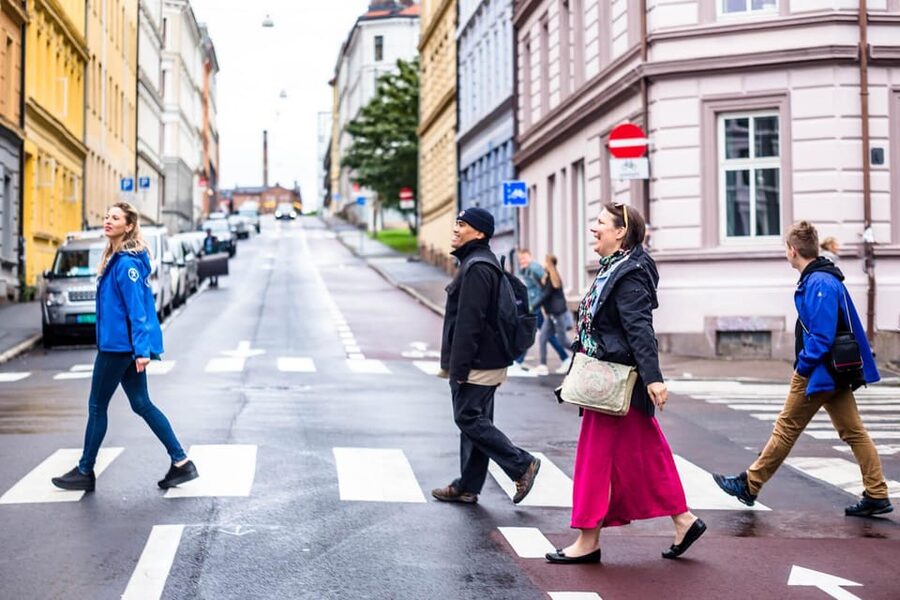
One of the tour’s most charming moments is Telthusbakken. You will climb down its quaint street, and you will definitely want to stop for photos. The hillside houses and gardens are the kind of detail that makes you forget you are on a scheduled walk.
This stop works because it gives your eyes a different texture than the industrial brick and graffiti. It is quieter visually, with a domestic feel. You still get that Oslo personality, but it comes through in gardens, slopes, and the way the houses sit close together.
Also, Telthusbakken is a reminder that Grünerløkka isn’t only a creative district of walls and venues. It is still a real neighborhood with homes, streetscapes, and daily routines.
If you are traveling with someone who enjoys scenic strolling and architecture details, Telthusbakken is the moment you both look at your phones less, and just start looking around.
Our Saviour’s Cemetery: the trio of Ibsen, Bjørnson, and Edvard Munch
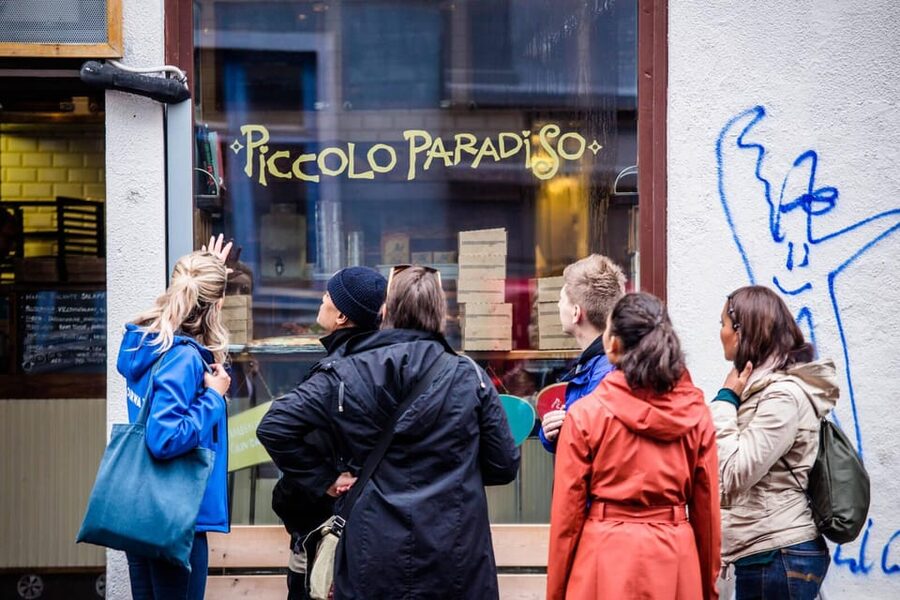
The tour’s history anchor is Our Saviour’s Cemetery. You get a chance to say hello to Norway’s dynamic trio: Ibsen, Bjørnson, and Edvard Munch. This is the stop that adds gravity to the colorful walk.
What elevates it is how your guide connects the cemetery to the surrounding neighborhood. You’ll learn that Edvard Munch lived in the area at multiple addresses. That turns the cemetery from a standalone landmark into part of the broader Grünerløkka story.
Even if you only know Munch from his most famous art, this kind of place helps your understanding click. You stop treating artists as distant figures and start seeing them as people who moved through specific streets, lived in specific areas, and were shaped by the city around them.
The cemetery stop also balances the tour’s tone. After street art and industrial streets, you get a slower, respectful pause. That change keeps the tour from feeling like a checklist.
Tip for your comfort: cemeteries can be colder and more open than streets. Dress for the weather and keep your walking pace steady so you do not feel rushed during the quiet part.
Industrial streets, Quan Thang Ancient House, and the approach to Vulkan
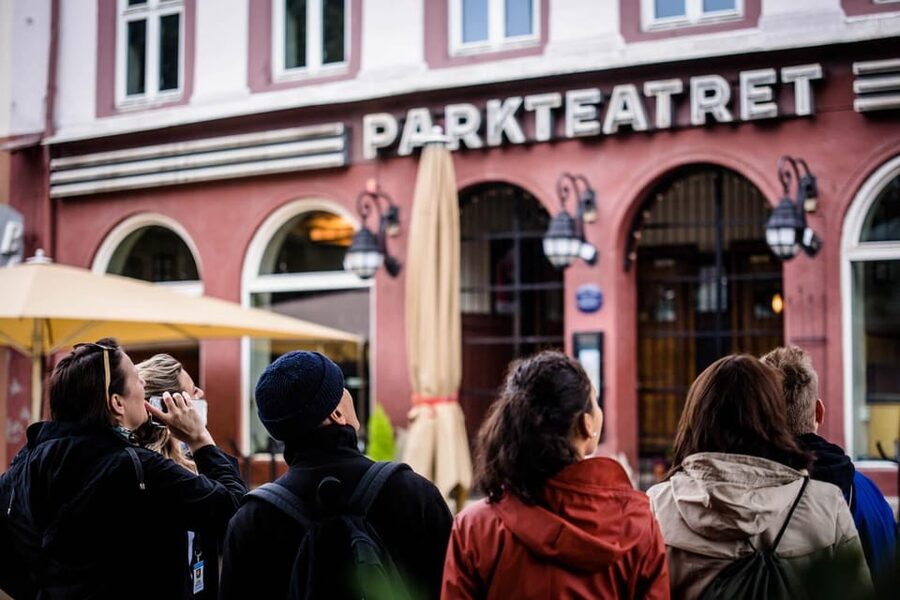
After the cemetery, the route keeps moving through the industrial and creative edges of Grünerløkka. You pass places like Brenneriveien and Quan Thang Ancient House, then continue toward the area where the tour ends.
I like the way this part of the walk keeps the visual variety. It’s not only old brick and art walls. It’s also the sense that the neighborhood keeps layering different kinds of spaces: streets that feel working, spaces that feel cultural, and corners that feel residential.
If you enjoy street-level details, you will probably find yourself slowing down again. The tour has enough stops and photo moments that you can absorb the area without feeling like you are sprinting.
This stretch also sets you up for the final stop. By the time you reach Vulkan, the walk has already trained your eye to spot the local cues: old industrial buildings, colorful graffiti, and the way food culture fits into that same creative ecosystem.
Mathallen Foodhall lunch timing in Vulkan, right where you end
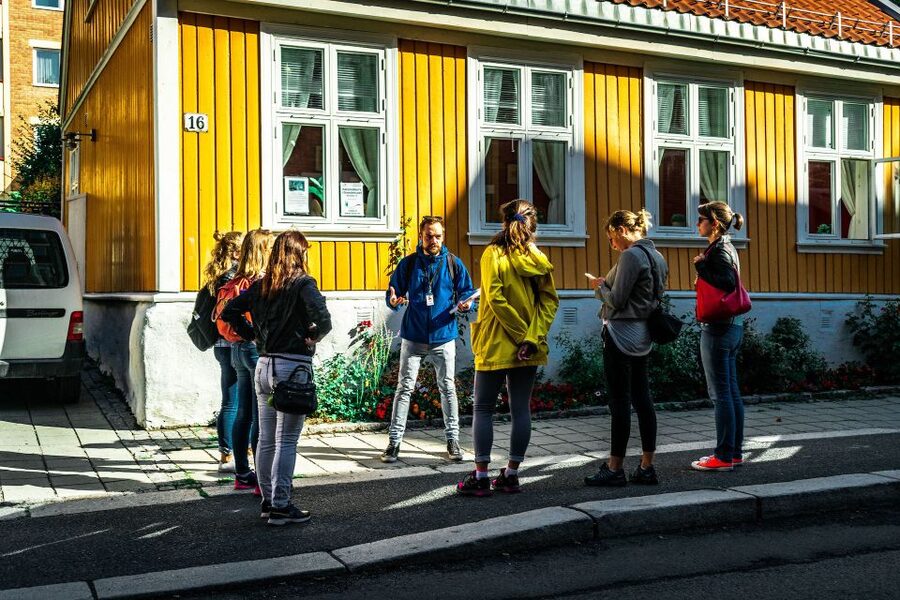
The best part about the finish is that it is designed for real life, not just tourism timing. You end at Vulkan, by the entrance to Mathallen Foodhall, right in time for lunch.
Mathallen is described as a food destination in the sustainable neighborhood of Vulkan, a melting pot for foodies and eco-lovers. That framing matters. You are ending your tour in a place where the neighborhood’s identity continues beyond street art and history.
The food hall is also set in old industrial buildings, with colourful graffiti around you. So even if you only grab one quick bite, the location keeps the mood of Grünerløkka going.
Practical advice: since the tour ends at the entrance, plan to stay. If you try to immediately rush out to catch a train, you’ll miss the whole point of finishing here. Take 20 to 40 minutes, grab something that looks good, and sit long enough to digest what you just saw.
If lunch turns into a longer stop, that’s normal here. The neighborhood is the kind of place you can keep exploring after the guided portion ends.
Price and logistics, with a plain-value reality check
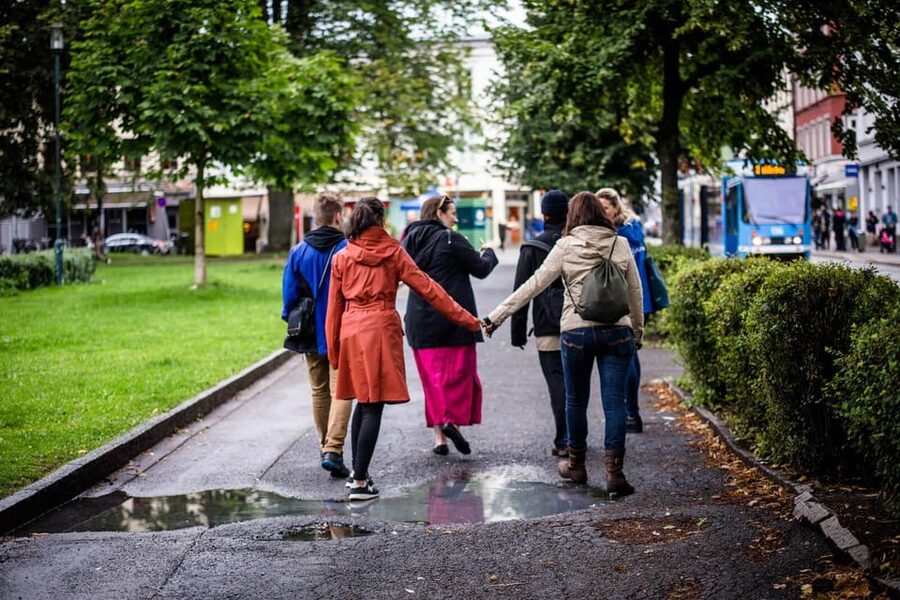
This tour is priced at $461 per group, up to 1, and lasts 3 hours. Because it is a private walking tour, you are paying for one-to-one time with a professional guide, plus a route that strings together several major moments in an efficient way.
Is it good value? For me, it feels most worthwhile if you:
- want a personal guide to connect the art, street art, and history into one story
- would rather spend time walking local streets than researching on your own
- care about the Munch cemetery stop and want context, not just a quick visit
It may feel pricey if you are happy to follow a self-guided route and only care about a couple of the highlights. Also, remember the tour ends at Vulkan. You may need to think about getting back, either by walking about 15 minutes, roughly 1 km, or by public transport, with a ticket not included.
Who should book this Grünerløkka walk
This experience fits best if you like your travel days to feel specific and lived-in. It’s a great match for people who enjoy:
- street art and industrial neighborhood vibes
- art and literature history, especially Munch, Ibsen, and Bjørnson
- photo stops that don’t feel forced
- ending with lunch in a food hall instead of cutting the day short
It is also a solid pick for solo travelers, since it is a private group. And if you prefer a guide who brings the neighborhood to life with stories and anecdotes, this tour’s style seems built for that.
One more small note from guides in past tours: Diana has been described as flexible and fun to walk with, and Tone has a talent for connecting the industrial streets and artwork to the place’s character. Even without naming who you’ll get, the goal is clear, you should leave with better context than you arrived with.
Should you book this Oslo: Bohemian Grünerløkka Private Walking Tour?
I would book it if you want Oslo that feels like Oslo, not Oslo that feels like a photo queue. The combination is strong: Blå street art and chandelier photos, a respectful pause at Our Saviour’s Cemetery, colorful streets like Damstredet and Telthusbakken, and a practical ending at Mathallen for lunch.
I would skip it if your trip is short and you only want the biggest, most famous sights, or if you dislike walking and side streets. You are paying for a focused neighborhood experience, so lean into that.
If you go, plan to wear comfortable shoes, bring a camera, and give yourself permission to stay at Mathallen after the tour. The ending is part of the experience.
FAQ
Where does the tour start and where does it end?
The tour starts at Youngstorget 2A in Oslo, by the fountain in the middle of the square. It finishes at Vulkan 16, 0178 Oslo, Norway, near the entrance to Mathallen Foodhall.
How long is the walking tour?
The tour lasts 3 hours.
Is the tour private, and what languages are available?
Yes, it is a private group tour. Live guides are offered in Spanish, English, French, German, Italian, and Norwegian.
What are the main sights you will see during the walk?
You will explore Grünerløkka, walk along Damstredet with colorful houses, visit Our Saviour’s Cemetery, take a photo stop at BLÅ, and end at Mathallen Foodhall in the Vulkan area.
What should I bring for the tour?
Wear comfortable shoes and bring weather-appropriate clothing.
How do I get back after the tour ends?
The tour ends at Vulkan. From there, you can walk back for about 15 minutes, around 1 km, or use public transport, but the transport ticket is not included.
Recently added around Oslo
- 4 hours Best View of the Oslofjord Winter Edition★ 4.0 · 15 reviews
- Oslo Winter Highlights Bike Tour★ 5.0 · 36 reviews
- Winter Forest Walk and Campfire by Torchlight in Oslo★ 4.5 · 20 reviews
- Viking Planet Oslo Combination Ticket (Museum +VR Game)★ 4.0 · 13 reviews
- Unknown war. Oslo and Norway during 1940-45★ 5.0 · 74 reviews
- The Ultimate Norwegian Skiing Experience★ 5.0 · 16 reviews
- The Viking Planet Museum – Mini Group (4 adults)★ 4.0 · 16 reviews
- The Ultimate Study of the Human Form at Vigeland’s Sculpture Park with a Local★ 4.0 · 14 reviews
Walking Tours, compared.
Past & Present Small Group Guided Walking Tour
Read our review →
Walking Tour in Bergen of the Past and Present
Read our review →
Guided Walking Tour of Central Oslo with Local Guide
Read our review →

Browse the lists this tour appears in