
Review · CITY TOURS
Oslo City Walks – The City of Contrasts
A city that changes fast deserves a walk with context. This Oslo City Walks route, Oslo, The City of Contrasts, strings together modern icons and older heartbeats, with stops built for good photo angles and quick orientation.
I especially like the focus on the Norwegian National Opera and Ballet, because you get a free taste of the building’s scale, and if timing works, a stroll up to the roof. I also like how the walk tackles Bjørvika, showing how a former industrial zone is turning into an art and culture magnet. One heads-up: the Munch stop is not included, so you may need to budget for your own ticket if you want to go inside.
In This Review
- Key things to know before you go
- A contrast walk that actually helps you understand Oslo
- Price, timing, and whether it feels like good value
- Meeting points and the route flow, from Oslo Visitor Center to Deichman Bjørvika
- Stop 1: Norwegian National Opera and Ballet, plus the roof if you have time
- Stop 2: Munch in Bjørvika, the newest draw and the ticket decision
- Stop 3: Akrobaten Pedestrian Bridge, a connector that feels like a landmark
- Kvadraturen: Oslo’s oldest restaurant and the original town hall feel
- What you’ll walk through, in plain terms
- Group size, fitness level, and how to dress for a 2-hour walk
- Who should book this Oslo City Walks tour
- Should you book Oslo City Walks – The City of Contrasts?
- FAQ
- How long is the Oslo, The City of Contrasts walking tour?
- What time does the tour start?
- Where do I meet for the tour?
- Where does the tour end?
- Is the tour offered in English?
- Is there an admission ticket cost for the Opera House stop?
- What is included in the tour price?
- What is not included?
- Does the tour run in bad weather?
- What is the cancellation policy?
Key things to know before you go
- Small group (max 20), so questions actually get answered, not buried.
- Two-hour pace starting at 5:00 pm, a good window for golden-hour views and evening city energy.
- Opera House roof option if time allows, with the relevant admission noted as free.
- Bjørvika transformation theme, connecting the past and the new side by side.
- Akrobaten pedestrian bridge as a fast connector, with big “this is where the city is going” energy.
- Munch museum entry not included, so plan your ticket decision in advance.
A contrast walk that actually helps you understand Oslo
Oslo can feel modern right out of the gate, but the city is also stitched together from older layers. This tour is built for that exact feeling. You’re not just looking at buildings. You’re watching ideas in motion, from waterfront redevelopment to the stubborn staying power of older neighborhoods.
What makes it work for me is the mix of “you can see it instantly” stops and “here’s why it matters” explanations. The Opera House gives you instant wow. Then you shift to Bjørvika, where the story is about change. Finally, Kvadraturen brings you back to the older Oslo that explains why the city still feels like itself, even when it’s reinventing parts of the waterfront.
The group size is capped at 20, which is perfect for a walking format. You can keep up without sprinting, and your guide from Oslo Guidebureau can manage the flow at each stop.
More City Tours in Oslo
- Oslo: City Sightseeing Hop-On Hop-Off Bus Tour
★ 3.6 · 724 reviews - Oslo: Grand City Sightseeing Tour by Bus with Fjord Cruise
★ 4.6 · 647 reviews - Oslo Combo Tour: Grand City Tour and Oslo Fjord Cruise
★ 4.5 · 555 reviews
Price, timing, and whether it feels like good value
At $53.31 per person for about 2 hours, this is a mid-range spend for a guided city walk. The practical value is that you’re paying for a local guide to connect the dots between big landmarks and neighborhood history, not just to walk from A to B.
Also, several parts of the experience have free admission listed in the details. The Opera House stop includes a free admission ticket. The Akrobaten bridge stop is free as well. That matters because it keeps your “all in” cost more predictable, even if you decide to add a paid museum visit at Munch.
Timing helps, too. This starts at 5:00 pm and ends near Deichman Bjørvika. That end point is convenient if you want to keep exploring on your own afterward, and the later start often makes it easier to enjoy streets without the most intense daytime crowds.
Main value calculation: if you’re the type who likes understanding context while you walk, the guide service is what you’re truly buying. If you only care about standing at famous spots for a quick photo, you might find you could do it on your own. But if you want the “why” behind the contrasts, this price starts to make sense fast.
Meeting points and the route flow, from Oslo Visitor Center to Deichman Bjørvika
You’ll start at the Oslo Visitor Center at Jernbanetorget 1 (0154 Oslo). The tour ends at Deichman Bjørvika at Anne-Cath, Vestlys plass 1 (0150 Oslo). That’s a nice setup because it keeps the walk oriented toward Bjørvika and the city’s modern waterfront districts.
The tour runs in all weather conditions, so plan your outfit accordingly. Norway weather can change quickly, and this format assumes you’ll be outside the whole time. Bring comfortable shoes, since this is a true walking experience, not a sit-down lecture.
It also helps to know the tour is listed as near public transportation. That matters in a city like Oslo, where you may already be using transit to hop between areas. You can start here, finish here, then continue by bus or rail without feeling locked into a long trek back.
Stop 1: Norwegian National Opera and Ballet, plus the roof if you have time
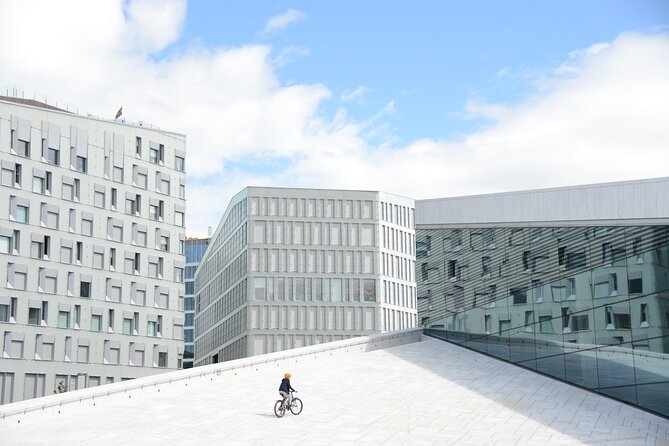
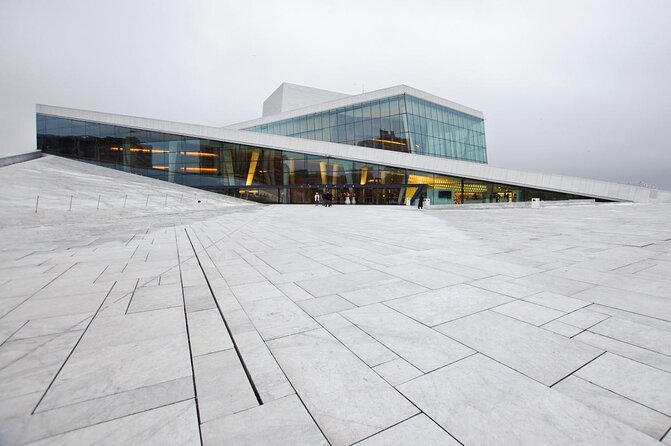
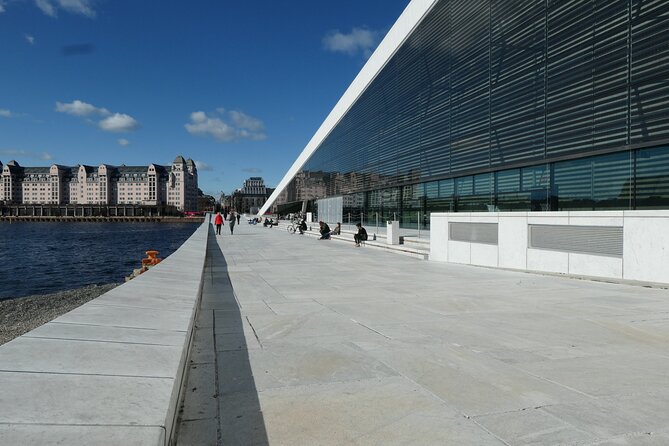
The first stop is the Norwegian National Opera and Ballet. Even if you do nothing else, this place is worth building a trip around. It’s an award-winning modern design, and it’s the kind of architecture you can understand just by looking at how people move around it.
Here’s the practical part: the stop lists free admission, and if time allows, your group will take a stroll on the roof. That roof walk option is a big deal because it turns the building from something you view into something you experience. You get the perspective change, and the building’s angles start to make sense in a very physical way.
What I like about starting here is pacing. You begin with a landmark that feels contemporary and confident. Then your guide can frame what you’re seeing against Oslo’s broader story of planning, modernization, and cultural investment.
Potential drawback: if you’re short on time or you prefer fully indoor stops, the roof option may or may not happen depending on scheduling and how the walking pace works that day. The details say if time allows, so treat the roof as a bonus.
Same corner of the country, a completely different day out:
- Oslo: Oslo Fjord Sightseeing Cruise by Sailing Ship
★ 4.5 · 5,790 reviews - Oslo: Scenic Fjord Cruise with Audio Guide Commentary
★ 4.5 · 5,375 reviews - Oslo Nature Walks: Island Hopping Tour
★ 4.8 · 2,713 reviews - Oslo: 24 or 48-Hour Hop-On Hop-Off Sightseeing Bus GrayLine
★ 4.0 · 2,088 reviews
Stop 2: Munch in Bjørvika, the newest draw and the ticket decision
Next is Munch. This stop is aimed at the Bjørvika area, which has been one of Oslo’s biggest “watch it change” zones. The Munch museum opened in October 2021, and it’s the newest attraction in this area.
The tour gives you about 20 minutes here. That’s not a full museum day. It’s more like a guided introduction point where you get oriented and then decide how much you want to do inside.
Important cost note: Munch admission is not included. That means you’ll need to decide whether you want to pay for entry yourself. If you love art museums, you’ll likely see this as the highlight and plan your ticket ahead. If you prefer a lighter museum touch, you can still enjoy the setting and the context your guide provides, then stop before the ticket expense.
Why this stop matters for the whole tour theme: Bjørvika is where Oslo shows its future face. Container port history may be part of the backdrop, but what you’re really looking at is the shift toward cultural life. The Munch museum becomes the symbol, and your guide helps you connect the art destination to the wider redevelopment story.
Stop 3: Akrobaten Pedestrian Bridge, a connector that feels like a landmark
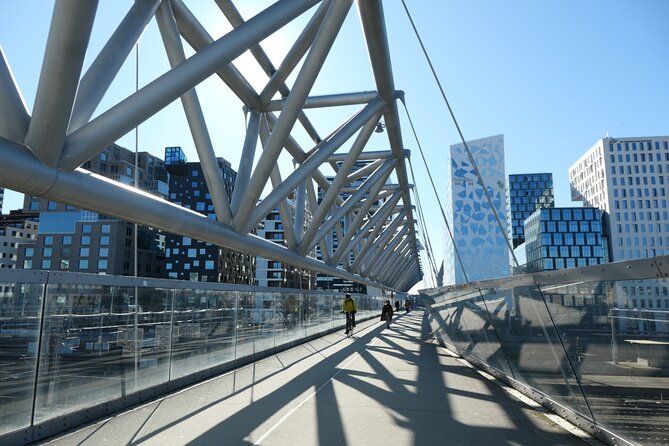
After the museum area, you’ll cross over on or visit the Akrobaten Pedestrian Bridge. This is the kind of stop that works even if you’re not a hardcore architecture fan, because it’s quick, scenic, and practical.
The bridge is described as binding the areas of Grønland and Bjørvika together, and it has become a popular feature in the city. The tour allots about 10 minutes, so think of it as a breather stop with a payoff: you see how the city organizes movement between neighborhoods, and you get one more vantage point where the modern waterfront meets older districts.
Admission here is free, so you’re not trading money for a view. You’re trading a few minutes of walking for an architectural moment that also helps the tour narrative make sense. It’s a physical shortcut between chapters of Oslo’s story.
Kvadraturen: Oslo’s oldest restaurant and the original town hall feel
Beyond the three listed stops, this tour includes the Kvadraturen area, and that part is crucial if you want the contrast theme to land. Kvadraturen is home to Oslo’s oldest restaurant and also the spot associated with what was its original town hall.
This is where the tour gets more than “look at cool buildings.” It becomes about continuity. You can walk from the modern Bjørvika cultural zone to the older streetscape and feel how Oslo keeps its roots even while it builds new districts.
I like having this older anchor on the same walking loop because it prevents the modern sights from feeling like they were dropped in from nowhere. Instead, you see Oslo as a city that can evolve without wiping the past off the map.
Practical advice for this segment: keep your eyes open for details in the street layout and building edges. With only a couple of hours total, you won’t have time to turn this into a slow wander. But you will have enough time to notice the shift in tone from new waterfront planning to older town-core organization.
What you’ll walk through, in plain terms
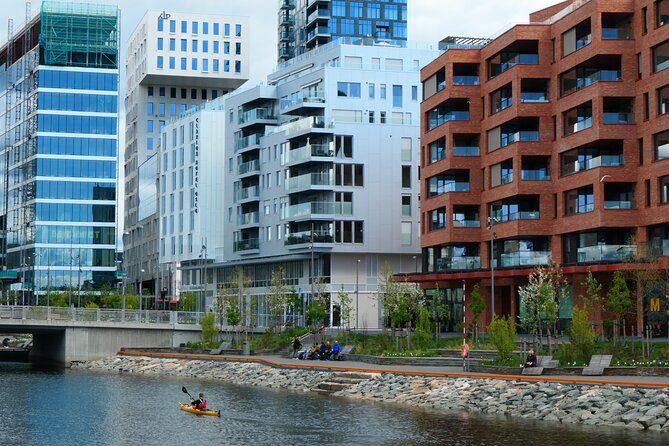
This is a compact route, roughly two hours, built around key points in Bjørvika and the surrounding city connections. You can expect a rhythm like this:
- Start at Jernbanetorget, where the city feels organized and visitor-friendly.
- Walk to a flagship modern building at the Opera House.
- Move into Bjørvika, where Munch represents the newest layer of the neighborhood’s cultural push.
- Cross or pass through Akrobaten for a quick architectural and movement connection.
- Finish in the direction of Deichman Bjørvika, with Kvadraturen included as the older counterweight.
Because the tour is near public transportation, it’s easy to join in even if you’re coming from elsewhere in the city. And since it operates in all weather conditions, you should bring the mindset that you’re walking through Oslo, not waiting for perfect conditions.
Group size, fitness level, and how to dress for a 2-hour walk
You should have a moderate physical fitness level. That’s realistic for two hours of walking, some city sidewalks, and a couple of short stops where you’ll likely stand and look around while your guide talks.
Comfort matters more than style. Wear shoes you can trust on uneven sidewalk edges. If it’s rainy, you’ll be outside for the full experience, so plan for that.
Also, service animals are allowed, which is good to know if you travel with one.
Who should book this Oslo City Walks tour
I think this one is a strong fit if you want:
- A first visit to Oslo where you need orientation fast.
- Modern architecture and city planning themes, not just sightseeing.
- A short evening plan, starting at 5:00 pm, that doesn’t swallow your whole day.
- A small-group format where you can ask questions and keep moving.
You might hesitate if:
- You hate walking and want a mostly indoor experience.
- You’re not interested in Bjørvika or Munch at all, since the museum stop is part of the plan and you’ll face the ticket decision there.
- You need a fully accessible, minimal-walking route. The tour does list moderate fitness and is described as a city walk, so it’s not positioned as a sit-only experience.
Should you book Oslo City Walks – The City of Contrasts?
If you want a guided walk that helps you connect Oslo’s modern face to its older roots, I’d say yes. The big reasons are simple: you get the Opera House start, a purposeful focus on Bjørvika’s transformation, and an older neighborhood anchor in Kvadraturen.
The pricing is fair for a guided 2-hour route, especially because some key stops are free from an admission standpoint. The main “watch out” is the Munch museum ticket, since that isn’t included. If you’re the kind of person who wants to go inside Munch, plan your spending. If you only want the context, you can treat it as a quick orientation stop.
With a 4.9 rating and a 98% recommendation rate shown in the available data, plus the repeated theme of an enthusiastic guide, this is the kind of tour that tends to leave people feeling like they understood more than they expected.
If you’re in Oslo for even a short stay, this is a good use of your time, and it sets you up to explore the rest of the city with better instincts.
FAQ
How long is the Oslo, The City of Contrasts walking tour?
It runs for about 2 hours.
What time does the tour start?
The start time is 5:00 pm.
Where do I meet for the tour?
You meet at the Oslo Visitor Center, Jernbanetorget 1, 0154 Oslo, Norway.
Where does the tour end?
The tour ends at Deichman Bjørvika, Anne-Cath, Vestlys plass 1, 0150 Oslo, Norway.
Is the tour offered in English?
Yes, it is offered in English.
Is there an admission ticket cost for the Opera House stop?
The Opera House stop lists an admission ticket as free, and the roof stroll is mentioned as possible if time allows.
What is included in the tour price?
A local guide is included.
What is not included?
Hotel pickup and drop-off are not included, and Munch admission is also not included.
Does the tour run in bad weather?
Yes, it operates in all weather conditions, so you should dress appropriately.
What is the cancellation policy?
You can cancel for a full refund up to 24 hours before the experience starts. If you cancel less than 24 hours before, the paid amount is not refunded.
Recently added around Oslo
- 4 hours Best View of the Oslofjord Winter Edition★ 4.0 · 15 reviews
- Oslo Winter Highlights Bike Tour★ 5.0 · 36 reviews
- Winter Forest Walk and Campfire by Torchlight in Oslo★ 4.5 · 20 reviews
- Viking Planet Oslo Combination Ticket (Museum +VR Game)★ 4.0 · 13 reviews
- Unknown war. Oslo and Norway during 1940-45★ 5.0 · 74 reviews
- The Ultimate Norwegian Skiing Experience★ 5.0 · 16 reviews
- The Viking Planet Museum – Mini Group (4 adults)★ 4.0 · 16 reviews
- The Ultimate Study of the Human Form at Vigeland’s Sculpture Park with a Local★ 4.0 · 14 reviews
City Tours, compared.
Grand City Sightseeing Tour by Bus with Fjord Cruise
Read our review →
Oslo Combo Tour: Grand City Tour and Oslo Fjord Cruise
Read our review →
Browse the lists this tour appears in