
Review · CITY TOURS
Oslo City Walks: The City of Contrasts
Oslo changes fast, and you can feel it on foot. This two-hour walk by Oslo Guidebureau links classic city beats with newer waterfront energy, with architecture commentary that helps you read what you see. I like tours where the guide explains the why, not just the what, and this one stays focused on that story.
Two things I really like: you get an authorized guide who can answer questions as you go, and the route is practical, ending near the Opera House area where you already want to be. I also love the mix of viewpoints, including a pedestrian bridge crossing into Bjørvika and time spent along the modern cultural stretch near the Munch Museum.
One possible drawback to plan for: some groups can feel on the large side, and with just two hours, you will not cover every classic sight people expect from Oslo. If you want a deep, site-by-site tour of lots of famous landmarks, this one may feel a bit light.
In This Review
- Key highlights to notice on this Oslo contrasts walk
- Oslo in Two Hours, From Østbanehallen to Bjørvika
- What You Actually Walk Past, Acrobat Bridge to Deichman Library
- Modern Architecture Lessons That Make the City Click
- Walking Conditions, Shoes, and the Evening Pace
- Price Check: Is $52 Good Value for Oslo City Contrasts?
- Who This Oslo Walk Is Best For (and Who Should Skip It)
- Should You Book Oslo City Walks: The City of Contrasts?
- FAQ
- How long is the Oslo City Walks tour?
- Where do I meet the guide?
- What is included in the price?
- What languages are available?
- What areas will the walk cover?
- Are high heels or drones allowed?
- Is it a pay later booking and can I cancel?
Key highlights to notice on this Oslo contrasts walk
- Østbanehallen start point makes it easy to connect the tour to train travel and central Oslo plans
- Acrobat pedestrian bridge gives you a clean “city now” view as you move into Bjørvika
- Bispevika and the Munch Museum area show how Oslo’s waterfront growth is reshaping the skyline
- Deichman Library near the Opera House is a strong finish point for photos and onward strolling
- Flat, two-hour pacing works well if you want a relaxed evening walk without a workout
Oslo in Two Hours, From Østbanehallen to Bjørvika
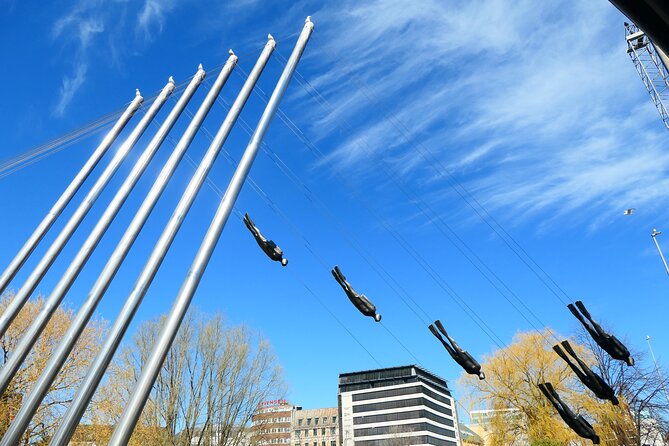
This is a city walk built for people who want Oslo in quick, readable chunks. You meet your authorized guide in front of the Oslo Visitor Centre, located inside Østbanehallen at Jernbanetorget 1, 0154 Oslo. It’s a smart meeting spot because it’s central and easy to reach if you are already using Oslo’s rail network.
The tour has a simple core theme: Oslo as one of Europe’s fastest-growing capitals, shaped by industrialization and city expansion. You will spend the evening walking through areas that reflect how the city has grown, including suburbs and industrial zones before you shift into the waterfront-modern section.
You start on what is described as a typical Monday evening, and you should arrive about 10 minutes early so you do not feel rushed. The walk is designed for a two-hour window, so the guide focuses on interpretation rather than long stops at each landmark.
More City Tours in Oslo
- Oslo: City Sightseeing Hop-On Hop-Off Bus Tour
★ 3.6 · 724 reviews - Oslo: Grand City Sightseeing Tour by Bus with Fjord Cruise
★ 4.6 · 647 reviews - Oslo Combo Tour: Grand City Tour and Oslo Fjord Cruise
★ 4.5 · 555 reviews
What You Actually Walk Past, Acrobat Bridge to Deichman Library
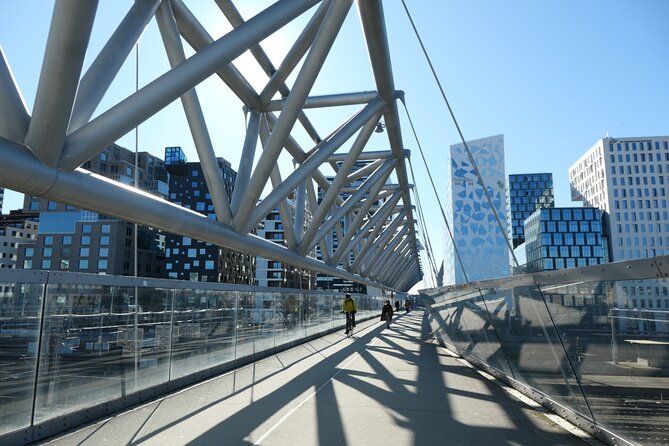
The route moves you through some of the most visually telling parts of Oslo’s modern growth. A big anchor moment is crossing the pedestrian bridge called the Acrobat, located at Oslo Central Station. From there, you head into Bjørvika, the area that many people associate with Oslo’s newer cultural and waterfront development.
Once you’re in the Bjørvika side of the city, you’ll pass through Bispevika and catch the Munch Museum area as you go by. You are not just walking past buildings, either. The point is to see how planned, contemporary construction sits next to older city logic and how the waterfront has been transformed for public life.
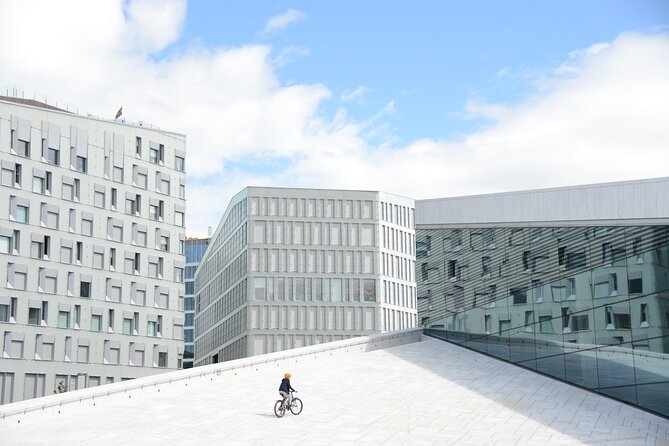
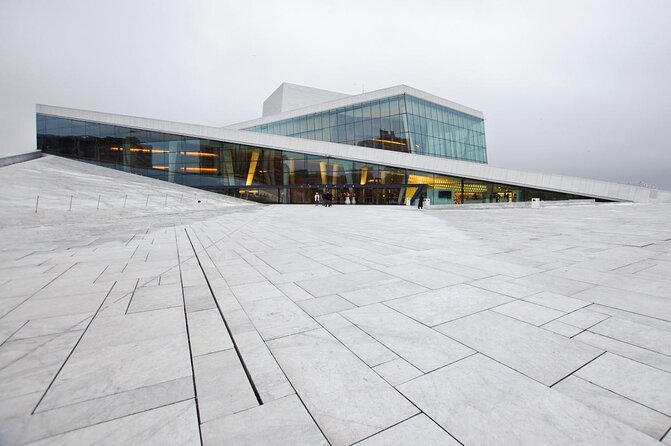
Then the tour ends at Deichman Library, right next to the Opera House. That finish is practical in real-life travel terms: you get dropped near one of Oslo’s best-known architectural icons, and you can extend your evening with wandering, photos, and an easy return plan.
Because the total time is about two hours, you should treat it like a guided “orientation walk.” Think of it as a fast way to understand what parts of Oslo feel new, what parts feel inherited, and how they connect.
Modern Architecture Lessons That Make the City Click
The main value here is not that you see one famous building after another. The value is that you learn how to read Oslo’s transformation while you’re still in motion.
Your guide explains how Oslo’s rapid growth links to industrialization and expansion. As you walk, you’ll notice how infrastructure and transit sit alongside modern architecture, and how these choices create new city rhythms. If you’ve ever looked at a skyline and thought, I know what I’m seeing, but I do not know why it’s there, this kind of commentary is exactly what helps.
The waterfront stops, especially around the move into Bjørvika, are ideal for that lesson. Water-adjacent development tends to show change clearly, because new public space, new building forms, and new pedestrian connections arrive at the same time. Passing the Munch Museum area is a good example of that. Even if you do not go inside, you get the architectural context and the reason Oslo invested here.
This is also where the tour’s photo opportunities feel most useful. You’re not hunting for one perfect angle. You’re getting multiple viewpoints as the guide leads you across and through the new city structure. The result is that you come away with pictures that match a story, not random building shots.
Walking Conditions, Shoes, and the Evening Pace
For a two-hour guided walk, comfort matters. You should wear good walking shoes, especially because you’ll be on foot for the whole experience. High-heeled shoes are not allowed, which is a helpful rule because it means the tour is set up for steady walking rather than stop-and-start photo hopping.
The pace is described as friendly and easygoing, and one review even called it the flattest tour the couple had done during their Europe stretch. That’s not a guarantee, but it does suggest this is not the kind of outing where you need to worry about steep climbs or constant strain.
That said, do not underestimate a two-hour evening walk in northern weather. Dress according to the weather. Oslo can feel brisk, even when the city is active, so bring layers you can adjust while you’re walking and standing for a few moments at viewpoints.
Finally, keep expectations aligned with group dynamics. One review flagged that the group felt too large. If you dislike crowds, consider going on a day you can arrive early, be ready for close spacing, and focus on listening to the guide from wherever the group naturally settles.
Same corner of the country, a completely different day out:
- Oslo: Oslo Fjord Sightseeing Cruise by Sailing Ship
★ 4.5 · 5,790 reviews - Oslo: Scenic Fjord Cruise with Audio Guide Commentary
★ 4.5 · 5,375 reviews - Oslo Nature Walks: Island Hopping Tour
★ 4.8 · 2,713 reviews - Oslo: 24 or 48-Hour Hop-On Hop-Off Sightseeing Bus GrayLine
★ 4.0 · 2,088 reviews
Price Check: Is $52 Good Value for Oslo City Contrasts?
At $52 per person for a two-hour, authorized-guided walk, this is not a budget DIY-freebie, but it also isn’t trying to be a full-day sightseeing program. The value mainly comes from interpretation plus route planning.
You’re paying for:
- An authorized guide who can provide English or Norwegian commentary
- A route that takes you from central transit areas toward the waterfront modern zone
- Context on why Oslo looks the way it does, especially the contrast between old patterns and new development
If your goal is to see Oslo quickly, learn the development story, and end near the Opera House for your next plans, it can be a strong fit. If your goal is to tick off lots of major Oslo landmarks with long photo stops and deep site visits, you may feel the time pressure.
My practical advice: treat the $52 as a payment for time saving and clarity. You are buying the guide’s ability to connect the dots while you’re already walking the city you want to explore anyway.
Also note the tour includes an authorized guide, which matters in a city where self-guided wandering is easy. A good guide makes it less about how fast you walk and more about what you notice once you know what to look for.
Who This Oslo Walk Is Best For (and Who Should Skip It)
This tour is a great match for you if you want:
- A short, guided way to understand Oslo’s modern growth story
- Architecture and city-planning commentary without spending hours in museums
- An evening plan that ends in a high-interest area, near Deichman Library and the Opera House
It also works well if you’re traveling with limited time. Two hours is long enough to feel like you did something, but short enough that you will not lose your whole day to sightseeing logistics.
You might consider skipping or choosing a different format if:
- You need a tour with lots of classic, heavily landmark-based stops
- You hate group situations and want a more private pace
- You expect a lot of time inside major attractions (this walk is built for outdoor route reading)
Because the route concentrates on a strong slice of central-to-waterfront Oslo, it is ideal for travelers who enjoy urban change and want a guided “map in your head” by the time you continue exploring on your own.
Should You Book Oslo City Walks: The City of Contrasts?
If you want a guided orientation to Oslo’s contrast, I’d say yes, book it. The core strengths are clear: you get an authorized guide, a practical route that moves you across key modern areas like Bjørvika, and helpful commentary that makes the city feel understandable instead of random.
Just do yourself a favor and set expectations for the format. This is a two-hour walk with a focused route, not a do-everything Oslo checklist. If you’re okay with that tradeoff and you like modern architecture and city growth stories, the experience should click fast. If you need maximum landmark coverage or a small-group feel, you may want to compare options before you commit.
FAQ
How long is the Oslo City Walks tour?
The tour lasts about 2 hours.
Where do I meet the guide?
Meet your guide in front of the Oslo Visitor Center, located inside Østbanehallen (Jernbanetorget 1, 0154 Oslo).
What is included in the price?
The tour includes an authorized tour guide.
What languages are available?
The live tour guide is available in English and Norwegian.
What areas will the walk cover?
You’ll start around Østbanehallen and Oslo Central Station, walk over the Acrobat pedestrian bridge into Bjørvika, pass through Bispevika by the new Munch Museum area, and end at Deichman Library next to the Opera House.
Are high heels or drones allowed?
High-heeled shoes are not allowed, and drones are not allowed.
Is it a pay later booking and can I cancel?
You can reserve now and pay later. Free cancellation is available up to 24 hours in advance for a full refund.
Recently added around Oslo
- 4 hours Best View of the Oslofjord Winter Edition★ 4.0 · 15 reviews
- Oslo Winter Highlights Bike Tour★ 5.0 · 36 reviews
- Winter Forest Walk and Campfire by Torchlight in Oslo★ 4.5 · 20 reviews
- Viking Planet Oslo Combination Ticket (Museum +VR Game)★ 4.0 · 13 reviews
- Unknown war. Oslo and Norway during 1940-45★ 5.0 · 74 reviews
- The Ultimate Norwegian Skiing Experience★ 5.0 · 16 reviews
- The Viking Planet Museum – Mini Group (4 adults)★ 4.0 · 16 reviews
- The Ultimate Study of the Human Form at Vigeland’s Sculpture Park with a Local★ 4.0 · 14 reviews
City Tours, compared.


Grand City Sightseeing Tour by Bus with Fjord Cruise
Read our review →
Oslo Combo Tour: Grand City Tour and Oslo Fjord Cruise
Read our review →

Browse the lists this tour appears in