
Review · WALKING TOURS
Oslo Self Guided Walking Tour with an APP
Oslo feels simpler with an offline app walk. This self-guided route across central Oslo is interesting because you get a planned set of stops, offline map support, and English narration at 25+ points, so you do not have to worry about hunting directions. I like that the stops are structured enough to feel like a guided day, but you still control the pace. One possible drawback is that not everything is included, Akershus Fortress and the Munch site are paid add-ons.
You start at Jernbanetorget station and finish in Frogner Park, so the walking loop naturally moves from classic landmarks to modern Bjørvika and ends with Gustav Vigeland’s sculptures. Even if the advertised time is 2 to 3 hours, the best value comes from pausing for the narration and actually stepping into places where entry is included, like Oslo Cathedral.
This is for you if you enjoy street-level sightseeing and you want a practical plan without joining a group tour. It is also for you if you like using your phone well, because the tour lives in the Trippy Tour Guide app.
In This Review
- Key highlights to plan around
- Start at Jernbanetorget, then follow the Trippy Tour Guide route
- Karl Johans Gate and central Oslo: Tiger Sculpture to the Royal Palace park
- The Nobel trail and major institutions: City Hall, Nobel Peace Center, and National Museum
- Harbor-side pause: Akershus Fortress, SALT Sauna, and an Oslofjord stroll
- Bjørvika modern loop: Deichman library, Oslo Opera House roof, and the Munch add-on
- Finish at Frogner Park: Vigeland Sculpture Park for a slow landing
- Price and value: why $14.99 can work in your favor
- Should you book this Oslo self-guided app tour?
- FAQ
- Where does the tour start and end?
- How long is the walking tour?
- How much does it cost?
- Is the tour available in English?
- Do I need Wi-Fi or mobile data?
- What does the app include?
- Which entrance tickets are included?
- What extra tickets are not included?
- When is the tour available?
- Can I cancel, and how much notice is needed?
- Is it a guided group tour with other people?
Key highlights to plan around
- Offline map, no roaming stress so you can keep moving even when signal is spotty
- English narration at 25+ points for context at the exact places you are looking
- Mobile ticket in the Trippy Tour Guide app for easy start and access
- Oslo Cathedral entry included meaning one major interior stop is already covered
- Two extra paid stops if you want them (Akershus Castle and Fortress, plus the Munch site)
- Route ends in Frogner Park for a scenic, relaxed finish after the main sights
Start at Jernbanetorget, then follow the Trippy Tour Guide route
The whole experience runs through the Trippy Tour Guide app, and that is the real “secret sauce.” You are not waiting for a person to arrive, and you are not stuck with someone else’s pace. Instead, you follow a sequence of locations from the transit hub at Jernbanetorget, and you end at Frogner Park near Kirkeveien.
I like that you get detailed directions to both major sights and smaller spots, because Oslo is easy to walk, but not always easy to navigate if you do not know the street rhythm. The fully offline map also matters. In Norway, you can still run into places where your phone battery or signal is less reliable than you want, and this tour is designed so you can keep going without relying on Wi-Fi or data.
The tour is sold as private, meaning it is just your group doing the route. There is no mixing with other groups on the same app experience, which helps if you want to stop for photos, duck into an included site, or wait for someone who walks a little slower.
One more practical note: the tour is available daily during its listed opening window, 8:00 AM to 8:00 PM. That flexibility is useful because you can time it around weather. If you have a gray morning, go early and keep things moving. If the afternoon is clearer, save the rooftop views later in the day.
More Walking Tours in Oslo
- Oslo: Guided Walking Tour of Central Oslo with Local Guide
★ 4.7 · 936 reviews - Oslo: Best of Oslo Walking Tour
★ 4.5 · 458 reviews - Oslo: Historic Myths & Legends Evening Walking Tour
★ 4.8 · 408 reviews
Karl Johans Gate and central Oslo: Tiger Sculpture to the Royal Palace park
This tour kicks off with the Tiger Sculpture, then quickly leads you into the heart of Oslo. It is a smart first hour, because it gives you recognizable anchors before you move into the more “inside the city” details.
Stop 1 is the Tiger Sculpture, a bronze icon tied to Oslo’s 1000th anniversary. The statue connects to Oslo’s Tiger City nickname, and it is meant to symbolize a shift from struggle to prosperity. If you are arriving with jet lag, starting with a single clear story like this helps you get oriented fast.
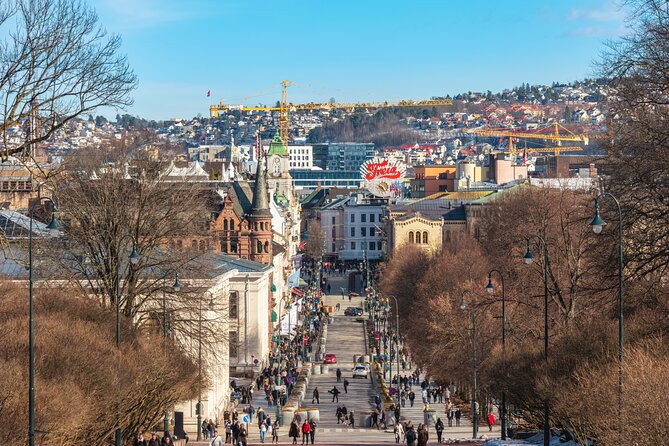
Next comes Karl Johans Gate, Oslo’s main street, running from Central Station toward the Royal Palace. It is named for King Karl XIV Johan and it is where you feel the city’s daily life, with shops, cafes, and historic buildings lining the route. This is the spine of the walk, and most of your photos will likely happen here.
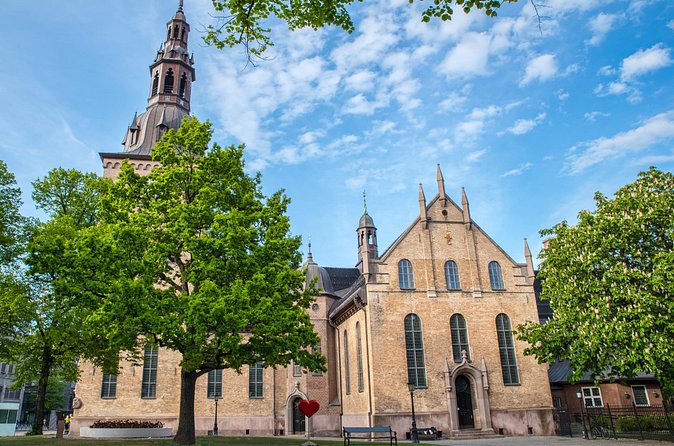
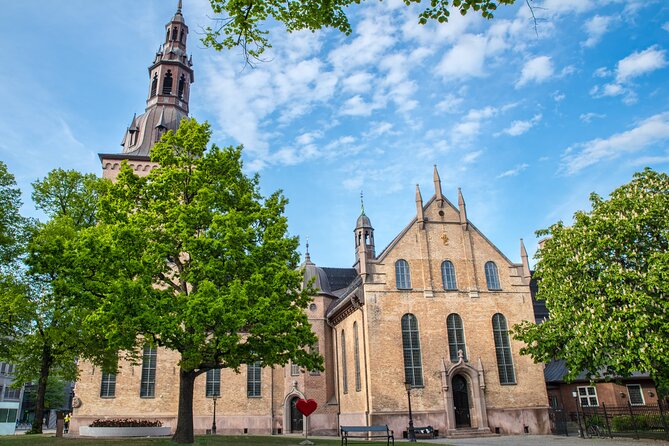
Oslo Cathedral is Stop 3, and this is one of the big wins of the tour: entry is included. The cathedral is a brick masterpiece from 1697, and the interior is known for its ornate features including starry ceilings and royal history. The tour timing gives you about 25 minutes, which is enough to see the main interior highlights without turning it into a half-day project.
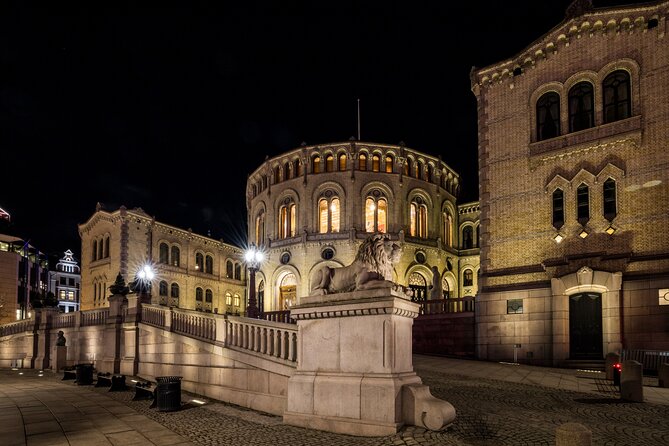
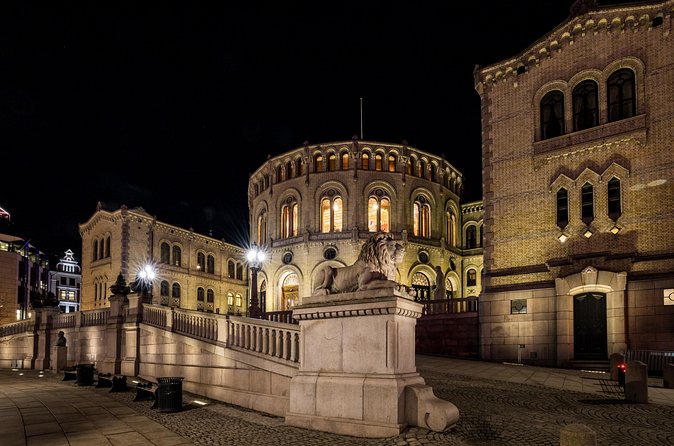
From there, you move to the Norwegian Parliament, the Stortinget building. It is a yellow-brick landmark opened in 1866. The tour frames it as Neo-Romanesque, and it notes it houses Norway’s 169-member legislature. Even if you do not join any free public tours at the moment, the exterior is a useful “government stop” that grounds what you are seeing in real civic life.
Stop 5 is the Grand Hotel Oslo. You get a quick but meaningful detail: it has hosted Nobel Prize-related events since 1874, and it has also hosted Roald Dahl and Henrik Ibsen. The building’s white granite facade and clock tower give you a classic Oslo postcard look.
Then you reach the National Theatre. It opened in 1899 and blends Classical and Art Nouveau styles. The tour suggests sticking to the outside view here since the included access is described as free to view outside. Still, the exterior is ornate, and it works well as a visual reset after the cathedral interior.
University Square (Stop 7) adds a cultural anchor. You see Oslo University’s classic buildings and statues honoring Norwegian icons like Holberg, Welhaven, and Wergeland. This section is where the narration points can be especially helpful, because it turns statues you might otherwise walk past into something you can actually read.
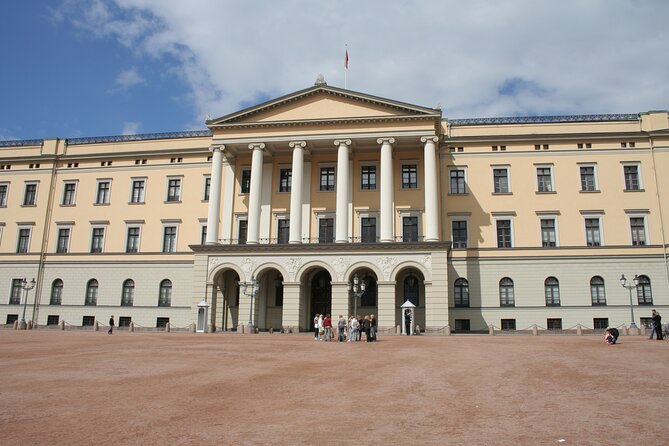
Stop 8 is the Royal Palace. The palace dates to 1847, and the tour highlights its neoclassical design and a statue of King Karl Johan. Park entry is described as free, but entry is not included. This is a good moment to slow down for the end-of-the-street feeling, then continue with the walk.
Finally, Stop 9 is Sentrum, Oslo’s old center. The tour emphasizes the 15th-century grid layout and the mix of colorful classical buildings with modern contrasts. You also get cobbled streets and bronze domes, and that older street texture makes the whole central stretch feel more human.
The Nobel trail and major institutions: City Hall, Nobel Peace Center, and National Museum
After Sentrum, the tour pivots into institutions that feel like Oslo’s “ideas and decisions” side of the city. This is where you start to notice how many Nobel-related and culture-related stops you can fit into a single self-guided loop.
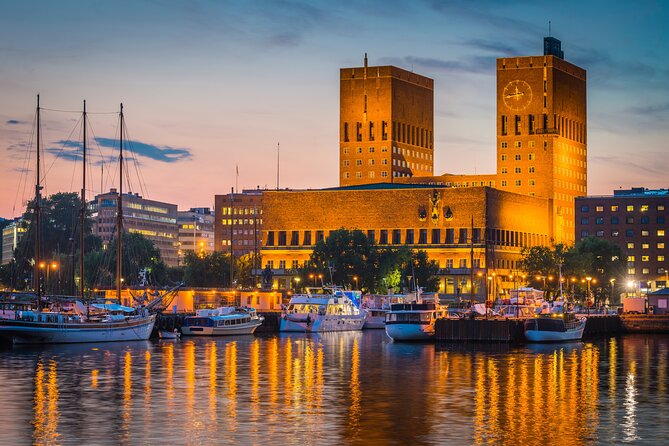
Stop 10 is Oslo City Hall. Built in 1950, it hosts the Nobel Peace Prize. The building has red-brick towers, and the tour notes there are art-filled interiors, with free entry to public areas. Even when you are not going inside, the square and the public views are part of the experience, especially the statue of Harald Hardrada.
Stop 11 is the Nobel Peace Center, located in old Vestbanen station. The tour calls out the yellow brick facade and the blend of old and modern elements. It is also described as interactive, showing stories of laureates. The location near Aker Brygge can make it feel like an easy transition between “city sights” and “waterfront atmosphere,” even if you keep your time here short.
Stop 12 is the National Museum, which opened in 2022. The tour describes it as sleek and modern, with 400,000 artworks and a shout-out to Munch’s The Scream. Admission here is listed as free for this tour stop. The only catch is time. The tour gives you about 10 minutes at this stop, so think of it as a place to orient yourself, pick one or two focal points, and decide if you want to return later on your own.
Stop 13 is George C. Marshall, with statues of Roosevelt and Marshall and the tour framing it around WWII efforts. The setting is a park area with lush greenery and Oslofjord views, which makes this a good pause stop if the earlier sights felt too “stone and signage” for your mood.
Then Stop 14 is Christiania Tivoli at Christiania Torv, a charming 17th-century square. The tour highlights King Christian IV’s glove sculpture, representing Oslo’s founding. This stop also connects you to nearby cafes and restaurants, so it is practical if you want a snack without breaking the walking rhythm.
Harbor-side pause: Akershus Fortress, SALT Sauna, and an Oslofjord stroll
This part of the route shifts from central institutions toward the water. It is also where the tour lets you choose how deep you go, because one of the stops requires paid entry.
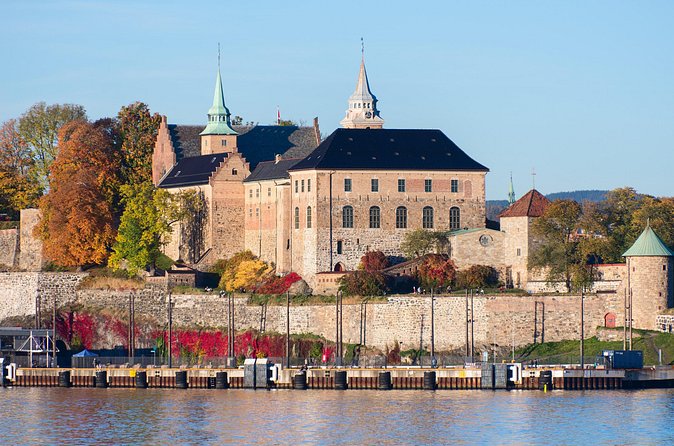
Stop 15 is Akershus Castle and Fortress. It dates to the 13th century and includes Akershus Castle, museums, and stunning views. The tour notes you can explore historic architecture and a public park in Oslo’s harbor area. Entry is not included and is listed at $15. If you love fortifications and museums, budget for this. If you are more of a “views plus photos” person, you might decide to keep it outside-focused instead of paying extra.
Stop 16 is SALT Sauna along Oslofjord. The tour describes it as a mix of food, art, and relaxation, with saunas and cultural events. The key idea here is that you can connect the city to the waterfront through a very Oslo-feeling ritual. It is listed as free for the tour stop, so it is a low-risk add-on.
Stop 17 is the Fjords – Cruise Oslofjorden stop. The tour describes it as a stroll along the Oslo Fjords, calling the fjord system a 100 km natural wonder. It also points you to the floating sculpture She Lies by Monica Bonvicini. The listing even hints at sauna culture as a contrast experience, warm up in a sauna and then plunge into the icy fjord waters. Even if you are not doing the full routine, this stop works because it keeps you physically close to the water and gives you a visual anchor for the whole day.
Same corner of the country, a completely different day out:
- Oslo: Oslo Fjord Sightseeing Cruise by Sailing Ship
★ 4.5 · 5,790 reviews - Oslo: Scenic Fjord Cruise with Audio Guide Commentary
★ 4.5 · 5,375 reviews - Oslo Nature Walks: Island Hopping Tour
★ 4.8 · 2,713 reviews - Oslo: 24 or 48-Hour Hop-On Hop-Off Sightseeing Bus GrayLine
★ 4.0 · 2,088 reviews
Bjørvika modern loop: Deichman library, Oslo Opera House roof, and the Munch add-on
From here, the route heads into Bjørvika and the modern architecture zone. This section is one reason the tour feels fun even when you are not spending long inside museums.
Stop 18 is Deichman Bjørvika, a library opened in 2020. The tour notes a cantilevered top floor, a grand staircase, and a rooftop terrace with amazing views. The practical value is that you can get impressive architecture and views without needing a separate ticket. It is a great “break” stop, especially if you want something indoors for a few minutes when weather turns.
Stop 19 is the Oslo Opera House, opened in 2008 by Snøhetta. The tour highlights its Carrara marble cladding and, crucially, the sloping roof you can walk for city and fjord views. The tour also describes exploring the modern lobby and taking in panoramic vistas from the roof. Since entry is listed as free, this is one of the best ways to spend your time without worrying about extra costs.
Stop 20 is Munch, meaning the Munch Museum. The tour describes it as holding over 28,000 works by Edvard Munch, including The Scream, and notes it opened in 2021. The building is framed as striking, with recycled aluminum panels and a grand staircase, and it references panoramic views from the 13-floor museum. Admission is not included, and the listed cost for the Munch site is $20 per person. If Munch is a must for you, plan your time carefully so you do not rush through. If Munch is a maybe, this is still a great architecture moment to see the exterior and decide.
Stop 21 is the Barcode Project in Bjørvika, a series of 12 high-rises that create a barcode effect. The tour calls out diverse designs and green rooftops. This is more of a “see it and move on” stop, but the payoff is that it gives your eyes something modern and playful after the older streets of central Oslo.
Finish at Frogner Park: Vigeland Sculpture Park for a slow landing
The tour ends at Frogner Park, and that ending is well-chosen. You go from city buildings into a park setting, and you finish with one of Oslo’s signature art attractions.
Stop 22 is Frogner Park and the Vigeland Sculpture Park. The tour notes 212 statues by Gustav Vigeland, plus rose gardens, lawns, and fountains. The best part is that this is not an all-or-nothing museum experience. Even if you only have 20 minutes left, you can still walk through and absorb the sculpture garden vibe.
Because this is the last stop, it is also the place to be flexible. If you followed the narration points earlier and kept good momentum, you will likely have the energy to linger here. If you stretched other interior stops, Frogner Park becomes your “slow down and breathe” finish, and that can actually make the whole day feel more relaxed.
Price and value: why $14.99 can work in your favor
At $14.99 per person, you are paying for structure, not for a long list of paid admissions. The tour includes access to Oslo Self Guided Walking Tour on the Trippy Tour Guide app, 25+ narration points, detailed directions, and a fully offline map. You also get entry to Oslo Cathedral.
That is good value for three reasons. First, the offline map and directions reduce time spent figuring out where to go next, and time is money in any city. Second, the narration points help you understand what you are looking at without paying for a live guide. Third, getting one interior admission included, Oslo Cathedral, means you have at least one “covered” stop that you do not have to decide on at the last minute.
The trade-off is that some major sites are not included. Akershus Castle and Fortress costs $15 for entry if you want to go in. The Munch site costs $20 per person. Royal Palace park entry is described as free, but the palace entry itself is not included. So your total day cost depends on what you decide to add.
Also, think about timing. The duration is listed as 2 to 3 hours, but the route includes many stops, and some include interiors or architecture you will want to look at longer than five minutes. If you want a slower pace, build in extra time. If you are tight on time, you can keep narration points shorter and still get the main sights.
Should you book this Oslo self-guided app tour?
I think you should book this if you want a first-timer-friendly Oslo walk that mixes the classics with modern Bjørvika, and you like controlling your pace. The best reasons to choose it are the offline map, the English narration points, and the included Cathedral entry.
I would skip it or adjust your plan if you know you want multiple paid museum interiors today. The tour includes many free sights, but Akershus and Munch cost extra, and a 2 to 3 hour frame can get tight if you plan deep museum time.
If you are traveling with a small group and you want everyone to move together but not feel rushed, this is a smart fit. It is also a strong pick if you will rely on transit and want a route that starts at Jernbanetorget and ends in Frogner Park without complicated backtracking.
FAQ
Where does the tour start and end?
The tour starts at Jernbanetorget station in Oslo and ends at Frognerparken Kirkeveien, 0268 Oslo. The final stop is Frogner Park.
How long is the walking tour?
The duration is listed as 2 to 3 hours (approx.).
How much does it cost?
The price is $14.99 per person.
Is the tour available in English?
Yes, the tour is offered in English.
Do I need Wi-Fi or mobile data?
No. The tour includes a fully offline map, so you do not need Wi-Fi or data.
What does the app include?
You get access to the Oslo Self Guided Walking Tour on the Trippy Tour Guide app, with 25+ narration points, detailed directions, and a mobile ticket.
Which entrance tickets are included?
Oslo Cathedral entry is included.
What extra tickets are not included?
Akershus Castle and Fortress entry is not included ($15.00 per person), and the Munch site entry is not included ($20.00 per person).
When is the tour available?
The listed opening hours are 8:00 AM to 8:00 PM, Monday through Sunday, valid for 07/24/2024 to 02/16/2027.
Can I cancel, and how much notice is needed?
Free cancellation is available. You can cancel up to 24 hours in advance for a full refund.
Is it a guided group tour with other people?
No. This is private, meaning only your group participates. It is self guided via the app.
Recently added around Oslo
- 4 hours Best View of the Oslofjord Winter Edition★ 4.0 · 15 reviews
- Oslo Winter Highlights Bike Tour★ 5.0 · 36 reviews
- Winter Forest Walk and Campfire by Torchlight in Oslo★ 4.5 · 20 reviews
- Viking Planet Oslo Combination Ticket (Museum +VR Game)★ 4.0 · 13 reviews
- Unknown war. Oslo and Norway during 1940-45★ 5.0 · 74 reviews
- The Ultimate Norwegian Skiing Experience★ 5.0 · 16 reviews
- The Viking Planet Museum – Mini Group (4 adults)★ 4.0 · 16 reviews
- The Ultimate Study of the Human Form at Vigeland’s Sculpture Park with a Local★ 4.0 · 14 reviews
Walking Tours, compared.
Past & Present Small Group Guided Walking Tour
Read our review →
Walking Tour in Bergen of the Past and Present
Read our review →
Guided Walking Tour of Central Oslo with Local Guide
Read our review →


Browse the lists this tour appears in